
7 Best Remote Companies to Work For in 2025: A Curated List

Finding the right remote job can feel like searching for a needle in a haystack. While the flexibility and autonomy are undeniable perks, identifying truly great remote-first companies requires cutting through the noise. This curated guide is designed to solve that problem. We've done the heavy lifting to identify the best remote companies to work for, focusing on organizations celebrated for their exceptional culture, employee satisfaction, and robust support for a distributed workforce.
This isn't just a list of names. For each company, we provide a detailed profile that includes its Glassdoor rating, standout benefits, and the typical remote roles available. You'll get a clear picture of their geographic hiring footprint, so you know if they hire in your region. We'll also break down exactly why each company earned its spot on our list, giving you actionable insights into what makes their workplace special.
As you explore these opportunities, it's also helpful to understand the financial landscape. The way companies structure pay can differ significantly, so researching the nuances of on-site vs remote work compensation can help you set realistic expectations and negotiate effectively.
Our goal is straightforward: to equip you with the detailed information needed to make an informed career decision. We'll show you not only who the top players are but also how to find and apply for their open positions directly through our platform, streamlining your job search and connecting you with companies that genuinely value their remote teams. Let's dive in and find your next great role.
1. Built In
Built In is an invaluable resource for job seekers targeting the tech industry, offering curated, data-driven lists of the best places to work. Its annual "Best Places to Work" awards include specific categories for remote-first and remote-friendly companies, making it a powerful tool for finding top-tier employers committed to distributed work. This platform isn't just a job board; it's a comprehensive research hub for vetting company culture before you even apply.
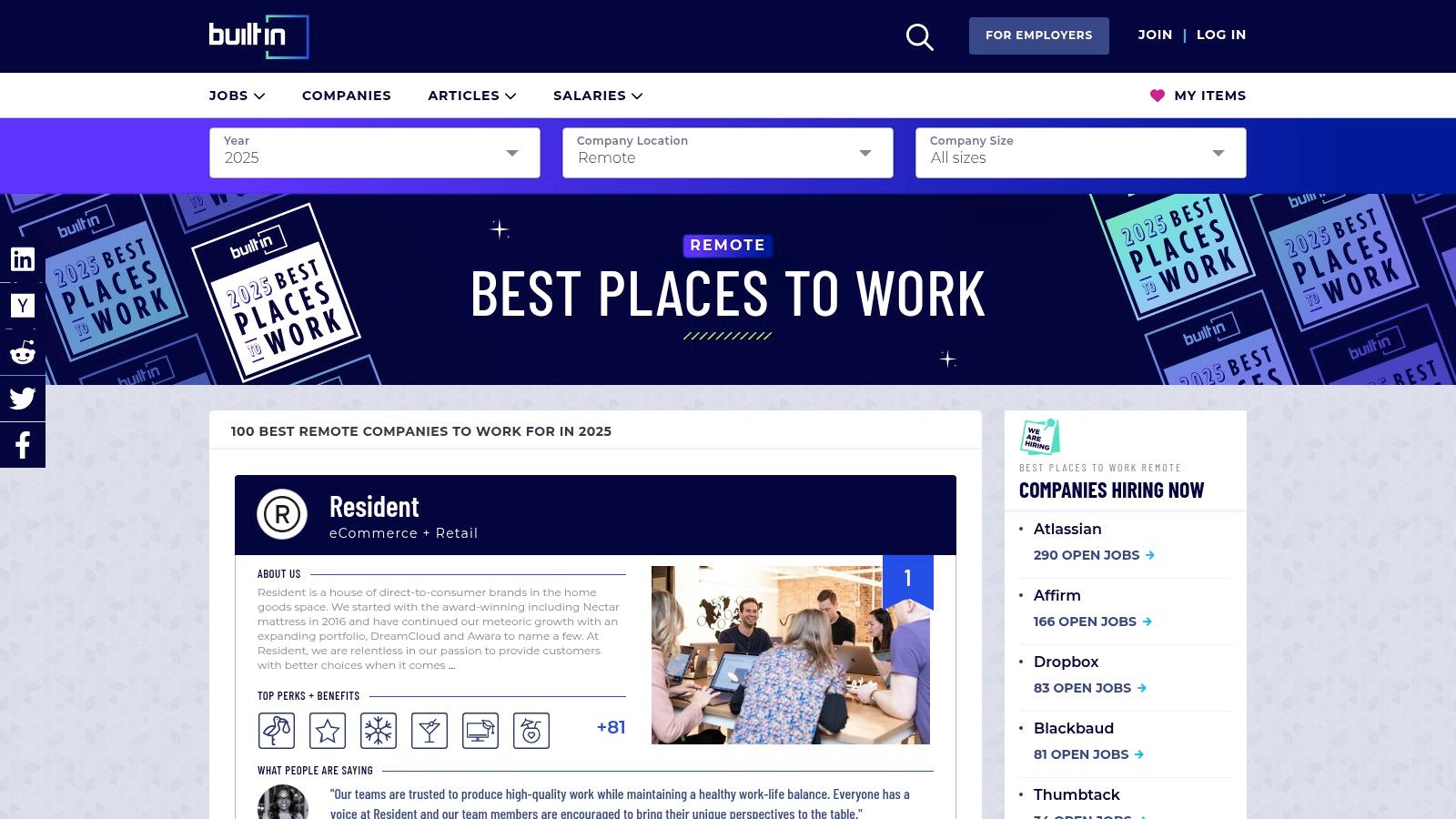
The platform’s strength lies in its rich, detailed company profiles. Each profile provides an inside look at an employer’s perks, benefits, and even salary data for various roles. This transparency allows you to benchmark compensation and benefits, ensuring you're pursuing opportunities that align with your expectations. Built In’s methodology is consistently applied each year, lending credibility to its rankings and helping you discover genuinely great remote workplaces.
Key Features and Offerings
- Curated Annual Lists: Access the "100 Best Remote Companies to Work For" list, along with other remote-specific categories sorted by company size. This streamlines your search for the best remote companies to work for by pre-vetting top employers.
- In-Depth Company Profiles: Go beyond a simple job description. Explore detailed pages that showcase a company's culture, diversity and inclusion initiatives, tech stack, and a comprehensive breakdown of benefits like parental leave, wellness stipends, and professional development budgets.
- Direct Job Application Links: Once you find a company you like, its profile links directly to current job openings, simplifying the application process.
How to Use Built In Effectively
To maximize your job search on Built In, start by filtering its "Best Places to Work" awards for the remote-only categories. Instead of just browsing job titles, dive deep into the company profiles of employers that catch your eye. Use their benefits and salary data to create a shortlist of companies that meet your personal and professional needs. This approach shifts your search from reactive to proactive, allowing you to target employers strategically. Explore our guide on how to identify the best places to work remotely for more tips on using platforms like Built In.
Pros and Cons
| Pros | Cons |
|---|---|
| Highly Vetted Lists: Shortlist reputable remote-first employers with confidence. | Tech-Focused: Less representation for non-tech industries. |
| Detailed Profiles: Gain deep insights into company culture, benefits, and salary. | U.S. Centric: Primarily focused on companies and roles within the United States. |
| Free to Use: Access all lists, profiles, and job links at no cost. | Annual Updates: Lists are updated once a year, so some information may become dated. |
Website: https://builtin.com/awards/remote/2025/best-places-to-work
2. FlexJobs
FlexJobs is a veteran in the remote work space, offering a subscription-based job board meticulously curated by humans. Its primary mission is to provide a scam-free, efficient job search experience for professionals seeking remote, hybrid, and flexible opportunities. The platform publishes an influential annual "Top 100 Companies to Watch for Remote Jobs" list, which serves as a definitive guide for identifying employers who have a proven track record of hiring for remote positions.
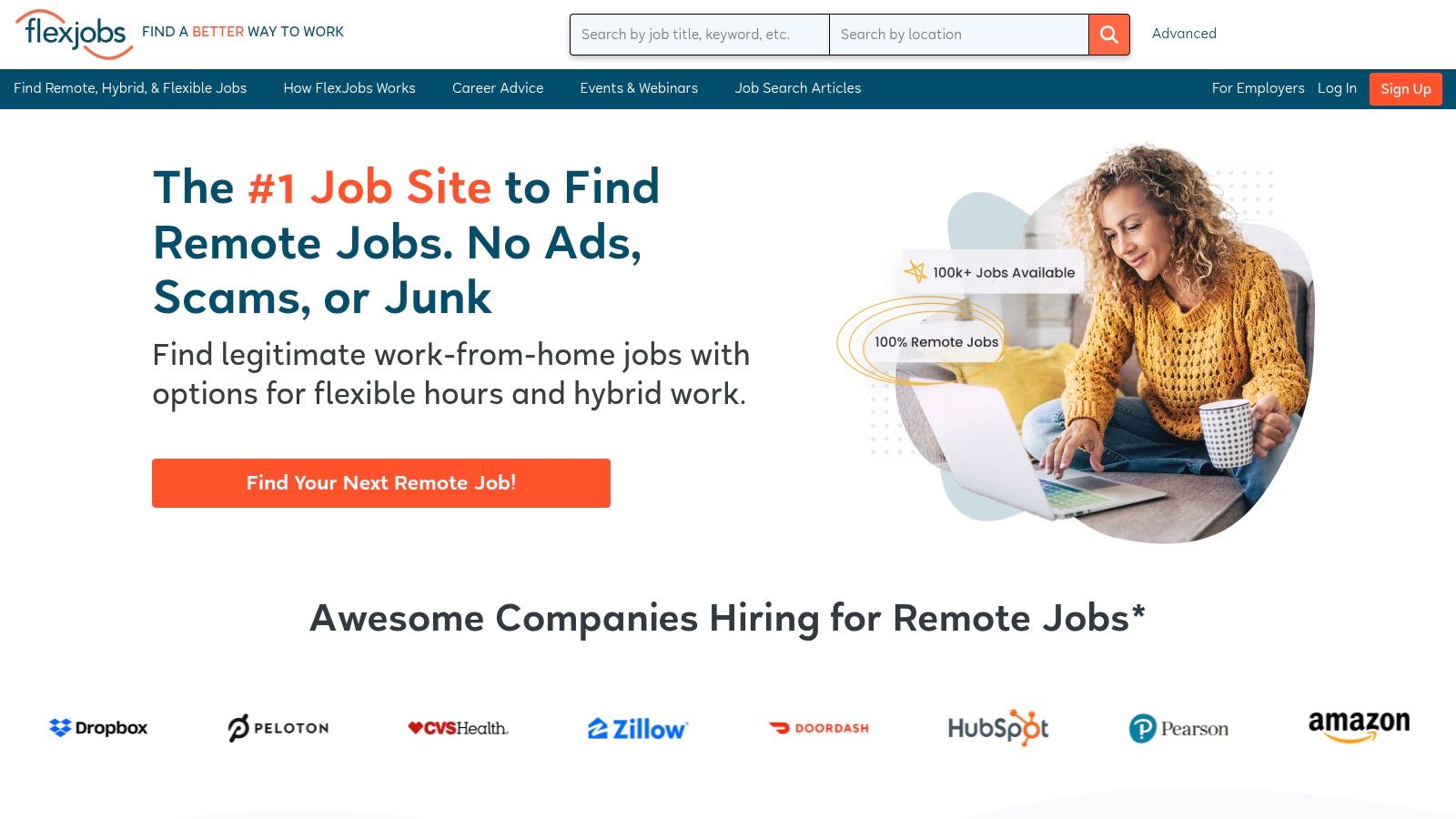
Unlike free-for-all job aggregators, FlexJobs’s core value proposition is quality over quantity. Every single job listing is hand-screened to filter out scams, ads, and commission-only roles, saving you valuable time and energy. This commitment to vetting extends beyond just job posts; its annual list of top companies is based on a deep analysis of which employers posted the most remote jobs throughout the previous year, offering a data-backed look at the market.
Key Features and Offerings
- Human-Vetted Job Listings: Access a high-quality database of remote and flexible jobs across more than 50 career categories, significantly reducing the risk of encountering fraudulent postings.
- Annual "Top 100" List: Use this data-driven list to discover and research companies that are actively and consistently hiring for remote roles, helping you find the best remote companies to work for.
- Career Development Resources: A subscription includes access to career coaching, resume reviews, expert-led webinars, and a library of skills tests to help you sharpen your professional profile.
- Advanced Search Filters: Effortlessly narrow your search by job type (100% remote, hybrid, flexible schedule), career level, and specific keywords to find the perfect fit.
How to Use FlexJobs Effectively
Begin by exploring the "Top 100 Companies to Watch for Remote Jobs" list to build a target list of employers. Use this list as a starting point for your research, then set up saved searches and email alerts for your target companies and roles. Take full advantage of the platform's career resources; participating in webinars or using the skills tests can give you a competitive edge. This proactive approach ensures you get the most value from your subscription. Our guide to the best remote job search sites offers more strategies for leveraging platforms like FlexJobs.
Pros and Cons
| Pros | Cons |
|---|---|
| High-Quality, Vetted Listings: Significantly lower risk of scams and fraudulent jobs. | Subscription Required: Access to full job details requires a paid membership. |
| Broad Industry Coverage: Strong representation for non-tech fields like education and healthcare. | Value Can Be Subjective: Some users may find the cost outweighs the benefits compared to free sites. |
| Comprehensive Career Tools: Provides valuable resources beyond just job listings. | Focus on U.S. Jobs: While global roles exist, the platform is heavily focused on the U.S. market. |
Website: https://www.flexjobs.com
3. Remote.co
Remote.co serves as a premier resource hub for professionals committed to remote work, offering curated lists of remote-first companies and those actively hiring. It distinguishes itself by focusing on established, fully distributed teams, providing a direct line to employers who have built their entire culture around remote work. More than just a job board, it acts as an educational platform and discovery tool for finding the best remote companies to work for across various industries.
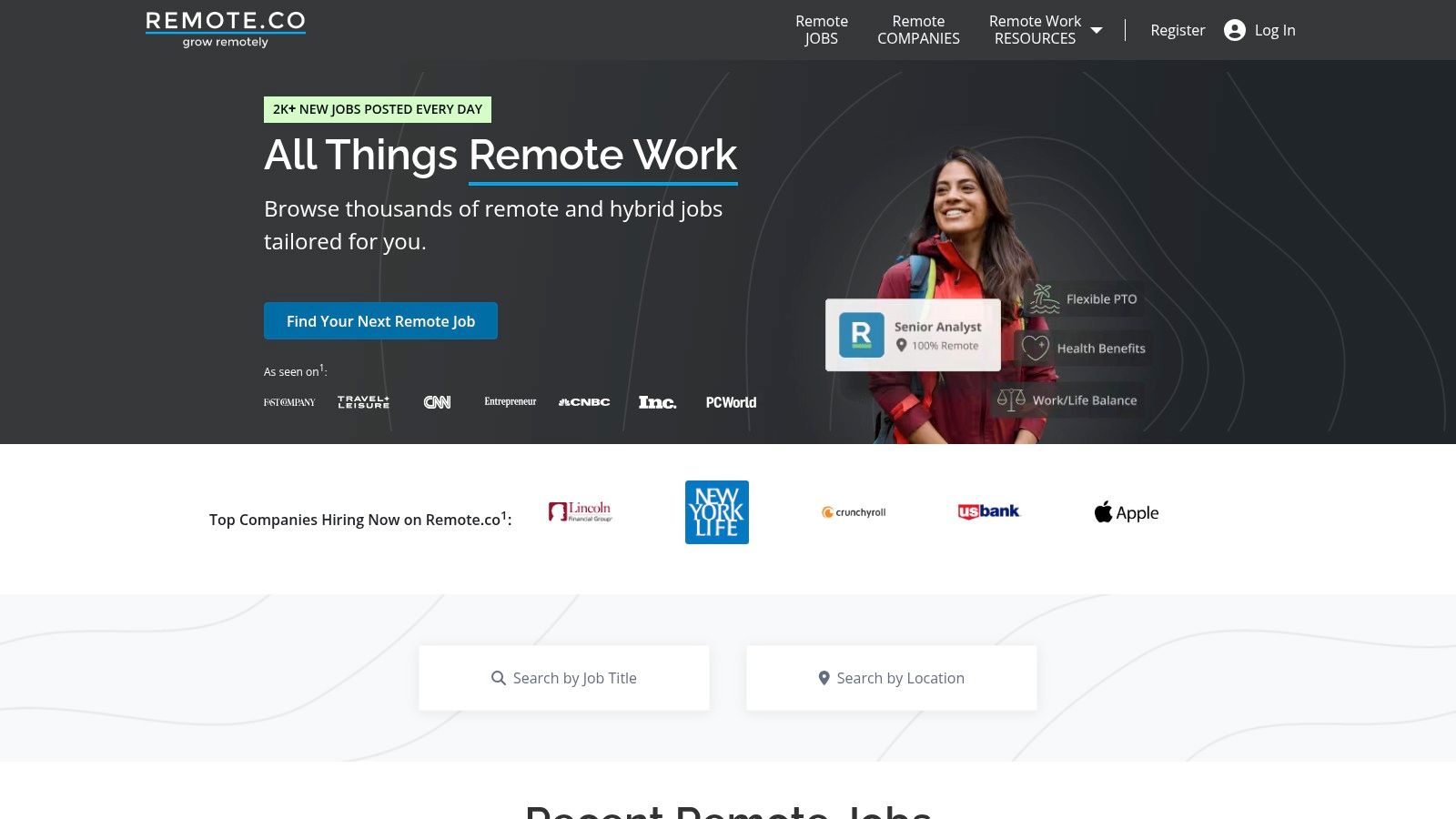
The platform's core value lies in its editorial curation. Instead of overwhelming you with endless listings, Remote.co features company spotlights that provide a snapshot of an employer's mission and culture, complete with direct links to their careers page. This approach saves you time and connects you with companies that are genuinely invested in the remote model, helping you identify organizations that offer stability and a strong distributed culture.
Key Features and Offerings
- Curated Company Lists: Access lists of "100 Top Companies with Remote Jobs," categorized by industry and function. This filtering helps you quickly discover remote-first brands in fields beyond just technology.
- Company Spotlights: Each featured company has a brief profile explaining what they do and why they are committed to remote work. These spotlights include direct links to the company's career page, streamlining your application process.
- Educational Content: The site offers a rich collection of articles, Q&As with remote leaders, and guides for remote workers. This content provides valuable insights into succeeding in a distributed environment.
- "Hiring Now" Section: A dedicated section showcases companies with immediate openings, making it easy to find timely opportunities.
How to Use Remote.co Effectively
Begin by exploring the "100 Top Companies with Remote Jobs" list to build a target list of potential employers. Use the company spotlights as a research tool to understand an organization’s ethos before visiting their career page. For more immediate results, check the "Hiring Now" section regularly. Don’t overlook the blog and Q&A sections; the advice from seasoned remote professionals can help you tailor your resume and interview responses to highlight your suitability for remote roles.
Pros and Cons
| Pros | Cons |
|---|---|
| Focus on Remote-First: Easily discover companies that are fully committed to distributed work. | Limited Search Functionality: Less powerful than large, filter-heavy job boards. |
| Direct Career Page Links: Simplifies the process of finding and applying for roles. | Listing Overlap: Some listings may overlap with its sister site, FlexJobs. |
| Free Resource Hub: Access all company lists, articles, and job links at no cost. | Less Detailed Profiles: Company information is less comprehensive than platforms like Built In. |
Website: https://remote.co/
4. We Work Remotely
As one of the original and largest remote-only job boards, We Work Remotely (WWR) is a foundational resource for anyone searching for distributed roles. Since 2011, it has cultivated a reputation as a high-volume, no-fluff platform connecting talented professionals with legitimate remote opportunities. Its longevity and focused mission make it a trusted starting point for finding the best remote companies to work for, especially in the tech, design, and customer support sectors.
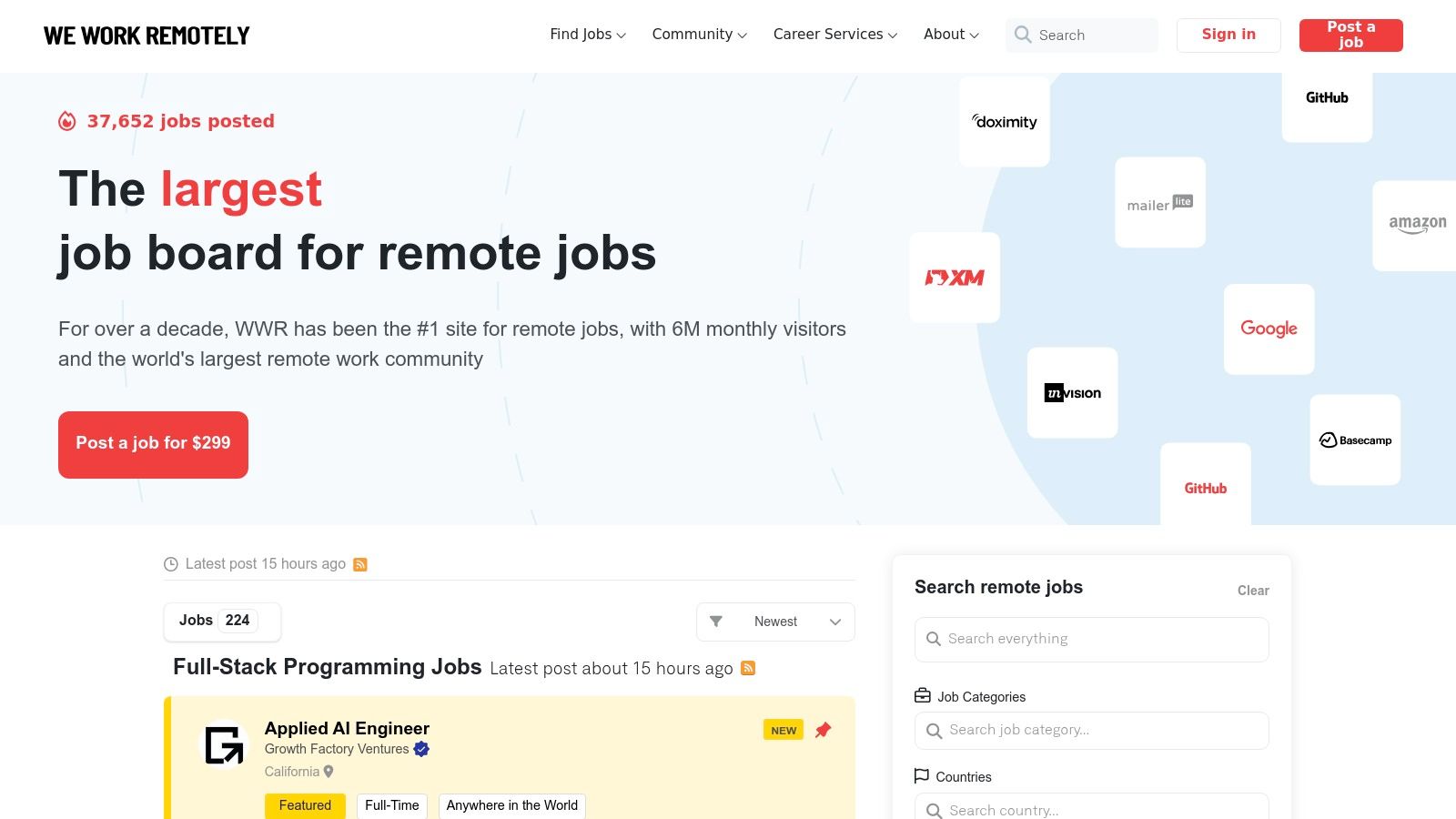
The platform’s core strength is its simplicity and sheer volume of listings from reputable companies. Because employers pay a significant fee to post a job, the quality of listings is generally high, filtering out less serious inquiries. For job seekers, the experience is free and straightforward, allowing you to quickly browse categories, find relevant positions, and apply directly without navigating a complex interface or creating a mandatory profile. This direct approach makes WWR a highly efficient tool for active job searching.
Key Features and Offerings
- High Volume of Listings: Access thousands of active remote job postings across popular categories like Programming, Design, Product, and Customer Support.
- Simple Browsing and Filters: The clean, uncluttered interface allows users to easily sort jobs by category or search by keyword, making it simple to find relevant roles quickly.
- Free Access for Job Seekers: Anyone can browse and apply for jobs at no cost, removing barriers to entry for professionals seeking their next remote role.
- Community and Resources: Beyond the job board, WWR maintains a community presence with resources and occasional virtual events for remote professionals.
How to Use We Work Remotely Effectively
To get the most out of We Work Remotely, use its powerful category filters to narrow your search to your specific field. Since the platform is one of the largest of its kind, check the board daily for new postings, as top roles can attract a high volume of applicants quickly. Set up alerts for relevant keywords to stay ahead of the competition. For more insights on leveraging platforms like this, explore our comprehensive guide to the best remote job boards.
Pros and Cons
| Pros | Cons |
|---|---|
| Many Reputable Companies Post Here: Attracts a wide range of established remote-first and tech companies. | Tech and Design Focused: Non-technical categories like marketing or finance have fewer listings. |
| Long-Established and Trusted: Strong brand recognition and a long track record in the remote work space. | High Competition: Popular roles receive a large number of applicants due to the site's visibility. |
| Simple, User-Friendly Interface: Easy to navigate and search for jobs without unnecessary features. | No Company Profiles: Lacks the in-depth company culture and benefits data found on other platforms. |
Website: https://weworkremotely.com
5. Remote OK
Remote OK is one of the most established and high-traffic job boards dedicated exclusively to remote work. It aggregates a massive volume of listings from around the globe, covering a wide spectrum of roles in both tech and non-tech sectors. For job seekers, it serves as a powerful, real-time firehose of opportunities, making it an essential resource for anyone serious about finding a remote position quickly. Its straightforward interface and robust filtering system cut through the noise, helping you pinpoint relevant openings from the best remote companies to work for.
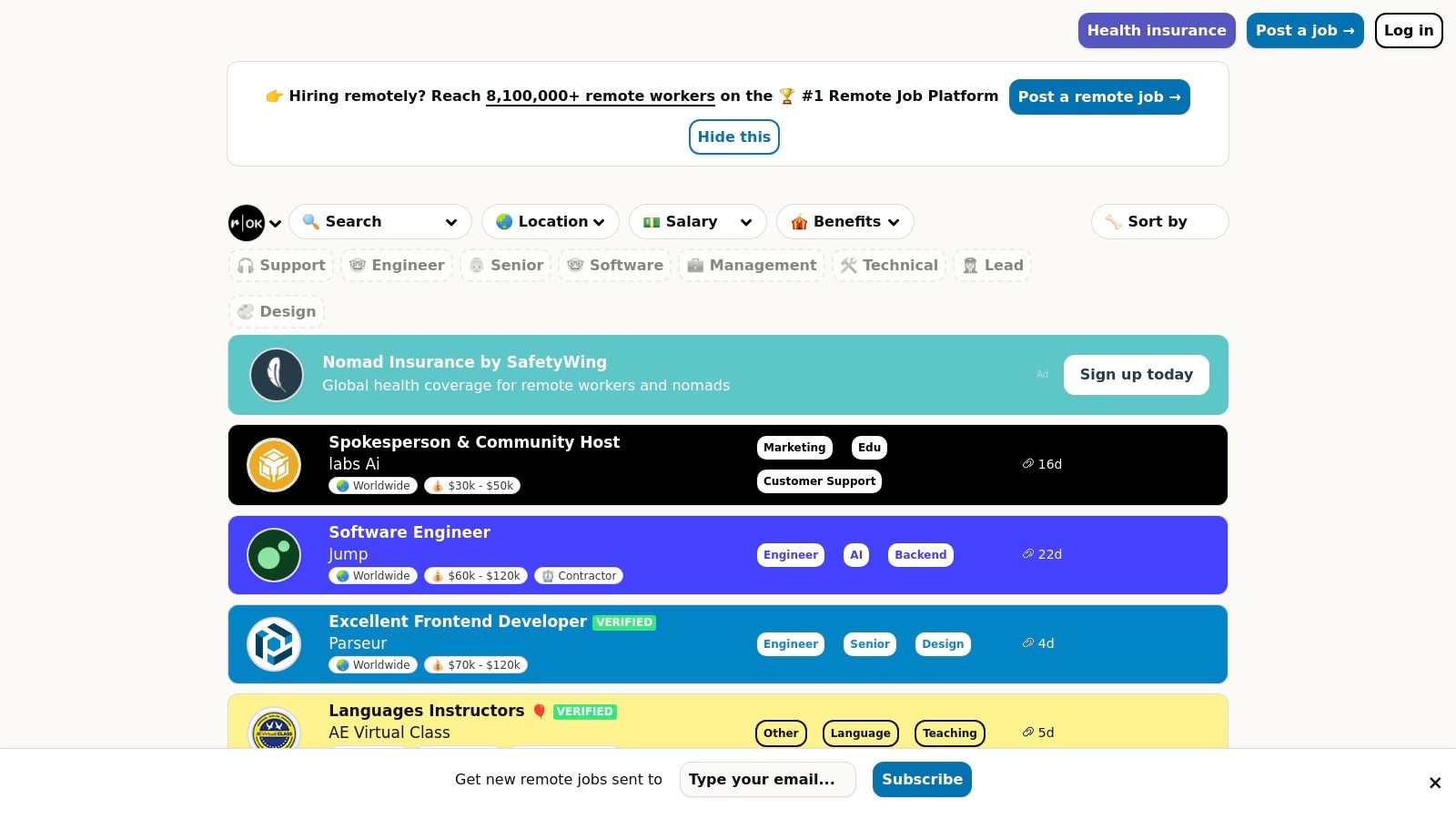
The platform's key advantage is its sheer volume and global reach. Unlike more curated lists, Remote OK provides a dynamic, constantly updated feed of new positions, which is ideal for active job seekers. It offers a transparent view of the remote job market, and its focus on clear tagging allows candidates to quickly filter by specific skills, seniority levels, and even time zone compatibility. Access for job seekers is completely free, with no sign-up required to browse and apply.
Key Features and Offerings
- Powerful Filtering System: Use a comprehensive set of tags to narrow your search by role (e.g., "dev," "marketing," "design"), seniority ("junior," "senior"), and even specific requirements like "4-day week" or "asynchronous."
- Email Alerts and RSS Feeds: Set up custom alerts for specific keywords or filters to receive notifications about new job listings directly in your inbox or feed reader, ensuring you never miss a relevant opportunity.
- Global Job Listings: Access a vast inventory of remote jobs from companies hiring worldwide, making it a valuable tool for international job seekers or those looking for roles outside a specific country.
- Free and Open Access: Candidates can search, browse, and apply for jobs entirely for free without needing to create an account, offering a low-friction user experience.
How to Use Remote OK Effectively
To get the most out of Remote OK, leverage its powerful tagging system from the start. Instead of a broad search, combine multiple tags to create a highly specific query, such as "senior," "full-stack," and "Europe timezone." Set up email alerts for these specific searches to automate your job hunt. Because of the high volume of listings, it's crucial to vet each company individually. Use the platform as a discovery tool, then conduct your own research on the companies that interest you to ensure their culture and values align with your own.
Pros and Cons
| Pros | Cons |
|---|---|
| High Volume of Listings: A massive and frequently updated pool of global remote jobs. | Variable Quality: The high volume means you must carefully vet individual companies and listings. |
| Excellent Filtering: Granular search options make it easy to find highly relevant roles. | Tech and Startup Bias: While non-tech roles exist, the platform leans heavily toward tech. |
| Completely Free for Candidates: No cost or registration is required to search and apply for jobs. | Competitive Landscape: Popular listings can attract a very large number of applicants. |
Website: https://remoteok.com
6. Wellfound (formerly AngelList Talent)
Wellfound, formerly known as AngelList Talent, is a premier job marketplace for those aspiring to work in the dynamic world of startups. It excels at connecting talent with innovative companies, from seed-stage ventures to established late-stage players. For remote job seekers, its powerful filtering capabilities, including a "distributed team only" option, make it an essential tool for discovering the best remote companies to work for in the startup ecosystem.
The platform's key differentiator is its deep focus on transparency and startup-specific data. Job listings frequently include clear salary and equity ranges, giving you the information needed to evaluate an offer's total compensation. Furthermore, company profiles provide valuable signals like funding rounds, tech stack, and team size, helping you assess a startup's stability and culture before you apply.
Key Features and Offerings
- Advanced Remote Filters: Easily narrow your search to companies that are fully distributed or remote-first, ensuring you only see opportunities that match your work-style preference.
- Salary and Equity Transparency: Many listings provide upfront compensation details, removing the guesswork and empowering you to make informed career decisions.
- In-depth Startup Signals: Evaluate potential employers by reviewing their funding history, investors, market traction, and tech stack directly on their profiles.
- Robust Candidate Profiles: Create a comprehensive profile that goes beyond a traditional resume, showcasing your skills, experience, and what you’re looking for in your next role, allowing companies to find you.
How to Use Wellfound Effectively
To get the most out of Wellfound, start by creating a detailed candidate profile that highlights your specific skills and remote work experience. Use the advanced search filters to zero in on roles that are not just "remote-friendly" but from companies that are truly "distributed." Pay close attention to the startup signals on each company page. A recently funded startup might offer more growth potential, while a more established one could provide greater stability. Tailor your applications by referencing details from their profile to show you've done your research.
Pros and Cons
| Pros | Cons |
|---|---|
| Excellent for startup roles: Unmatched access to jobs at funded startups. | Startup Volatility: Roles and company stability can change quickly. |
| High Transparency: Clear salary and equity data on many listings. | Niche Focus: Less coverage of large, non-tech corporate enterprises. |
| Free for Candidates: No cost to search, create a profile, and apply for jobs. | Competitive Landscape: High-growth startup roles can attract many applicants. |
Website: https://wellfound.com
7. Buildremote
Buildremote takes a unique, data-centric approach to the remote job search by offering a paid, downloadable database of remote-first and fully remote companies. Rather than a traditional job board, it's a powerful research tool designed for strategic job seekers who want to build a targeted list of potential employers. This sortable spreadsheet, containing over 1,200 companies, allows you to fast-track your outreach and application campaigns by putting all the essential company data right at your fingertips.
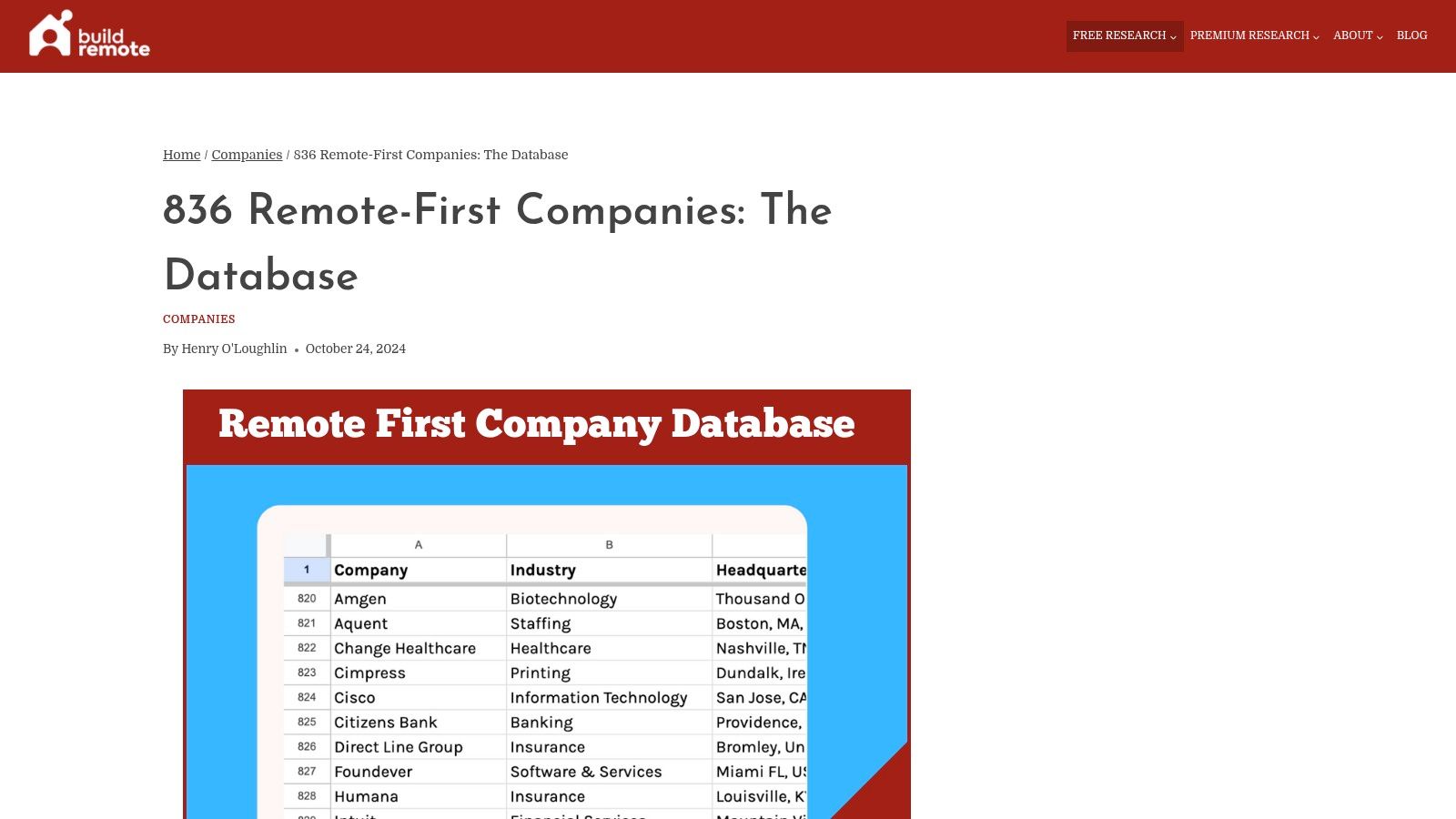
The platform’s core strength lies in its efficiency. It consolidates hundreds of hours of research into a single, organized file, giving you a massive head start. You can filter companies by industry, headcount, location, and type, making it easy to identify organizations that align perfectly with your career goals. This makes it an indispensable asset for anyone serious about finding the best remote companies to work for and who prefers a proactive, data-driven job search method.
Key Features and Offerings
- Curated Downloadable Database: Get instant access to a list of over 1,200 remote-first and fully remote companies in a sortable spreadsheet format (compatible with Google Sheets and Excel).
- Detailed Company Data: The database includes valuable fields like company type, industry, employee headcount, headquarters/country, and direct links to their careers pages.
- Sortable Format for Targeted Outreach: Easily filter and sort the data to create customized shortlists of companies for direct application, networking, or speculative outreach.
- Free 100-Company Sample: Test the product's value before committing by downloading a free sample list of 100 remote companies.
How to Use Buildremote Effectively
Start by downloading the free 100-company sample to familiarize yourself with the data and structure. If you find it useful, purchase the full database. Once you have access, use the spreadsheet's filtering capabilities to narrow down the list based on your specific criteria, such as industry, company size, or geographic location. Create a "Top 20" list of target companies and use the direct career page links to check for open roles. This organized approach helps you manage your applications systematically and discover opportunities you might otherwise miss.
Pros and Cons
| Pros | Cons |
|---|---|
| Saves Significant Research Time: Condenses hundreds of hours of sourcing into one organized file. | Paid Product: Requires a one-time purchase to access the full database. |
| Enables Strategic Outreach: Ideal for building a targeted list of employers. | Not a Job Board: It's a database of companies, not a list of current job openings. |
| Covers Multiple Industries: Includes companies from tech, marketing, healthcare, and more. | Requires Proactive Effort: You must use the data to actively seek out opportunities. |
Website: https://buildremote.co/companies/remote-first/
Top 7 Remote Job Platforms Comparison
| Item | Implementation / Complexity 🔄 | Resource Requirements ⚡ | Expected Outcomes ⭐ / 📊 | Ideal Use Cases 💡 | Key Advantages |
|---|---|---|---|---|---|
| Built In | Low — browse curated lists and profiles 🔄 | Low — web access, minimal time ⚡ | High⭐ — targeted employer leads and benchmarking📊 | Targeting U.S. tech/remote-first employers; benchmarking benefits 💡 | Curated “Best Remote” lists; rich company profiles; annually updated methodology |
| FlexJobs | Moderate — membership setup and use of alerts/webinars 🔄 | Medium — paid subscription + time for vetting ⚡ | Reliable⭐ — lower scam risk; cross-industry coverage📊 | Job seekers wanting vetted remote roles across industries; career resources 💡 | Human-vetted listings; career resources, webinars and skills tests |
| Remote.co | Low — browse curated lists, spotlights and guides 🔄 | Low — mostly free resources; time to review ⚡ | Good⭐ — discover established remote-first brands; educational impact📊 | Discovering remote-first companies and remote-work best practices 💡 | Company spotlights, direct career links, editorial guides |
| We Work Remotely | Low — simple board with category filters 🔄 | Low — free access; expect high applicant volume ⚡ | High volume⭐ — many reputable postings but competitive📊 | Searching high-volume tech/product/design/customer-support roles 💡 | Long-established platform; strong brand recognition and steady postings |
| Remote OK | Low–Moderate — use tags, filters, RSS/alerts 🔄 | Low — free access; requires quality vetting ⚡ | Very high📊 — frequent global listings; variable quality⭐ | Monitoring frequent/global openings and using alerts/RSS 💡 | Powerful filtering/tags, email & RSS alerts; transparent employer options |
| Wellfound (AngelList) | Moderate — profile setup and startup targeting 🔄 | Low — free for candidates; time to optimize profile ⚡ | High⭐ — effective for funded startups; salary/equity transparency📊 | Finding remote roles at funded startups (seed to late-stage) 💡 | Remote filters, salary & equity visibility, strong startup signals |
| Buildremote | Moderate — purchase and integrate downloadable dataset 🔄 | Medium — one-time paid purchase + data management ⚡ | High📊 — speeds organized sourcing; not a job board⭐ | Targeted outreach, recruitment campaigns, organized application workflows 💡 | Curated sortable database (1,200+ companies); fields for outreach and targeting |
Final Thoughts
Navigating the vast landscape of remote work can feel overwhelming, but finding your ideal role at a company that truly values its distributed team is more attainable than ever. Throughout this guide, we've explored a curated selection of some of the best remote companies to work for, each excelling in culture, benefits, and employee satisfaction. From innovative startups to established industry leaders, the common thread is a commitment to making remote work work for everyone.
The journey to landing your dream remote job starts with knowing where to look and what to look for. This list is a starting point, designed to illuminate what a top-tier remote-first culture looks like and to introduce you to companies that are leading the charge.
Key Takeaways: Your Roadmap to Remote Success
As you move forward in your search, keep these core principles in mind. They are the recurring themes we've seen across the most successful remote workplaces and will serve as your compass.
- Culture is Paramount: A company's Glassdoor rating, benefits package, and employee testimonials are not just data points; they are direct reflections of its culture. Prioritize companies that demonstrate a clear, intentional, and positive approach to remote collaboration and employee well-being.
- Benefits Beyond the Basics: The leading remote companies understand that a distributed workforce has unique needs. Look for benefits that actively support a remote lifestyle, such as home office stipends, wellness allowances, flexible hours, and professional development funds.
- Clarity in Communication: Pay close attention to how a company communicates during the application and interview process. Organizations that are transparent, responsive, and clear are often the ones that have mastered asynchronous communication-a critical skill for any remote team.
- Alignment with Your Goals: The "best" company is ultimately the one that aligns with your personal and professional aspirations. Consider the company's mission, growth trajectory, and the types of roles they offer. Do they provide a path for you to grow your skills and advance your career?
Actionable Next Steps: Turning Insight into Opportunity
You're now equipped with a list of exemplary companies and the criteria to evaluate them. It's time to put that knowledge into action.
- Refine Your Search Criteria: Before you start applying, create a personal checklist. What are your non-negotiables? Is it a 4-day work week, a specific healthcare plan, or opportunities for international travel? Use this list to filter your options.
- Tailor Your Application: Generic applications get lost in the noise. For each company that interests you, customize your resume and cover letter to highlight skills and experiences relevant to a remote environment. Mention specific company values or projects that resonate with you.
- Leverage Your Network: Don't underestimate the power of connections. Use platforms like LinkedIn to find current or former employees of your target companies. Politely reach out for an informational interview to gain firsthand insight into their remote culture.
- Prepare for a Remote Interview: The remote interview process can differ significantly from in-person meetings. Ensure your tech setup is flawless, practice your video presence, and be ready to answer questions specifically about your ability to self-manage, communicate asynchronously, and collaborate with a distributed team.
Finding a place among the best remote companies to work for is about finding a professional home that supports your lifestyle, values your contributions, and empowers you to do your best work, no matter where you are. The opportunities are out there, and with a strategic and informed approach, you can find the perfect fit.
Ready to streamline your job search and discover even more top-tier remote opportunities? RemoteWeek aggregates and curates the best remote job listings from across the web, including many of the companies featured here, into one simple, daily email. Sign up for RemoteWeek today and let your next great remote role find you.