
Top 10 Reasons for Working From Home in 2026: A Complete Guide

The world of work has fundamentally changed, and professionals are increasingly seeking roles that offer more than just a paycheck; they want flexibility, autonomy, and a healthier work-life balance. The conversation is no longer about if remote work is viable, but how to make it a sustainable and fulfilling career path. This guide explores the most compelling reasons for working from home, backed by data, real-world examples, and actionable insights for your job search. As traditional services adapt to digital demands, understanding the move to virtual operations, such as offered in a complete guide to Remote Online Notary for businesses, becomes essential for comprehending the future of work.
Whether you're a seasoned remote professional or just beginning your search, the following points will clarify the immense value of remote work. We'll equip you to find a role that truly supports your personal and professional goals. This listicle breaks down everything from tangible financial savings and productivity gains to the crucial ability to avoid toxic workplace cultures, a growing concern for many job seekers. We will go beyond the surface to provide specific, actionable steps for each benefit, helping you evaluate potential employers and find a trustworthy remote role that fits your life.
1. Improved Work-Life Balance
One of the most compelling reasons for working from home is the profound improvement it offers to work-life balance. By eliminating the daily commute, professionals reclaim hours previously lost to traffic, which can be reinvested into personal health, family time, or hobbies. This newfound flexibility allows for a more integrated lifestyle where personal appointments and family needs can be managed without disrupting professional responsibilities.

This model is proven to boost employee well-being and loyalty. For instance, fully remote companies like GitLab and Zapier consistently report that superior work-life balance is a primary driver of employee satisfaction and retention. The ability to structure a workday around life’s demands, rather than the other way around, reduces stress and prevents burnout, leading to a more sustainable and fulfilling career.
How to Achieve Balance While Working Remotely
To maximize this benefit, it's crucial to establish clear boundaries. Without the physical separation of an office, work can easily spill into personal time.
- Create a Dedicated Workspace: Designate a specific area in your home for work to mentally separate your professional and personal life.
- Set Firm 'Offline' Hours: Communicate your working hours to your team and stick to them. Disable notifications after your workday ends.
- Schedule Personal Time: Use calendar blocks for lunch, exercise, and family activities to protect your time from meeting requests.
By proactively managing your schedule, you can harness the full potential of remote work. For a deeper dive into effective techniques, explore these work-life balance strategies to help you thrive.
2. Increased Productivity and Focus
One of the key reasons for working from home is the significant boost it provides to productivity and focus. Traditional office environments are often filled with interruptions like impromptu meetings, colleague chatter, and general background noise. A remote setup allows professionals to control their environment, minimize distractions, and achieve the deep focus necessary for complex tasks, leading to higher-quality output in less time.
This isn't just a perception; it's backed by data. For example, Automattic, the company behind WordPress.com, reports that its distributed workforce is significantly more productive than office-based counterparts. Similarly, research from Microsoft showed that remote work increased focused work time by 13-16%. This environment empowers employees to align their work schedules with their most productive hours, whether that's early in the morning or late at night.
How to Maximize Focus While Working Remotely
To leverage the full productivity benefits, a structured approach is essential. Creating an environment optimized for concentration is the first step toward achieving peak performance.
- Designate a No-Distraction Zone: Establish a dedicated workspace that is physically separate from your personal living areas to create a mental distinction.
- Utilize Focus-Enhancing Tools: Use noise-canceling headphones to block out ambient sounds and schedule "focus blocks" in your calendar where meetings are not allowed.
- Embrace Asynchronous Communication: Rely on tools like Slack or email for non-urgent updates to avoid breaking your concentration with constant notifications.
By implementing these strategies, you can create an optimal work setting. For maximizing output, understanding the tools and infrastructure is key, including selecting the best internet for working from home. To explore this topic further, check out these detailed work-from-home productivity tips and build a routine that works for you.
3. Cost Savings and Financial Benefits
One of the most tangible reasons for working from home is the significant financial savings it generates. By cutting out daily commutes, professionals eliminate expenses like gas, public transit fares, and vehicle maintenance. Additional savings come from a reduced need for a professional wardrobe, fewer lunches bought out, and lower childcare costs, directly boosting personal financial health and disposable income.

The accumulated savings can be substantial. For example, recent data shows remote workers in the United States save an average of $4,512 per year on commuting alone, while their UK counterparts save over £2,000 annually on transport. The ability to live in a lower cost-of-living area while earning a competitive salary, a concept known as geographic arbitrage, further amplifies these financial benefits, making remote work a powerful tool for wealth building.
How to Maximize Your Remote Work Savings
To fully capitalize on the financial perks of remote work, a strategic approach to your budget is key. Focus on turning eliminated expenses into tangible savings.
- Quantify and Reallocate: Use a budget tracker to calculate your previous commuting, food, and clothing costs. Create an automatic transfer to move that exact amount into a savings or investment account each month.
- Explore Geographic Arbitrage: Research areas with a lower cost of living that still offer the lifestyle you desire. Moving can drastically reduce major expenses like housing without impacting your income.
- Track Home Office Expenses: Meticulously log expenses for your dedicated workspace, including internet, utilities, and equipment. These may be tax-deductible depending on your employment status and location.
4. Access to Global Job Opportunities
One of the most transformative reasons for working from home is the elimination of geographical barriers, granting professionals access to a global job market. Talent is no longer confined to local opportunities or limited by the feasibility of relocation. This opens up unprecedented career paths, allowing you to find roles that perfectly match your skills and ambitions, regardless of where the company is headquartered.
This global talent pool benefits both employees and employers. For example, a Polish software engineer can work for an innovative Australian tech firm, or a Brazilian marketing specialist can join a fast-growing European startup. Platforms like Nomad List and RemoteWeek have popularized this trend by connecting professionals with international roles, proving that exceptional talent can be found anywhere. This global access often allows professionals to earn salaries competitive with major tech hubs while enjoying a lower cost of living.
How to Secure Global Remote Roles
To successfully navigate the international job market, you need a strategic approach that addresses cross-border complexities.
- Build a Global-Ready Profile: Ensure your online portfolio and resume are easily accessible and highlight skills relevant to a global audience.
- Master Asynchronous Communication: Develop strong written communication skills to collaborate effectively with teams across different time zones.
- Research Legal and Tax Rules: Proactively investigate work authorization requirements and tax implications for your target countries to avoid future complications.
By preparing for the nuances of international employment, you can unlock a world of career possibilities. Explore global listings on RemoteWeek, which serves over 20 countries, to start your search.
5. Health and Wellness Benefits
Working from home offers significant advantages for both physical and mental well-being, making it one of the most powerful reasons for seeking remote opportunities. Eliminating the daily commute reduces chronic stress and frees up time for exercise, while full control over your home environment allows for healthier meal choices. This autonomy directly combats the risk of burnout associated with traditional office settings.
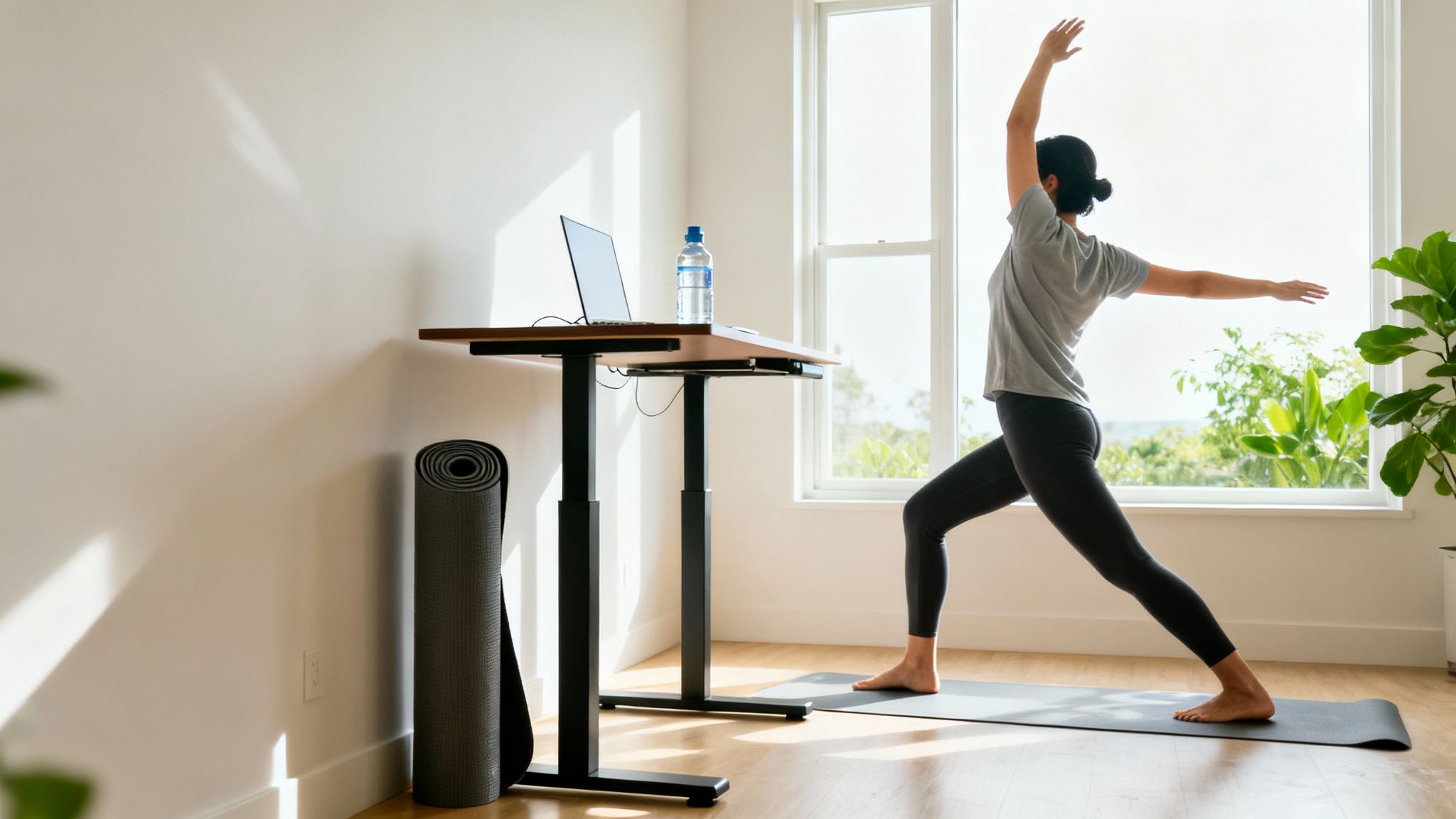
The positive impact is well-documented. Studies reveal remote workers experience a 14% improvement in mental health and take 35% fewer sick days, demonstrating a clear link between remote work and overall health. Furthermore, companies that prioritize employee wellness see this reflected in productivity and morale. This focus on health is a core reason professionals are increasingly choosing remote-first careers.
How to Prioritize Wellness While Working Remotely
To leverage the health benefits of remote work, it's essential to be intentional about creating a healthy routine. Your environment and schedule play a huge role in your well-being.
- Invest in Ergonomics: A proper chair, desk, and monitor setup prevents strain on your back, neck, and wrists. Consider a standing desk to alternate positions.
- Schedule Movement Breaks: Use a timer to remind yourself to get up and stretch or walk around every hour. Short bursts of activity are highly effective.
- Protect Your Eyes: Practice the 20-20-20 rule. Every 20 minutes, look at something 20 feet away for at least 20 seconds to reduce digital eye strain.
- Maintain a Consistent Sleep Schedule: The flexibility of remote work can make it tempting to alter sleep patterns, but consistency is key for good health.
6. Environmental Impact and Sustainability
One of the most impactful yet often overlooked reasons for working from home is its significant positive effect on the environment. By eliminating daily commutes, remote work directly reduces carbon emissions, decreases office energy consumption, and cuts down on resource waste like paper and plastic. This collective benefit makes remote work a powerful tool for sustainability.
The data highlights a compelling case for this green initiative. Global Workplace Analytics found that if just 25% of the US workforce worked from home full-time, it would prevent 54 million metric tons of CO2 emissions annually. Companies like Unilever and Salesforce have integrated remote work into their corporate sustainability goals, reporting significant reductions in their overall carbon footprint. This model aligns personal values with professional life for environmentally conscious individuals.
How to Maximize Your Green Impact While Working Remotely
Adopting a remote role is a great first step, but you can enhance your positive environmental impact by being mindful of your home office habits.
- Track Your Carbon Savings: Use an online calculator to quantify the emissions you've avoided by eliminating your commute. This helps visualize your impact.
- Opt for Green Energy: If possible, switch your home's electricity to a provider that uses renewable energy sources like solar or wind.
- Reduce Business Travel: Prioritize video conferencing over air or car travel for meetings to further reduce your professional carbon footprint.
By making conscious choices, you can amplify the inherent environmental benefits of remote work. For more ideas, consider exploring how to create a sustainable home office that aligns with your green goals.
7. Greater Autonomy and Control
Another of the significant reasons for working from home is the greater autonomy and control it affords professionals. This model shifts the focus from time spent in an office to the quality and impact of the work produced. By empowering employees to decide how, when, and where they work best, companies foster a culture of trust and ownership that can lead to higher engagement and more innovative problem-solving.
This sense of independence is a cornerstone of successful remote-first companies. For example, organizations like Automattic and 37signals (the creators of Basecamp) built their operations on a foundation of trust, giving employees complete autonomy over their schedules and work processes. This approach respects individual working styles and empowers team members to take full responsibility for their contributions, leading to a more mature and results-driven professional environment.
How to Foster Autonomy in a Remote Role
To thrive with this level of freedom, it’s essential to build structure and maintain clear communication with your team. This ensures your independence aligns perfectly with company goals.
- Establish Clear Goals: Work with your manager to define specific, measurable performance metrics so you know exactly what success looks like.
- Communicate Proactively: Provide regular updates on your progress without being asked. This builds trust and keeps everyone aligned.
- Document Your Work: Keep a clear record of your decisions, processes, and outcomes to ensure transparency and accountability.
- Seek Regular Feedback: Schedule check-ins to confirm your work is meeting expectations and to make any necessary adjustments.
8. Enhanced Career Development and Skill Building
One of the less-obvious reasons for working from home is the unique opportunity it provides for accelerated career development. Remote work inherently demands and cultivates a diverse skill set, including self-management, asynchronous communication, and digital literacy. The autonomy and flexibility also create dedicated time for upskilling without the constraints of a physical location or rigid schedule.
This environment fosters a culture of continuous learning and documentation. For example, remote-first companies like Stripe and Automattic empower employees with extensive learning budgets and rich internal knowledge bases. Similarly, GitLab's public handbook model creates a transparent learning culture where career growth is built into the company’s operational DNA, proving that remote work can be a powerful catalyst for professional advancement.
How to Foster Your Career Growth Remotely
To leverage remote work for skill development, you must be intentional about seeking out learning opportunities. Without the structure of an office, your growth is your responsibility.
- Dedicate Time for Learning: Block out 5-10% of your workweek specifically for professional development, such as taking courses on Coursera or Udemy.
- Seek Cross-Functional Mentors: Connect with colleagues in different departments and time zones to gain diverse perspectives and expand your network.
- Contribute to Documentation: Actively document your processes and projects. This reinforces your own knowledge and demonstrates your value to the team.
- Attend Virtual Conferences: Participate in online industry events to stay current with trends and connect with global professionals.
9. Increased Inclusivity and Accessibility
One of the most powerful reasons for working from home is its ability to create a more inclusive and accessible workforce. Remote work dismantles physical and geographical barriers, opening doors for talented individuals who may be excluded from traditional office environments. This includes people with disabilities, chronic health conditions, caregiving responsibilities, and those living in remote areas, creating a richer, more diverse talent pool.
This approach benefits both employees and employers by fostering diversity of thought and experience. For example, companies like Microsoft have championed remote work to better support employees with disabilities, while others actively use remote setups to build neurodiverse teams. The flexibility allows parents and caregivers to pursue meaningful careers without sacrificing their responsibilities, making the workforce more representative of society.
How to Foster an Inclusive Remote Environment
To truly leverage this benefit, companies must be intentional about building an inclusive culture that supports everyone, regardless of their location or personal circumstances.
- Ensure Digital Accessibility: All communication tools, software, and digital resources should meet accessibility standards (e.g., WCAG) to support employees with disabilities.
- Offer Flexible Scheduling: Accommodate different time zones and personal needs, such as caregiving duties or medical appointments, without judgment.
- Train for Inclusive Practices: Educate managers and teams on unconscious bias, inclusive communication, and how to support diverse colleagues in a remote setting.
By thoughtfully designing remote policies, companies can attract and retain top talent from every background. To learn more about building a supportive remote workplace, explore these strategies for fostering remote inclusion.
10. Reduced Workplace Toxicity and Toxic Culture Avoidance
One of the most powerful reasons for working from home is the ability to escape toxic office environments. Remote work creates a physical and psychological buffer from common workplace issues like micromanagement, office politics, and unhealthy competition. This distance allows professionals to focus on their tasks in a more controlled, positive setting.
This shift empowers employees to be more selective about the cultures they engage with. For example, after major policy changes at companies like Twitter (now X), many tech workers sought remote roles at organizations with transparent and supportive cultures. Remote-first companies like Automattic and Basecamp build their reputations on positive, trust-based environments, using culture as a key differentiator to attract top talent. This intentional focus on a healthy work environment is a primary driver for professionals seeking sustainable, long-term careers away from office negativity.
How to Vet Company Culture Before Accepting a Remote Role
To ensure you join a healthy remote workplace, proactive research is essential. You must look beyond the job description to understand the reality of the company's culture.
- Research on Review Platforms: Scour sites like Glassdoor and Comparably for candid reviews from current and former employees, paying close attention to comments on management and team dynamics.
- Ask Targeted Interview Questions: Inquire specifically about communication styles, conflict resolution processes, and how the company supports employee well-being.
- Connect with Current Employees: If possible, reach out to team members on LinkedIn to ask for their honest perspective on the work environment.
By being diligent, you can identify and avoid problematic workplaces. For a more detailed guide, learn about the common signs of a toxic work culture before you accept an offer.
Top 10 WFH Benefits Comparison
| Benefit | Implementation Complexity (🔄) | Resource Requirements (⚡) | Expected Outcomes (📊) | Ideal Use Cases (💡) | Key Advantages (⭐) |
|---|---|---|---|---|---|
| Improved Work-Life Balance | Low — policy + personal boundaries | Low–Moderate — home setup, scheduling tools | 📊 Higher satisfaction; reduced burnout | Caregivers, knowledge workers seeking flexibility | ⭐ Reduced stress; saved commute time; better retention |
| Increased Productivity and Focus | Medium — workflow & meeting redesign | Moderate — quiet workspace, collaboration tools | 📊 Faster task completion; higher quality output | Deep-focus roles (dev, writing, analysis) | ⭐ Measurable productivity gains (30–40%) |
| Cost Savings and Financial Benefits | Low — straightforward to adopt | Low — initial home office investments | 📊 Significant annual savings (~$4k–6k) | High-commute employees; geographic arbitrage seekers | ⭐ Lower living/commute costs; tax/home-office benefits |
| Access to Global Job Opportunities | Medium — legal & HR adjustments | High — payroll, compliance, async systems | 📊 Expanded job pool; higher salary potential | Talent-seeking companies; remote job hunters | ⭐ Access to global roles; international experience |
| Health and Wellness Benefits | Low — behavioral and policy support | Low–Moderate — ergonomic gear, wellness programs | 📊 Reduced stress; better sleep; fewer sick days | Employees with health/commute stress; wellness-focused orgs | ⭐ Improved physical/mental health; lower burnout |
| Environmental Impact and Sustainability | Low–Medium — tracking & policy alignment | Low — remote enablement, promote renewables | 📊 Lower CO2 (~5.4 t per remote worker/yr) | Organizations with ESG goals; remote-first models | ⭐ Reduced emissions; lower office utility costs |
| Greater Autonomy and Control | Medium — shift to results-based management | Low — clear goals, performance metrics | 📊 Higher engagement; increased ownership | Self-managed teams; creative/knowledge roles | ⭐ Trust-based culture; reduced micromanagement |
| Enhanced Career Development and Skill Building | Medium — learning programs & docs | Moderate — training budgets, mentorship platforms | 📊 Broader skills; better documentation | Professionals seeking upskilling; distributed teams | ⭐ Access to courses, global mentorship, stronger docs |
| Increased Inclusivity and Accessibility | Medium — accessibility policies & tooling | Moderate — accessible tech, accommodations | 📊 Broader talent pool; improved inclusion metrics | Hiring people with disabilities, caregivers, neurodiverse talent | ⭐ Removes physical barriers; flexible accommodations |
| Reduced Workplace Toxicity and Culture Avoidance | Low–Medium — culture vetting & transparency | Low — platform vetting, interview practices | 📊 Improved mental health; lower turnover from bad fits | Job seekers avoiding toxic environments; value-driven hires | ⭐ Ability to choose healthier cultures; less office drama |
Finding Your Ideal Remote Role: The Smart Way Forward
The journey through the compelling reasons for working from home reveals a clear, modern truth: the future of work is flexible, autonomous, and centered on human well-being. We've explored how remote work isn't just a trend but a fundamental shift that empowers professionals to reclaim their time, enhance productivity, and achieve a healthier work-life balance. From the tangible financial savings realized by cutting commutes and office-related expenses to the profound benefits of accessing a global talent market, the advantages are layered and significant.
Moreover, the positive ripple effects extend beyond the individual. Remote work contributes to a more sustainable planet, fosters greater inclusivity by removing geographical and physical barriers, and allows individuals to escape the daily drain of workplace toxicity. The autonomy gained leads to a greater sense of ownership and can even accelerate career development as you learn to manage your time and projects independently. These are not minor perks; they represent a complete reimagining of the professional landscape.
From Aspiration to Action: The Strategic Job Search
Understanding these benefits is the first step, but translating them into a fulfilling career requires a strategic approach. The goal is not just to find any remote job but to secure a position within a company that genuinely embodies the principles of remote work. A poorly managed remote environment can easily negate all the potential benefits, replacing office-based stress with digital burnout and isolation.
This is why your job search must be as intentional as your decision to work remotely. Instead of casting a wide net, focus on employers who have a proven track record of supporting their distributed teams. Look for key indicators of a healthy remote culture:
- Clear Communication Protocols: Do they have established channels and expectations for asynchronous and synchronous communication?
- Emphasis on Outcomes, Not Hours: Is performance measured by results and impact rather than by time spent "online"?
- Investment in Remote Tools and Training: Does the company provide the necessary technology and resources for you to succeed from anywhere?
- Strong Community and Connection: Are there deliberate efforts to foster team bonding and prevent social isolation?
By asking these questions and vetting potential employers, you move from a passive job seeker to an active career architect. You are building a professional life that aligns with your values, and that requires choosing a workplace that shares them. The many reasons for working from home only come to life when you join an organization that is committed to making them a reality for its employees.
Ready to find a remote role at a company that truly gets it? Stop scrolling through endless, unvetted job boards. RemoteWeek curates the best remote opportunities from companies with positive workplace cultures, so you can apply with confidence. Explore top-tier remote jobs on RemoteWeek and start building the career you deserve.