
10 Powerful Recruitment Marketing Strategies for Remote Tech Hiring in 2026

Why Your Old Hiring Playbook Won't Work for Remote Tech Talent
In the era of remote-first work, top engineers, designers, and product managers demand more than a title and salary. They seek a transparent culture, clear growth paths, and seamless digital experiences. Relying on outdated job boards and one-size-fits-all ads won’t cut it when the best candidates have multiple offers.
Recruitment marketing strategies tailored for remote roles focus on authentic storytelling, targeted outreach, and data-driven optimization. This listicle delivers a comprehensive, actionable roundup of 10 strategies designed for companies hiring on RemoteWeek. You’ll learn how to transform each touchpoint - from your career page to community partnerships - into a talent magnet.
Emphasizing employer branding, content marketing, referral programs, and social media, this guide also covers advanced tactics like programmatic ads, SEO for job content, and virtual events. Expect clear implementation steps and real examples that align with your remote-first culture and values.
What You'll Learn
- Employer Branding & Culture Marketing: Craft narratives that reflect your remote ethos
- Content & Thought Leadership: Publish SEO-optimized articles and case studies
- Referral & Employee Advocacy: Incentivize your team for high-quality introductions
- Social Media & Community Building: Host live AMA sessions and nurture developer groups
- Targeted Job Advertising: Leverage programmatic platforms and A/B test ad creatives
- Candidate Experience & Analytics: Automate workflows and track key metrics
- Niche Partnerships: Collaborate with remote tech meetups and learning platforms
- Video Recruitment & Virtual Events: Produce role-specific job trailers and online hackathons
- SEO for Recruitment: Optimize job listings and blog content for relevant keywords
- Passive Outreach & Pipeline Building: Use AI-powered sourcing and personalized email cadences
Dive in to replace stale tactics with high-impact methods that attract and retain remote tech talent at scale.
1. Employer Branding & Company Culture Marketing
Employer branding is the process of managing and influencing your reputation as an employer among job seekers, employees, and key stakeholders. It involves defining your company's identity and communicating what makes it a uniquely great place to work. For remote-first companies, this strategy is paramount; without a physical office, your culture, values, and employee experience become your headquarters.

This approach is one of the most foundational recruitment marketing strategies because it attracts candidates who are already aligned with your mission and work style, leading to better retention and engagement. Companies like GitLab, which makes its all-remote handbook public, and HubSpot, with its transparent Culture Code, exemplify how to market culture effectively. They turn internal documentation into a powerful external recruitment asset.
How to Implement This Strategy
- Show, Don't Just Tell: Instead of simply listing "great culture" as a perk, showcase it. Feature authentic employee testimonials and stories in your job listings and on your career page. Create short video interviews with team members discussing their remote work experience.
- Be Transparent with Policies: Clearly articulate your remote-work policies. Detail specifics like flexible hours, asynchronous work expectations, stipends for home offices, and professional development budgets. This transparency builds immediate trust.
- Showcase Your Remote Infrastructure: Highlight the tools and processes that make remote collaboration seamless. Mention your communication stack (e.g., Slack, Notion, Asana) and any virtual team-building rituals. This demonstrates a mature remote-first environment.
Why It Works for Remote Hiring
A strong employer brand acts as a magnet for top talent, reducing reliance on outbound recruiting. It answers the crucial questions remote candidates have: "Will I feel connected to my team?" and "Does this company truly support remote work?" By proactively marketing your culture, you build a compelling case for why your company is the best choice. This aligns perfectly with defining a strong employee value proposition, which is the cornerstone of your brand. You can explore a variety of employee value proposition examples to see how leading companies articulate their unique offerings.
2. Content Marketing & Thought Leadership
Content marketing for recruitment involves creating and distributing valuable, relevant content to attract and engage a clearly defined audience of potential candidates. This strategy positions your company as a thought leader in your industry, building trust and credibility long before a candidate ever sees a job post. For remote companies, it's a powerful way to demonstrate expertise in both your technical field and remote-first operations.
This is one of the most effective long-term recruitment marketing strategies because it builds an inbound pipeline of high-quality talent. Instead of you chasing candidates, they come to you. Companies like Buffer, with its renowned transparency blog, and Atlassian, with its extensive technical guides, have mastered this. They provide genuine value to the developer and remote work communities, making them aspirational employers in the process.
How to Implement This Strategy
- Share Your Expertise: Publish blog posts or technical whitepapers that address common challenges your target candidates face. Share insights about your tech stack, engineering philosophies, or unique approaches to remote project management.
- Host Virtual Events: Organize webinars or "Ask Me Anything" (AMA) sessions with your engineering leads or key team members. This offers a direct, interactive way for potential hires to engage with your team and learn about your culture.
- Humanize Your Content: Feature employee bylines on blog posts and encourage team members to share their remote work stories. This adds authenticity and provides a relatable glimpse into life at your company. Repurpose this content into social media snippets or podcast episodes.
Why It Works for Remote Hiring
Content marketing builds a relationship with candidates before they even consider applying. It demonstrates that you are not just hiring for a role but are a leading voice in the remote and tech spaces. For a candidate evaluating multiple remote opportunities, the company that has taught them something valuable or shared a relatable story stands out. This strategy attracts candidates who are not just skilled but are also genuinely interested in your company's mission and methods, leading to more engaged and aligned hires.
3. Referral Marketing & Employee Advocacy
Referral marketing transforms your current employees into your most powerful recruiters. This strategy incentivizes team members to recommend qualified candidates from their personal and professional networks. Employee advocacy is a natural extension, encouraging employees to organically share job openings and positive company content across their social media platforms.
This is one of the most effective recruitment marketing strategies for remote companies because it leverages trust. A recommendation from a current employee provides powerful social proof, answering a remote candidate’s key concerns about culture and support. Companies like Stripe and Airbnb have built strong, distributed workforces by fostering a culture where employees are proud to refer their connections, leading to higher-quality hires who often onboard faster and stay longer.
How to Implement This Strategy
- Make It Rewarding and Simple: Offer competitive referral bonuses, often ranging from $1,000 to $5,000+ for senior technical roles. The submission process should be incredibly simple, ideally a mobile-friendly form that takes less than two minutes to complete.
- Equip Your Advocates: Provide employees with pre-written, yet customizable, social media posts and email templates. Create an internal "now hiring" update that highlights priority roles, making it easy for them to share relevant opportunities.
- Create Visibility and Recognition: Implement a dashboard where employees can track the status of their referrals. Publicly celebrate successful referrals and top referrers in company-wide communications like Slack channels or newsletters to encourage ongoing participation.
Why It Works for Remote Hiring
Employee referrals cut through the noise of crowded job boards. Referred candidates come pre-vetted with an understanding of your company culture, as explained by someone they trust. This strategy directly builds a workforce based on shared values and mutual respect, which is essential for a cohesive and productive remote team. It accelerates the hiring process and significantly lowers the cost-per-hire.
4. Social Media Recruiting & Community Building
Social media recruiting involves leveraging platforms like LinkedIn, Twitter, and developer-centric communities to source candidates, engage with talent pools, and amplify your employer brand. For remote tech companies, this means going beyond standard corporate posts and embedding your team within the digital ecosystems where top engineers and developers congregate. It's about building authentic relationships and demonstrating technical credibility, not just broadcasting job openings.
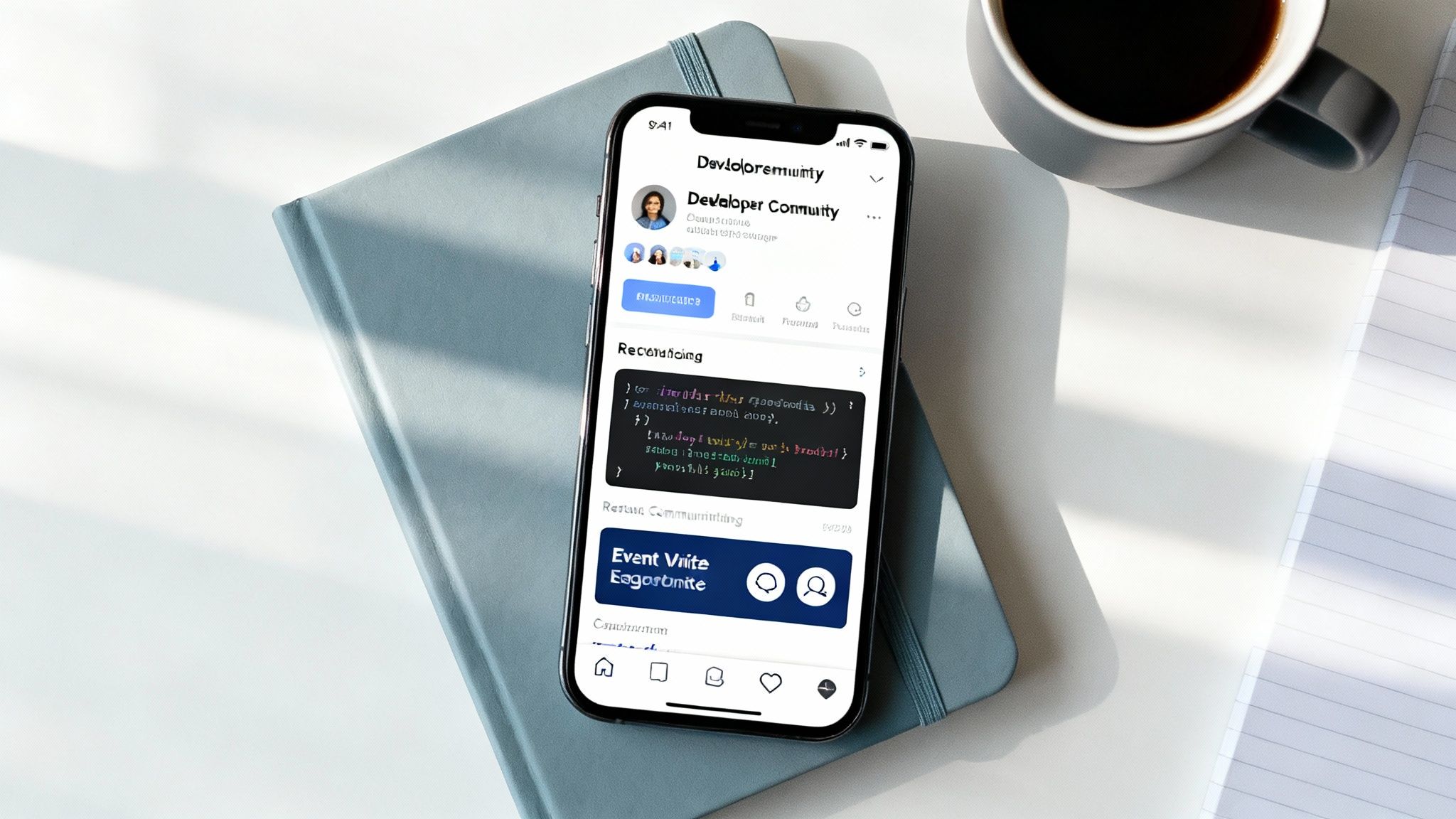
This is one of the most proactive recruitment marketing strategies because it allows you to build a warm talent pipeline before a role even opens. Companies like Vercel, with its active Next.js community, and Stripe, known for its deep engagement with the developer ecosystem, showcase how community-building translates directly into a high-quality talent funnel. They participate in conversations, share valuable insights, and become a trusted voice, making them an employer of choice.
How to Implement This Strategy
- Go Where Developers Are: While a polished LinkedIn page is important, invest time in platforms like GitHub, Stack Overflow, and relevant Discord servers. Encourage your engineers to contribute to open-source projects and answer technical questions authentically.
- Share Your Work: Post technical blog content, engineering wins, and case studies on Twitter and LinkedIn. Showcase the interesting problems your team is solving. This positions you as an innovator and attracts candidates who want to work on challenging projects.
- Host Live Events: Use Twitter Spaces or LinkedIn Live to host Q&A sessions with your engineering leaders or discussions on emerging tech trends. This provides a direct, unscripted line of communication with potential candidates.
Why It Works for Remote Hiring
Social media and online communities are the natural habitat for a globally distributed workforce. Actively participating in these spaces makes your company visible and accessible to candidates regardless of their location. It helps you build credibility within niche technical communities, reaching passive candidates who are not actively looking for jobs but are open to compelling opportunities. By engaging authentically, you demonstrate a culture of transparency and expertise, which is highly attractive to senior remote talent.
5. Targeted Job Advertising & Programmatic Recruitment
Targeted job advertising moves beyond a "post and pray" approach, using data to place your job openings in front of specific, highly relevant candidate profiles. Programmatic recruitment automates this process, using algorithms to bid for and place ads on platforms where your ideal candidates are most active, such as LinkedIn, Google for Jobs, and niche developer forums. For remote hiring, this precision is crucial for cutting through the noise and reaching qualified talent globally.
This strategy is one of the most effective recruitment marketing strategies for roles requiring specific skills or experience. Instead of waiting for candidates to find you, you proactively find them. Platforms like Appcast and PandoLogic optimize ad spend in real-time, while tools like LinkedIn Recruiter allow for granular targeting by skill, industry, and location. This ensures your budget is spent reaching individuals who are not just looking for a job, but the right job.
How to Implement This Strategy
- Define Your Ideal Candidate Persona: Before launching a campaign, create a detailed profile of your ideal hire. Include their technical skills (e.g., Python, AWS), experience level, and even the online communities they frequent, like Stack Overflow or specific subreddits.
- Leverage Platform-Specific Targeting: Use the unique features of each platform. On LinkedIn, target users by their listed skills and job titles. On Facebook, create lookalike audiences based on your current high-performing employees to find similar profiles.
- Optimize for Google for Jobs: Ensure your career page and job listings use structured data (Schema.org's
JobPostingmarkup). This helps your roles rank higher in Google's native job search results, driving direct, high-intent applicants.
Why It Works for Remote Hiring
Targeted and programmatic advertising allows you to overcome geographical barriers efficiently. You can run campaigns targeting specific time zones, countries, or regions where certain tech talent is concentrated, without a physical presence. It provides measurable ROI by tracking metrics like cost-per-click and cost-per-applicant, allowing you to continuously refine your campaigns for maximum impact and connect with top remote candidates who might not be actively browsing traditional job boards.
6. Candidate Experience Optimization, Recruitment Automation & Data-Driven Analytics
This multifaceted strategy focuses on creating a seamless, respectful, and efficient journey for every applicant while using technology and data to refine the process. It recognizes that in a competitive remote market, a negative candidate experience can damage your employer brand, while a positive one can turn applicants into advocates. By optimizing every touchpoint and automating communication, you ensure no candidate feels lost or ignored.

This approach combines the human-centric focus of great candidate experience with the efficiency of automation and the intelligence of analytics. Companies like Greenhouse and Lever have pioneered this by building platforms that not only track applicants but also facilitate personalized, automated communication and provide deep analytical insights. This turns recruitment from a reactive function into a proactive, data-informed strategic advantage. To streamline the hiring process and improve efficiency, consider leveraging specialized recruitment automation software.
How to Implement This Strategy
- Simplify the Application: Audit your application process. If it takes longer than five minutes to complete, you are losing top talent. Use tools like Typeform for a modern, mobile-first experience and only ask for essential information upfront.
- Automate Thoughtfully: Set up automated emails that confirm application receipt, provide timeline expectations, and update candidates as they move through stages. Use scheduling tools like Calendly to eliminate the back-and-forth of booking interviews.
- Track and Analyze Everything: Define key performance indicators (KPIs) such as time-to-hire, application completion rate, and source-of-hire. Use the analytics in your Applicant Tracking System (ATS) or tools like LinkedIn Talent Insights to identify bottlenecks and A/B test job descriptions.
Why It Works for Remote Hiring
For remote roles, the entire hiring process is digital, making the candidate experience a direct reflection of your company's operational excellence. A clunky, slow, or impersonal process suggests a disorganized remote environment. Conversely, a smooth, automated, and communicative process demonstrates that you have the infrastructure to support a thriving remote team. This positive experience sets the stage for a successful transition from candidate to employee, which you can continue with the best remote onboarding practices.
7. Niche Community Engagement & Partnerships
Engaging with niche communities involves building authentic relationships where your target candidates already gather online. Instead of broadcasting your roles widely, this strategy focuses on becoming a valued member of specific tech forums, professional associations, and identity-based networks. For remote companies, these digital communities are the equivalent of local meetups, offering a direct channel to connect with highly relevant talent.
This is one of the most effective recruitment marketing strategies for sourcing specialized or underrepresented talent. Companies like Zapier have long sponsored remote work communities, while others form deep partnerships with groups like Women Who Code or Out in Tech. The goal is not just to post jobs but to contribute value, build trust, and establish your company as a genuine supporter of the community’s goals.
How to Implement This Strategy
- Identify & Participate Genuinely: Identify 3-5 key communities aligned with your hiring needs. Encourage your current employees, especially engineers and leaders, to participate authentically by answering questions, sharing expertise, and engaging in discussions without a hard sell.
- Sponsor and Support: Move beyond just posting jobs. Sponsor a community’s newsletter, virtual event, or open-source project. This demonstrates a tangible commitment and elevates your brand's visibility with its most active members.
- Create Co-Branded Content: Partner with community leaders to host a joint webinar, workshop, or AMA (Ask Me Anything) session. This provides value to the members while positioning your team as industry experts and creating an authentic recruitment channel.
Why It Works for Remote Hiring
Niche communities allow you to connect with passive candidates who may not be actively searching on job boards but are deeply engaged in their craft. It’s a long-term play that builds a sustainable talent pipeline based on trust and shared values. By showing up where remote tech professionals learn and collaborate, you prove your company understands and respects their culture, making you an employer of choice before they even consider a new role.
8. SEO for Recruitment & Job Content Marketing
SEO for recruitment is the strategic process of optimizing your careers page, job descriptions, and related content to rank higher in search engine results. When a candidate types "remote senior backend engineer job" into Google, you want your open role to appear on the first page. This transforms your careers page from a passive portal into an active, organic candidate generation engine.
This is one of the most cost-effective, long-term recruitment marketing strategies you can implement. Instead of paying for every click or impression, you build a sustainable pipeline of inbound applicants who are actively searching for roles like yours. Companies like Zapier and GitLab excel at this, creating blog content around remote work and engineering challenges that captures search traffic and funnels it directly to their career pages. They answer the questions candidates are already asking.
How to Implement This Strategy
- Target Long-Tail Keywords: Don't just target "software engineer job." Optimize for specific, intent-driven phrases like "fully remote Python job with flexible hours" or "asynchronous senior product manager role." Use tools like Ahrefs or SEMrush to find these opportunities.
- Implement Job Posting Schema: Use
JobPostingstructured data (schema markup) on your job listings. This helps Google understand the details of your role (title, location, salary) and can enable your jobs to appear in special search features, like Google for Jobs. - Create Supporting Content: Write blog posts, guides, and FAQ pages that address common questions from remote job seekers. Topics like "How We Manage Remote Onboarding" or "A Day in the Life of a Remote Engineer" can attract high-quality candidates and build authority.
Why It Works for Remote Hiring
SEO captures candidates at the exact moment of intent, when they are actively looking for a new opportunity. For remote hiring, this is crucial because the talent pool is global, and search engines are the primary tool candidates use to navigate it. By optimizing for location-specific remote keywords (e.g., "remote developer Canada") or tool-specific searches ("React jobs at a remote company"), you attract a highly relevant audience. A solid SEO foundation ensures your company remains visible in a crowded digital marketplace, reducing your cost-per-hire over time.
9. Video Recruitment & Virtual Events
Video recruitment marketing involves using video content and virtual events to attract, engage, and screen candidates. In a remote-first world, this strategy replaces in-person career fairs and office tours, offering a dynamic and personal way to connect with a global talent pool. It allows you to showcase your company culture, explain complex roles, and build human connections, all without geographical constraints.
This is one of the most effective recruitment marketing strategies for distributed teams because it brings your remote workplace to life. Companies like Zapier use their YouTube channel to share employee stories and remote work tips, while Buffer has built a brand on transparency through its culture videos. These efforts move beyond a simple job description, giving candidates an authentic preview of what it's like to be part of the team.
How to Implement This Strategy
- Create Role-Specific Videos: Instead of a generic company video, create short (2-3 minute) overviews for high-priority roles. Have the hiring manager briefly discuss the team, the role's impact, and the ideal candidate profile.
- Host Virtual "Ask Me Anything" (AMA) Sessions: Schedule live Q&A events with team members from different departments. This allows candidates to ask direct questions about culture, tools, and daily workflows in an informal setting.
- Showcase Your Remote Stack: Film short screen-share videos demonstrating how your team collaborates using tools like Slack, Notion, or Asana. This provides tangible proof of a well-oiled remote infrastructure.
Why It Works for Remote Hiring
Video content and virtual events bridge the distance inherent in remote work. They offer a high-fidelity, engaging medium that builds trust and rapport far more effectively than text alone. For candidates, it provides a crucial window into your team's personality and work environment. This approach also helps standardize the initial screening process; tools like a pre-recorded video interview can provide a consistent and fair evaluation for every applicant, regardless of their location. Archiving these events also creates a valuable, on-demand content library for future candidates.
10. Passive Candidate Outreach & Talent Pipeline Building
Passive candidate outreach is the strategy of proactively engaging with qualified professionals who are not actively looking for a new job. Instead of waiting for applications, this approach involves building a long-term talent pipeline by nurturing relationships through consistent, valuable communication. For remote companies, this means finding top talent where they are most active, such as on LinkedIn, GitHub, or specialized tech communities.
This method is one of the most effective recruitment marketing strategies for securing hard-to-find technical talent. It shifts recruitment from a reactive to a proactive function, ensuring you have a pre-engaged pool of candidates when a role opens. Companies like Stripe are known for their effective GitHub-based recruiter outreach, while Google has long perfected the art of nurturing passive candidates, sometimes for years, before the right role becomes available.
How to Implement This Strategy
- Personalize Your Outreach: Generic messages are easily ignored. Reference a candidate’s specific GitHub project, a blog post they wrote, or their contributions on Stack Overflow. Show that you’ve done your homework.
- Build a Nurture Engine: Create a talent newsletter or an exclusive online community for professionals interested in your company. Share valuable content like tech talks, industry insights, and company culture updates, not just job openings.
- Leverage Professional Networks: Use platforms like LinkedIn Recruiter to identify and connect with ideal candidates. Focus on building a genuine connection first by engaging with their content before sending an outreach message.
Why It Works for Remote Hiring
Top remote talent often has the luxury of being selective; they may not be actively searching because they are content in their current roles. Proactive outreach allows you to get on their radar and build a relationship based on mutual respect and interest. It demonstrates that you value their specific skills and are willing to invest time in them, making your company a more compelling option when they eventually decide to make a move. This long-term approach fills your pipeline with high-quality, pre-vetted candidates who are already familiar with and interested in your brand.
Top 10 Recruitment Marketing Strategies Comparison
| Strategy | Implementation Complexity 🔄 | Resource Requirements ⚡ | Expected Outcomes ⭐ / 📊 | Ideal Use Cases 💡 | Key Advantages |
|---|---|---|---|---|---|
| Employer Branding & Company Culture Marketing | Moderate–High: ongoing internal alignment and content upkeep | Medium: storytelling, video, HR time | ⭐ Improved applicant quality; 📊 lower turnover, long‑term employer equity | Companies with strong Glassdoor ratings seeking culture‑fit remote hires | Attracts culture‑fit candidates, organic referrals, better retention |
| Content Marketing & Thought Leadership | High: consistent publishing and expertise coordination | High: writers, SMEs, promotion, event hosting | ⭐ Builds credibility; 📊 steady SEO & passive candidate inflow | Firms aiming to become industry authorities and attract passive talent | Long‑term traffic, trust building, multiple touchpoints |
| Referral Marketing & Employee Advocacy | Low–Medium: program setup and ongoing incentives | Low–Medium: bonuses, referral platform, comms | ⭐ Highest hire quality; 📊 fast time‑to‑hire, lower cost‑per‑hire | Companies with engaged teams and strong employee satisfaction | Fast hires, higher retention, authentic endorsements |
| Social Media Recruiting & Community Building | Medium: continuous engagement and moderation | Medium: community managers, content creation | ⭐ Pipelines of passive talent; 📊 growing brand visibility over time | Tech roles active on GitHub, Stack Overflow, Discord, Twitter | Direct access to passive candidates, authentic engagement |
| Targeted Job Advertising & Programmatic Recruitment | Medium: campaign setup and ongoing optimization | High: ad spend, tooling, analytics expertise | ⭐ Quick candidate volume; 📊 measurable ROI and attribution | Urgent hires, scale hiring across geographies and tech stacks | Precise targeting, fast launch, clear performance metrics |
| Candidate Experience Optimization & Recruitment Analytics | High: systems integration and continuous testing | High: ATS/tools, analytics, specialist time | ⭐ Higher completion & satisfaction; 📊 reduced time‑to‑hire, data‑driven gains | High‑volume hiring, improving conversion and employer brand | Better conversion, predictive insights, reduced bias |
| Niche Community Engagement & Partnerships | Medium: relationship building and sponsorships | Medium: sponsorship budgets, staff time | ⭐ Higher‑quality, targeted applicants; 📊 stronger D&I outcomes over time | Specialized roles, underrepresented talent sourcing, vertical hiring | Access to pre‑filtered talent, authentic community goodwill |
| SEO for Recruitment & Job Content Marketing | Medium–High: technical + content effort over months | Medium: SEO skills, content production | ⭐ Sustained organic visibility; 📊 high‑intent candidate traffic | Long‑term hiring strategies, capturing search demand for remote roles | Cost‑effective long term, captures high‑intent applicants |
| Video Recruitment & Virtual Events | Medium: production plus live event coordination | Medium–High: recording equipment, editors, hosts | ⭐ Higher engagement and cultural fit assessment; 📊 improved apply rates | Remote‑first companies and global candidate pools | Personal connection at scale, shareable culture proof |
| Passive Candidate Outreach & Talent Pipeline Building | High: personalized outreach and long‑term nurturing | High: sourcers, CRM, cadence management | ⭐ Access to top passive talent; 📊 higher offer acceptance when ready | Senior roles, scarce skills, building future pipelines | High‑quality candidates, faster hires when roles open |
Building a Recruitment Engine That Attracts the Best
Navigating the competitive landscape of remote tech hiring requires more than just posting a job and hoping for the best. As we've explored, success hinges on building a powerful, multi-faceted recruitment engine. The collection of recruitment marketing strategies detailed in this guide, from crafting an authentic employer brand to leveraging data-driven analytics, are not just individual tactics. They are interconnected gears in a system designed to attract, engage, and convert top-tier talent.
Thinking of these strategies as a cohesive system is the key to unlocking their true potential. Your content marketing efforts fuel your social media engagement, which in turn strengthens your employer brand. Your optimized candidate experience validates the promises made in your job ads, and your referral programs bring in candidates who are already aligned with your culture. It's a virtuous cycle where each component amplifies the others.
Key Takeaways: From Strategy to Execution
To transform these concepts into a high-performing recruitment function, focus on these core principles:
- Authenticity is Your North Star: Top remote talent isn't just looking for a paycheck; they're looking for a mission they can believe in and a culture where they can thrive. Let your genuine company culture shine through in your employer branding, content, and every candidate interaction.
- Meet Talent Where They Are: Don't wait for candidates to find you. Proactively engage with them on niche social platforms, in specialized communities, and through targeted advertising. Passive candidate outreach and building a talent pipeline ensure you're always connected to great people, even when you're not actively hiring for a specific role.
- Experience is Everything: A clunky, impersonal application process can undo all your hard work. Optimizing the candidate experience with clear communication, automation, and a human touch demonstrates respect and professionalism, making your company an employer of choice.
- Data is Your Co-Pilot: Don't guess what's working. Use analytics to measure the performance of your job ads, track source-of-hire, and understand your conversion funnels. Data-driven insights allow you to refine your recruitment marketing strategies, double down on successful channels, and maximize your return on investment.
Your Actionable Next Steps
Feeling overwhelmed? You don't have to implement everything at once. The most effective approach is iterative and focused. Start by identifying the biggest bottleneck in your current hiring process.
- Conduct a Quick Audit: Where are you losing the most candidates? Is it at the awareness stage, the application stage, or the interview stage?
- Choose One or Two Strategies: Pick the strategies from this article that directly address your biggest challenge. If you're not getting enough applicants, focus on targeted job advertising or SEO for recruitment. If your offer acceptance rate is low, double down on employer branding and candidate experience.
- Measure and Adapt: Set clear goals for your chosen initiatives. Track key metrics, analyze the results, and be prepared to pivot. This continuous improvement loop is what separates good recruitment from great recruitment.
Ultimately, the goal is to shift from a reactive hiring model to a proactive talent attraction ecosystem. To fully grasp the proactive approach of attracting talent, understanding what is recruitment marketing and its impact is foundational. By thoughtfully combining employer branding, targeted outreach, and an exceptional candidate journey, you create a sustainable advantage that consistently brings the best remote professionals to your digital doorstep. This is how you build not just a team, but a thriving, globally-distributed workforce poised for future success.
Ready to put these strategies into action and connect with a curated pool of top remote talent? RemoteWeek vets both companies and candidates to ensure a perfect fit, making your recruitment marketing efforts more effective by targeting an audience that's already looking for a company like yours. List your remote roles on RemoteWeek today and start building your world-class team.