
The Ultimate Guide to Work From Home Reviews

When you're looking for a remote job, work from home reviews are your single best tool for figuring out what a company is really like. Think of them as an unofficial background check you run on a potential employer. They help you see past the polished job description and discover which companies genuinely support remote work and which ones just hand you a laptop and call it a day.
Why Remote Work Reviews Matter More Than Ever

Jumping into the remote job market can feel like navigating a massive, bustling city without a map. There are opportunities everywhere, but it's also easy to get lost in misleading claims and dead ends. The sheer number of choices can be paralyzing, making it tough to tell a dream job from a digital disaster.
This is exactly why learning how to read work from home reviews is no longer just a good idea—it's a crucial skill for any serious remote job seeker.
The New Reality of Remote Work
The move to remote and hybrid work has completely changed the game. By 2025, experts predict that 32.6 million Americans will be working remotely. We're also seeing remote positions make up over 15% of all U.S. job postings, a huge leap from the 4% we saw before the pandemic.
This boom means more companies are vying for your skills, and reviews have become the most reliable way to learn what it's actually like to work for them. You can dive deeper into these trends with recent labor-market analyses.
Here’s a good way to think about it: For a traditional job, you get to visit the office and get a feel for the place. For a remote job, employee reviews are your virtual tour guide, walking you through the digital hallways and showing you the company’s real culture.
Looking Past the Star Ratings
This guide will teach you how to analyze reviews like a detective, piecing together clues to understand a company's true remote environment. Forget just glancing at the star rating; we'll give you a framework for digging deeper into the feedback. You’ll learn to spot patterns, recognize red flags, and use what employees are saying to make a career choice you feel good about.
We want to give you the skills to:
- See if a company is truly remote-first: Do they just tolerate remote work, or do they build their culture around it?
- Evaluate their management and communication: Are managers actually trained to lead teams they don't see in person?
- Check the real work-life balance: Do employees feel they have genuine flexibility, or are they expected to be online 24/7?
By the time you're done, you won't just be reading reviews—you'll be decoding them to find a remote job that genuinely fits your life.
Why Reviews Are Your Window into Remote Culture
If you're considering an in-office job, you can learn a ton from a quick visit. You get to see how people talk to each other, feel the buzz of the office, and get a real sense of the company’s vibe. When it comes to remote roles, you’re often flying blind.
This is where work from home reviews become your most powerful tool. They provide a rare, unfiltered look at what it’s really like to work there day in and day out, long after the onboarding is over. These reviews aren't just a collection of star ratings; they're your window into the company's digital soul.
Think of reviews as a way to read a company's "digital body language." A job post might shout about flexibility and a vibrant team, but employee feedback is what tells you the truth behind the marketing copy. These firsthand accounts reveal the unwritten rules of the road for that specific company.
Uncovering the Unwritten Rules
Reviews are where you find the answers to questions a job description would never touch. They shine a light on the small details that make or break a remote experience.
You can start to piece together a clear picture of things like:
- Communication Flow: Are teams buried in back-to-back Zoom calls, or do they thrive on thoughtful, asynchronous communication? Reviews will tell you if the flow is clear and respectful or just plain chaotic.
- Real-World Flexibility: Does "flexible hours" actually mean you can build a schedule that works for you? Or is it code for being on-call 24/7? Employee stories expose any pressure to answer late-night Slacks and weekend emails.
- The Tech Stack: Are you getting modern, efficient tools that make your job easier, or will you be stuck wrestling with outdated, clunky software?
- Leadership Style: How do managers actually lead from a distance? Reviews quickly separate the leaders who trust and empower their teams from those who lean toward micromanagement.
Getting a handle on how a company’s management operates remotely is crucial. You can explore some essential remote team management tips to get a better sense of what a healthy, supportive structure looks like.
The Flexibility Tug of War
The demand for remote work hasn't cooled off, and it's creating a fascinating tug of war in the job market. This tension between what employees need and what companies are willing to offer makes reviews more critical than ever for finding a genuine fit.
The numbers paint a clear picture. About one-third of professionals want a fully remote job, period. The stakes are high for companies, too—46% of employees say they’d think about quitting if forced to give up working from home. Despite this, some organizations are digging in their heels, with 72% now enforcing some type of office attendance policy.
This clash means you simply can't take a company's "remote-friendly" claims at face value. Reviews are where the truth comes out—where you learn if a company's talk of autonomy and trust actually matches the daily reality.
Diving into reviews helps you sidestep jobs that look great on paper but feel isolating or micromanaged in practice. By paying close attention to what current and former employees are saying, you can find an organization that doesn’t just allow remote work but actively cultivates a strong, connected, and supportive remote working culture.
It all comes down to finding a company that genuinely invests in its people, no matter where they happen to log in from.
How to Analyze Reviews Like a Pro

It’s easy to glance at a company’s star rating and move on, but if you want the real story, you need to dig deeper. Think of yourself as an investigator. Each review is a clue, and your job is to piece them together to see what a company’s remote culture is actually like, day in and day out.
A single bad review about a micromanager? It could just be a one-off personality clash. But when you start seeing five, ten, or fifteen different people mentioning the same thing over the past year, you've found a pattern. That’s when an anecdote turns into evidence.
Look for the Patterns, Not Just the Stories
Instead of getting lost in one person’s dramatic tale, zoom out and search for recurring themes. A company's true culture—good or bad—always leaves a trail of consistent feedback.
Try to group what you're reading into a few key buckets:
- Management and Leadership: Are managers consistently described as supportive and trusting? Or does the theme of poor communication and micromanagement keep popping up?
- Work-Life Balance: Look for phrases like “respect for your time” or “truly flexible.” These are worlds apart from repeated complaints about “pressure to always be online” or “last-minute deadlines.”
- Career Growth and Development: Do people talk about learning new skills and moving up? Or is the common thread a feeling of being stuck with no clear path forward?
These themes give you a far more accurate picture than any single 5-star or 1-star review ever could.
Don’t Put All Your Eggs in One Basket
You wouldn't make a major life decision based on one person's opinion, so why do it with a job? Smart job seekers cross-reference their intel from multiple sources. It’s a classic investigative technique called triangulation, and it's your best friend when vetting remote companies.
Never rely on a single review site. A company might have a squeaky-clean 4.5-star rating on one platform while another is littered with red flags. Seeing both sides gives you a 360-degree view that’s much harder for a company to game.
Learning the basics of monitoring online reviews can give you a professional edge in your search. Different platforms attract different kinds of reviewers, and comparing them is how you build a complete picture. To get started, check out our guide on the top company review websites to learn where to focus your efforts.
A Quick Checklist for Digging Deeper
As you read, keep an eye out for specifics. Vague comments about "culture" are less useful than concrete details about how the company actually operates.
Use this checklist to focus your investigation:
- The Onboarding Experience: How does the company bring new remote hires into the fold? A structured, welcoming onboarding process is a massive green flag. Vague or chaotic stories signal disorganization.
- Tools and Tech: Do people seem happy with the software they use every day (like Slack, Asana, or a modern CRM)? Or are they constantly fighting clunky, outdated tech that makes their work harder?
- The Meeting Culture: Are meetings described as focused and productive? Or is “Zoom fatigue” from endless, pointless calls a common complaint?
- Team Connection: Does the company actually try to build a sense of community? Look for mentions of virtual hangouts, team-building events, or other intentional efforts to connect a distributed team.
By looking for these specific details, you stop being a passive reader and become an active investigator. This methodical approach helps you cut through the noise, figure out what really matters in a remote role, and find a company that’s genuinely a good fit.
Spotting Red Flags in Remote Job Reviews
Not every work from home review you read is the real deal. While most offer a genuine window into a company's culture, others are nothing more than smoke and mirrors. You need to put on your detective hat and learn to separate honest feedback from the fluff and the outright fakes. A little healthy skepticism is your best tool for dodging a bad career move—or worse, a clever job scam.
This means training your eye to catch the subtle tells of a fabricated positive review and the massive, waving red flags of a potential fraud. Fake praise is often a calculated move to bury real criticism, while scam artists use reviews to build a convincing but completely false front. If you're not paying attention, both can lead you astray.
The Problem of Fake Positive Reviews
Ever see a company with a questionable reputation suddenly get a tidal wave of glowing, five-star reviews? That should make you pause. It’s a common tactic to drown out legitimate negative feedback with a flood of manufactured praise.
These fake reviews almost always have a few things in common. They’re usually thin on details and packed with generic, marketing-style buzzwords. You're looking for comments that sound less like a real person's experience and more like they were lifted straight from an ad brochure.
- Vague Praise: Watch out for phrases like "amazing culture" or "great team" that aren't backed up by a single concrete example.
- Identical Phrasing: See multiple reviews posted around the same time using strangely similar language or sentence structures? That’s a huge warning sign.
- Reviewer History: A reviewer with only one post to their name—a single, beaming review—is far less credible than someone with a history of balanced feedback on multiple companies.
A real positive review has texture and detail. A happy employee might mention a specific project they loved, give a shout-out to a supportive manager by name, or describe a company policy that actually made a difference in their life. Fake reviews almost never have that personal touch.
When Reviews Signal a Job Scam
Beyond just spotting fake praise, work from home reviews are your first line of defense against straight-up job scams. Scammers will go to great lengths to appear legitimate, including creating fake company profiles and seeding them with phony reviews to lure you in. These schemes are designed to prey on your enthusiasm, and the fallout can be devastating.
Getting familiar with the classic warning signs is the best way to protect yourself. For a deeper dive, our guide on avoiding remote job scams is packed with essential tips to keep your job hunt safe. The most serious red flags almost always involve requests for money or sensitive personal information way too early in the process.
Let's be clear: a legitimate company will never ask you to pay for your own training, equipment, or background check. If you see any mention of an upfront fee in a review or job post, run. It's the oldest trick in the scammer's playbook, designed to take your money, not give you a job.
Your Red Flag Reference Guide
To help you quickly sort the good from the bad, we've put together a reference guide. Think of this table as your go-to checklist. When you see one of these red flags in a review or job listing, it’s your cue to stop, dig deeper, and be very careful about your next move.
Common Red Flags in Remote Work Reviews and Listings
| Red Flag | What It Could Mean | Your Next Step |
|---|---|---|
| Request for Payment | The "job" is likely a scam designed to steal your money for fake training, software, or background checks. | Stop all communication. Do not send any money. Report the listing on the platform where you found it. |
| Overly Vague Job Duties | The role may not be real, or the company is disorganized and doesn't have a clear plan for the position. | Ask for specifics. Request a detailed job description or ask pointed questions about daily tasks during the interview. |
| Sudden Flood of 5-Star Reviews | The company may be trying to artificially boost its rating to hide a pattern of genuine negative feedback. | Filter reviews by date. Look for the negative reviews that prompted the sudden positive wave and analyze them for patterns. |
| Pressure to Act Immediately | Scammers create a false sense of urgency to prevent you from doing your research and spotting their red flags. | Slow down. A legitimate employer will respect your need to consider an offer. Never let pressure rush your decision. |
| Use of Personal Email | Communication from a generic email address (like Gmail or Yahoo) instead of a professional company domain is highly unprofessional and a common scam tactic. | Verify the company. Find the official company website and look for a careers page or contact information to confirm the opening is real. |
When you start treating review analysis as a non-negotiable part of your job search, you put yourself in the driver's seat. You’ll learn to trust the patterns, question the outliers, and confidently walk away from any opportunity that just doesn't feel right. This careful approach doesn't just save you from scams; it points you toward the companies that are truly worthy of your time and talent.
Your Action Plan for Vetting Remote Companies
Alright, you've learned how to read reviews. But how do you turn all that information into a confident "yes" or "no"? It’s time to move from just reading to actually doing. Let's walk through a repeatable plan you can use for every single remote job you consider. This isn't about guesswork; it's a methodical way to cut through the noise.
Think of it like putting together a puzzle. A review is one piece. A news article is another. A social media post from an employee adds more to the picture. Your goal is to gather enough of these pieces to see the company for what it really is—not just the polished version on its careers page.
This simple flow breaks it down: you find the feedback, figure out what it means, and then decide what to do next.
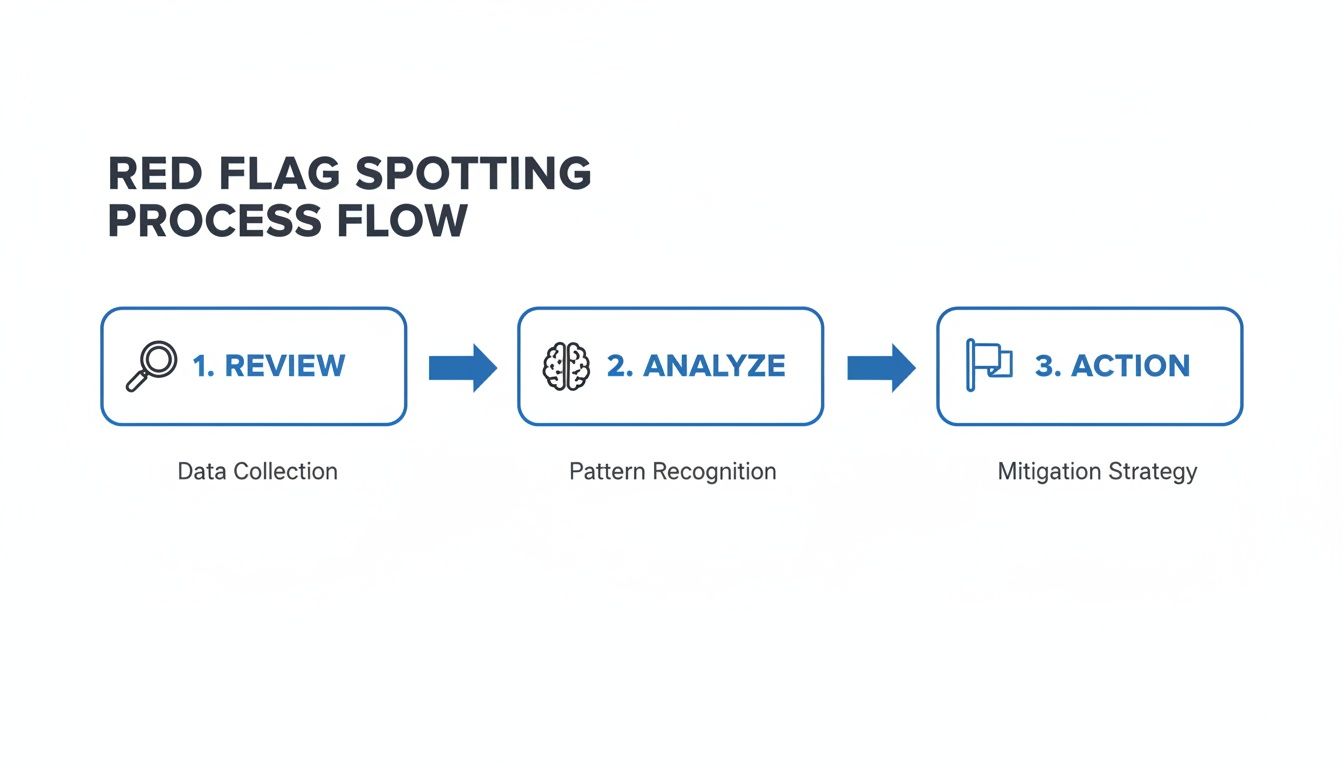
This process makes sure you're not just passively scrolling through reviews. You're actively using them to protect yourself and make a smart career move.
Phase 1: The Initial Scan and Triage
First things first: the quick check. Before you spend hours tweaking your resume and writing a cover letter, take five minutes to see if the company even passes the initial smell test. This is all about being efficient and weeding out the obvious mismatches right away.
- Check Overall Ratings: Head over to a major platform like Glassdoor. What’s the company’s overall score? At RemoteWeek, we consider a 3.5-star rating a decent baseline. It usually means the employee experience is more positive than not. If it's hovering below that, proceed with caution.
- Skim Recent Reviews: Read the five most recent work from home reviews. Are they a train wreck of negativity? A sudden string of bad feedback can be a huge red flag, hinting at a recent culture shift or a policy change that went horribly wrong.
This isn't about making your final call. It's simply about deciding if this company is worth more of your valuable time. If it passes this quick scan, you can dig deeper with a bit more confidence.
Phase 2: The Deep Dive and Cross-Referencing
Okay, now it’s time to put on your detective hat. This is where you connect the dots and build a real picture of the company’s remote culture. The golden rule here? Never rely on a single source. You need to look at the evidence from multiple angles to get the real story.
- Look for Themes: Stop reading individual comments and start hunting for patterns. Are multiple people bringing up micromanaging bosses, terrible communication, or, on the flip side, amazing work-life balance? These recurring themes are your most reliable intel.
- Search for Company News: Do a quick Google News search. Have they had major layoffs recently? A big change in leadership? Or maybe they just won an award for being a great place to work? This kind of context is gold.
- Check Social Media: Take a look at the company's LinkedIn page. How do they talk about their own culture? Even more telling, click on the profiles of current employees. Do they seem engaged? How long have they been sticking around? A high turnover rate is a quiet but powerful warning sign.
By blending employee reviews with public information, you get a much more balanced picture. A company might have a handful of angry ex-employees, but if current staff are celebrating work anniversaries on LinkedIn and the company is winning 'best workplace' awards, you know the story is more nuanced.
Phase 3: Prepare for the Interview
All this research isn't just for you. It's your secret weapon for the interview. When you've done your homework, you can ask sharp, specific questions that show you're serious about finding the right fit, not just any job.
Forget asking a generic question like, "So, what's the culture like?" You can do so much better.
Example of an informed question:
"I noticed in a few reviews that your team is distributed across several time zones. Could you tell me a bit about the specific communication strategies you have in place to ensure everyone feels connected and included?"
An approach like this completely changes the dynamic. The interview becomes a two-way street, not an interrogation. You're not just trying to get an offer; you're confirming if this is a company where you can actually be happy and successful. This simple plan turns your research into a real strategic advantage, giving you the confidence to find and land a remote job you'll love.
Answering Your Questions About Work From Home Reviews
Even with a solid plan, trying to figure out work from home reviews can feel a bit like detective work. You’ll probably have some questions pop up along the way. Getting good answers is what helps you separate the good opportunities from the bad ones.
Let's clear up some of the most common questions people have.
How Much Should I Trust Anonymous Reviews?
Think of anonymous reviews as clues, not gospel. Their real value isn't in one person's dramatic takedown or glowing praise, but in the patterns you see across multiple comments.
A single bad review? It could just be a disgruntled employee or a one-off bad experience. But when you start seeing ten reviews from the last year all circling the same issue—like terrible communication from management—you’ve likely stumbled upon a real problem.
A single review is just a snapshot. A collection of consistent reviews is more like a documentary. Use them to arm yourself with smart questions for your interview, not to make a final call on the spot.
What Are the Best Platforms for Reliable Company Reviews?
Don't put all your eggs in one basket. Relying on a single review site gives you a skewed, incomplete picture of what a company is really like.
The smartest approach is to piece together the full story from a few different places:
- Start Broad: Kick things off with the big players like Glassdoor and Indeed. They have a massive volume of reviews, which gives you a good feel for the general consensus.
- Go Deeper: Next, dig into industry-specific forums or Reddit communities. Subreddits like r/remotework often have refreshingly candid and detailed conversations you won't find anywhere else.
- Verify Legitimacy: Finally, use a curated job board like RemoteWeek to cross-check the company. Seeing a company listed there is a good sign that it's established and cares about its reputation.
By combining these sources, you get a much more balanced and realistic perspective, helping you see past the polished marketing spiel.
What Should I Do If a Company Has No Online Reviews?
Don't panic! A complete lack of reviews isn't necessarily a red flag, especially for a newer startup or a smaller business that just hasn't been on the radar long. It just means you need to put on your investigator hat.
Without reviews to guide you, your attention should shift elsewhere. Dig into the company's website. Check out the LinkedIn profiles of current employees—what's their tone? How long have they been there? You're looking for clues about their culture and stability.
Most importantly, the interview becomes your prime opportunity for fact-finding. This is your chance to ask direct questions about their remote work policies, how teams actually communicate, and what a successful person in this role looks like. The answers they give will be the most valuable intel you get.
How Can I Spot a Fake Positive Review?
You can usually smell a fake positive review from a mile away. It often reads less like a real person's experience and more like a press release. The biggest giveaway is a complete lack of specifics.
Be on the lookout for generic, over-the-top language packed with buzzwords like "game-changer" or "we're like a family," but with zero examples to back it up. It’s also a good idea to check the reviewer's profile. Is it brand new with only that one review? That’s suspicious. Another huge red flag is a sudden burst of 5-star reviews all posted around the same time—a classic move to drown out a recent wave of negative feedback.
Ready to find a remote job at a company you can actually trust? RemoteWeek only lists jobs from top-tier, employee-focused companies with a proven history of building great cultures. Start your search for high-quality remote roles and find a job you’ll love.