
7 Top Resources to Find the Best Tech Companies to Work For in 2025

The search for the 'perfect' tech job can feel overwhelming. Endless scrolling, generic job descriptions, and uncertainty about company culture make it tough to find a role that truly fits. The good news is you're not just looking for a paycheck; you're seeking one of the best tech companies to work for—an employer that values work-life balance, invests in your growth, and fosters a positive, remote-first environment. But how do you separate the genuinely great from the merely good?
This guide cuts through the noise. We've compiled the seven most effective resources and platforms that provide the data, insights, and direct connections you need to identify and land a role at a top-tier tech company. We'll explore how to leverage employee reviews on Glassdoor, network effectively on LinkedIn, and decode compensation data on Levels.fyi. Each entry is designed to give you a strategic advantage, moving beyond simple job postings to provide a holistic view of potential employers.
Forget the guesswork. It's time to build a targeted strategy for finding a remote tech job you'll love. In this comprehensive roundup, you will discover how to use each platform to its full potential, complete with actionable tips, direct links, and screenshots to guide your search. We will cover how to filter for the roles you want, evaluate company culture based on real employee feedback, and benchmark salary expectations to ensure you're compensated fairly. Let's find your next great opportunity.
1. Glassdoor: The Employee-Powered Truth Detector
Before you even start applying, effective research is the foundation for finding the best tech companies to work for. This is where Glassdoor excels, serving as an indispensable due diligence platform. It moves beyond glossy career pages and corporate marketing to give you direct access to the unfiltered opinions of current and former employees. Think of it as your inside source for company culture, compensation realities, and leadership effectiveness.
Glassdoor’s power lies in its massive, user-generated database. Instead of relying on a company's self-reported perks, you can read anonymous, candid reviews that offer a more authentic picture. This transparency is its core differentiator, allowing you to validate whether a company truly lives up to its promises of great work-life balance or a supportive environment.
Key Features for Your Job Search
- Employees’ Choice Awards: Every year, Glassdoor releases its "Best Places to Work" list based entirely on employee feedback. This is an excellent starting point for building a shortlist of highly-rated employers.
- Detailed Company Profiles: Dive deep into a company’s ratings, broken down by categories like Culture & Values, Diversity & Inclusion, Work-Life Balance, and Senior Management. You can even see the CEO's approval rating.
- Salary and Benefits Data: Get role-specific salary estimates submitted by actual employees. This data helps you benchmark your own expectations and negotiate with confidence. You can also see detailed reviews of benefits packages, from health insurance to parental leave policies.
- Interview Insights: Prepare for interviews by reading questions asked in previous hiring processes for specific roles. This feature demystifies the interview experience and helps you anticipate what’s coming.
How to Use Glassdoor Effectively
To get the most out of the platform, don't just look at the overall star rating. Filter reviews by job function and recency to find feedback that is most relevant to your situation. Pay close attention to recurring themes in both positive and negative reviews, as this often points to systemic cultural traits.
Pro Tip: Use the "Compare Companies" feature to see a side-by-side analysis of up to two employers. This tool is invaluable for making a final decision between two promising job offers, comparing everything from salaries to culture ratings.
While the core features are free, some in-depth salary details or interview questions may require you to sign up and contribute an anonymous review or salary data point of your own. This "give-to-get" model helps maintain the quality and volume of the data. For more strategies on leveraging platforms like this, you can explore a deeper analysis of company review websites.
Website: https://www.glassdoor.com
2. LinkedIn: The Professional Network Powerhouse
While Glassdoor uncovers what it's really like to work somewhere, LinkedIn shows you the path to getting your foot in the door. As the world’s largest professional network, it’s more than just a job board; it's a dynamic ecosystem for building connections, showcasing your expertise, and engaging directly with the best tech companies to work for. Think of it as your digital handshake and personal branding platform, all in one.
LinkedIn’s core advantage is its focus on professional identity and network-driven opportunities. Instead of just passively applying, you can leverage your existing connections for warm introductions and discover alumni from your school who work at your target companies. This ability to humanize the job search process is its key differentiator, helping you stand out from the hundreds of other applicants in a crowded digital queue.
Key Features for Your Job Search
- Top Companies List: Similar to Glassdoor, LinkedIn publishes an annual "Top Companies" list based on data-driven metrics like skills growth, company stability, and employee advancement. It's a fantastic resource for identifying employers that invest heavily in their talent.
- Powerful Job Search and Alerts: The platform’s search functionality is incredibly robust, allowing you to filter for remote roles, specific salary brackets, and skills matches. You can save these searches and receive real-time alerts when a new role that fits your criteria is posted.
- Network and Alumni Visibility: On any company page, you can instantly see who you’re connected to that works there, as well as alumni from your university. This is invaluable for securing referrals, which significantly increase your chances of landing an interview.
- Premium Applicant Insights: With a Premium subscription, you gain access to AI-powered features that help tailor your resume to a job description and see how you stack up against other applicants based on skills and experience.
How to Use LinkedIn Effectively
Your profile is your foundation. Ensure it is complete, keyword-optimized, and tells a compelling story about your professional journey. Don't just apply using the "Easy Apply" button; use the platform to find the hiring manager or a team member and send a personalized connection request or InMail message. Engage with content from your target companies to stay on their radar.
Pro Tip: Turn on the "Open to Work" feature and set its visibility to "Recruiters only." This privately signals to recruiters that you are actively looking without alerting your current employer, putting you in a prime position to be contacted for relevant opportunities.
The core features of LinkedIn are free, but accessing advanced tools like InMail credits and competitive applicant insights requires a Premium subscription (which often includes a free trial). A well-crafted profile is crucial, and you can find more strategies for making yours stand out by exploring how to optimize your LinkedIn profile for success.
Website: https://www.linkedin.com
3. Fortune: The Gold Standard for Workplace Culture
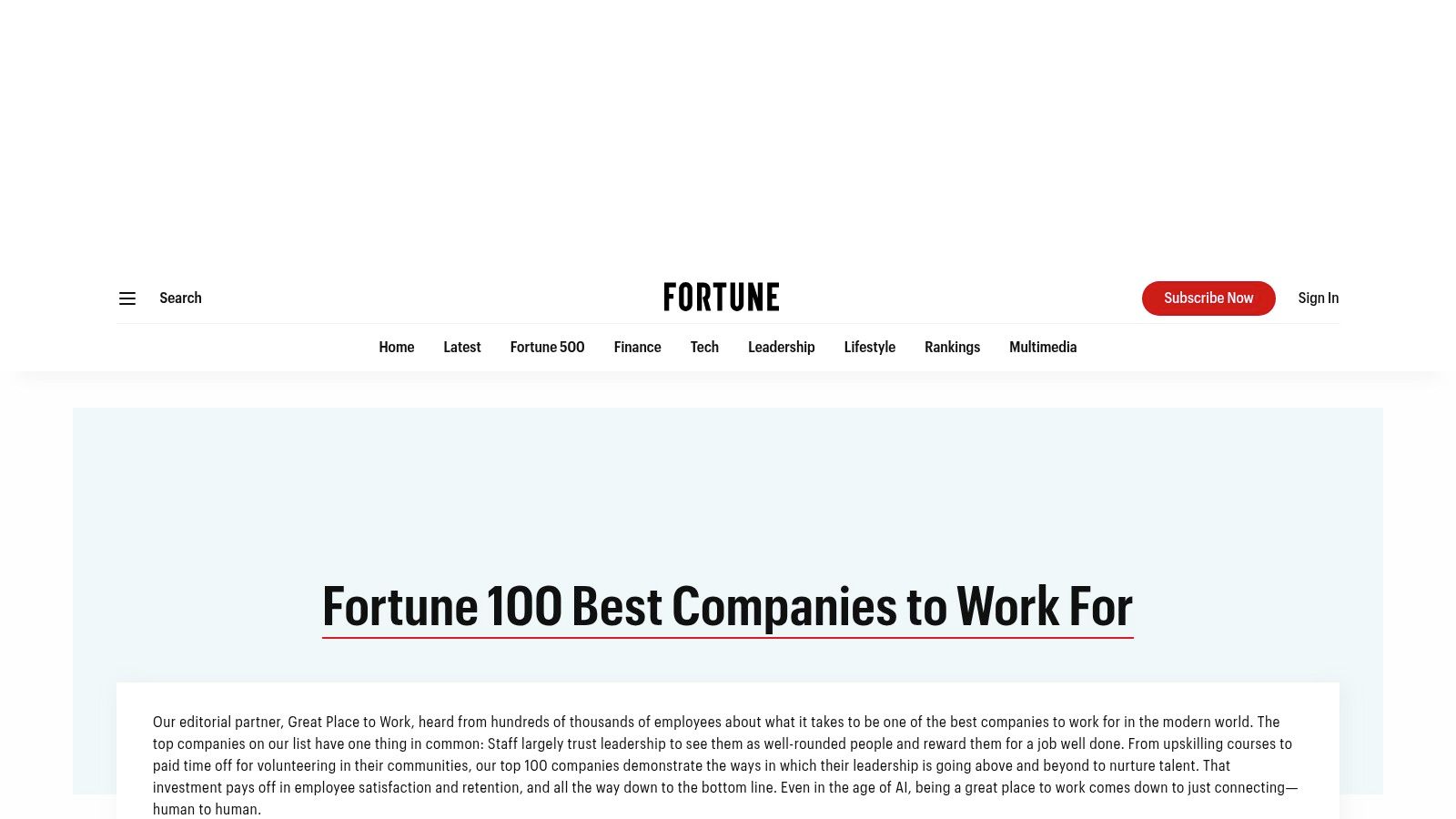
While many platforms focus on individual reviews, Fortune’s annual "100 Best Companies to Work For" list provides a macro-level, research-backed perspective. In partnership with Great Place to Work, Fortune’s list is built on a rigorous methodology that includes extensive employee surveys and deep dives into company culture. This makes it a powerful tool for identifying employers who have a proven, long-term commitment to employee well-being and a positive work environment.
For those searching for the best tech companies to work for, this list serves as a pre-vetted directory of excellence. It highlights companies that not only offer great perks but also excel in areas like trust, fairness, and camaraderie. Fortune’s editorial write-ups add valuable context, telling the story behind the numbers and giving you a feel for what makes each company unique.
Key Features for Your Job Search
- Annual "100 Best Companies to Work For" List: The flagship list is a highly anticipated annual ranking that sets the standard for workplace culture. It's a fantastic starting point for building a list of aspirational employers.
- Industry and Thematic Filters: Fortune publishes numerous related lists, allowing you to filter for the best workplaces in tech, for millennials, for diversity, and by region. This helps you narrow your focus to companies that align with your specific criteria.
- Transparent Methodology: The site provides clear insights into how companies are evaluated through its partnership with Great Place to Work. This transparency builds trust and helps you understand the weight behind the rankings.
- Editorial Deep Dives: Each ranked company receives an editorial profile that goes beyond simple statistics, offering qualitative insights into its culture, benefits, and employee-first initiatives.
How to Use Fortune Effectively
Start with the main list to identify large, culturally celebrated companies, then use the industry-specific filters to uncover dedicated tech leaders. While Fortune isn’t a job board, the profiles often link directly to the companies' career pages. Use the list as a high-level discovery tool to build a shortlist of employers, then use platforms like Glassdoor or LinkedIn to investigate specific roles and employee feedback.
Pro Tip: Look at a company’s history on the list. A company that consistently ranks year after year demonstrates a sustained commitment to its culture, which is often a more reliable indicator than a one-time appearance.
Access to the list and its accompanying articles is free, although some deeper content on Fortune’s site may be behind a paywall. The rankings themselves are a powerful, no-cost resource for any job seeker. To see how these top-ranked employers compare, check out our roundup of the best remote companies to work for.
Website: https://fortune.com/ranking/best-companies/
4. Great Place To Work: The Gold Standard for Certified Culture
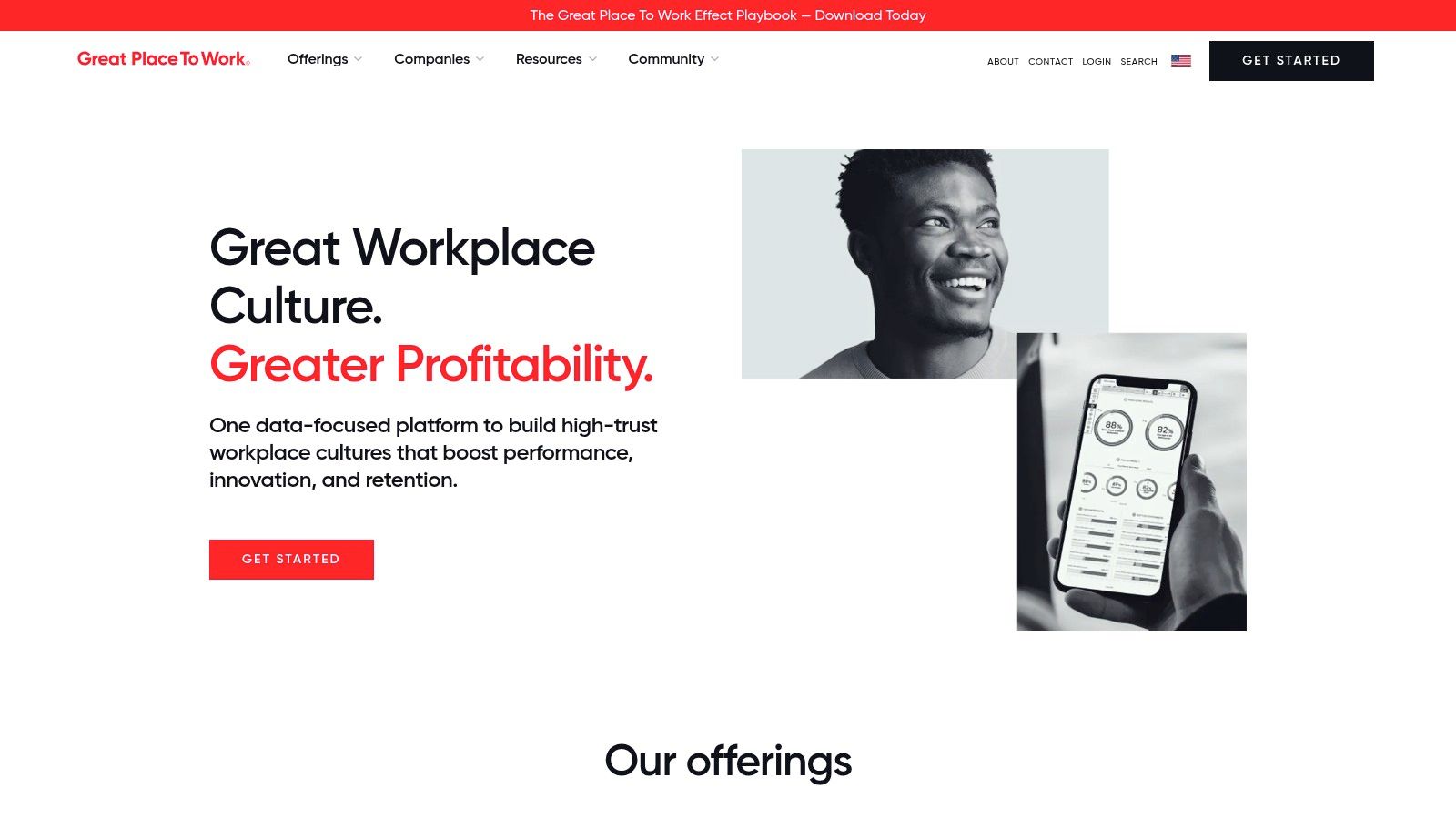
While many platforms rely on anonymous reviews, Great Place To Work (GPTW) offers a different, more structured approach to identifying the best tech companies to work for. As the global authority on workplace culture, GPTW uses rigorous, data-driven methodology to certify companies, moving beyond sentiment to provide a statistical measure of employee trust and satisfaction. This makes it a powerful tool for vetting employers who have invested in and proven their commitment to a positive work environment.
Its distinction lies in its certification process. Companies aren't just listed; they must undergo a comprehensive employee survey and a detailed culture audit. This means that a "Great Place To Work Certified™" badge is a reliable signal that a company has met a high bar for employee experience, making your search for quality employers more efficient.
Key Features for Your Job Search
- "Best Workplaces in Technology" Lists: GPTW publishes annual lists specifically for the tech industry, broken down by company size (large and small/medium). These lists are a prime resource for finding top-tier, pre-vetted tech employers.
- Detailed Certification Profiles: When a company is certified, you can access its public profile. This often includes anonymized, aggregate data from their employee surveys, highlighting strengths in areas like camaraderie, fairness, and leadership credibility.
- Methodology Insights: The platform is transparent about its evaluation criteria, which are based on the "Trust Index™" survey. Understanding this helps you appreciate what a certification truly represents, focusing on concepts like respect, pride, and fairness.
- Global and Thematic Lists: Beyond tech, you can explore lists like "World's Best Workplaces" or lists for parents and millennials, which can help you find companies that align with your specific values or life stage.
How to Use Great Place To Work Effectively
Start by exploring the "Best Workplaces in Technology" list for the most recent year. From there, click into the individual company profiles to understand why they made the list. Look for the percentage scores in different cultural areas to see where a company truly shines. While it isn't a job board, these profiles almost always link directly to the company's career page.
Pro Tip: Use the certification as a vetting tool. If a company claims a fantastic culture on their careers page, cross-reference it with GPTW. If they have earned a certification, it adds a significant layer of credibility to their marketing claims.
The platform is completely free for job seekers to browse all lists, profiles, and resources. The burden of cost is on the companies seeking certification, making it an unbiased tool for your research. Its focus is purely on culture evaluation, so you'll need to use it in conjunction with a job board to find active openings.
Website: https://www.greatplacetowork.com
5. Built In: The Hyper-Local Tech Hub
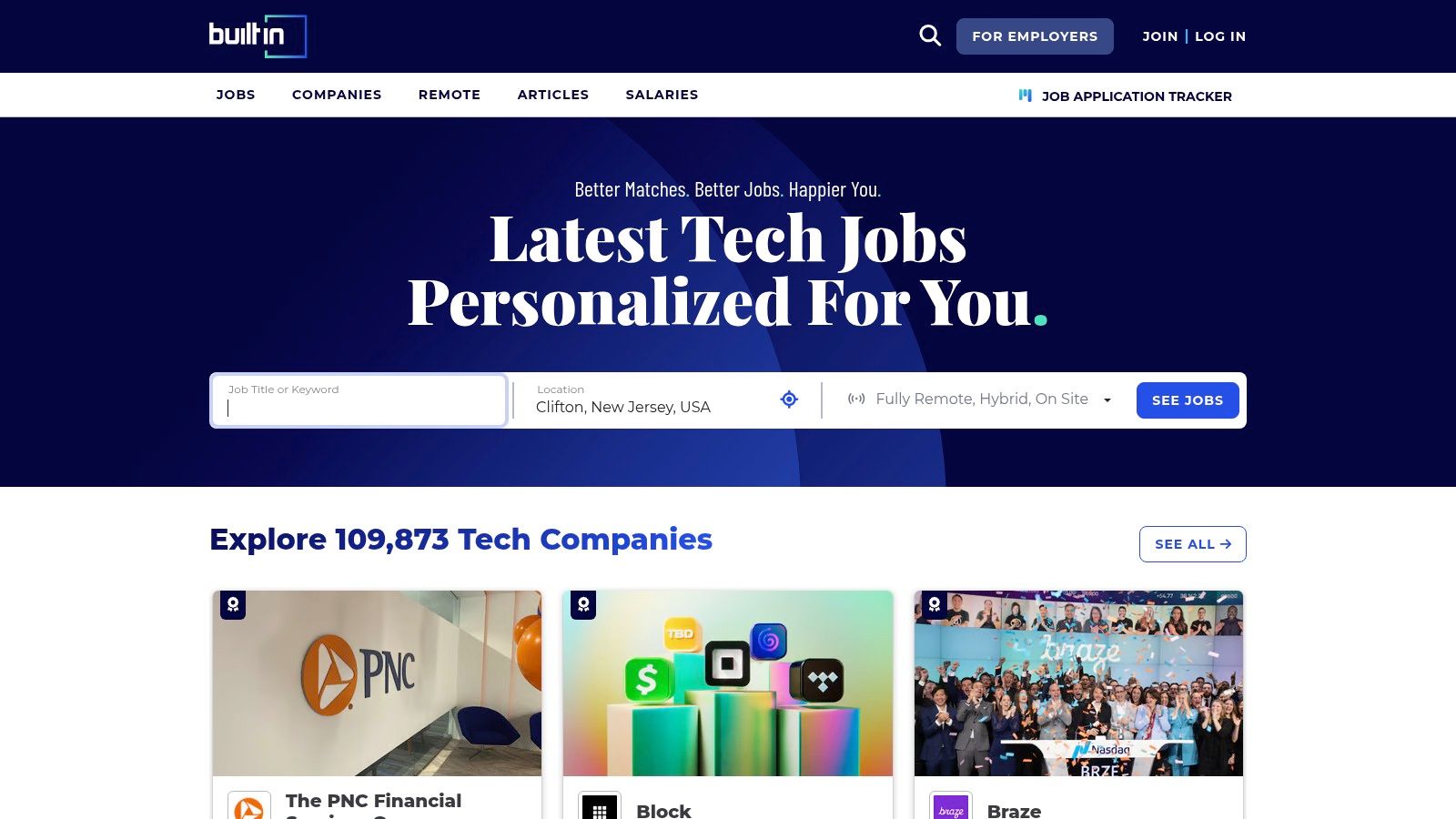
While many job platforms cast a wide net, Built In focuses its lens sharply on the tech industry, serving as a specialized hub for both job seekers and companies. It is designed for tech talent who want to go beyond a simple job listing and understand a company's entire ecosystem, from its tech stack to its culture. This platform is particularly powerful for those targeting specific U.S. tech markets or seeking top-tier remote opportunities.
Built In’s core strength is its community-driven, market-specific approach. It curates content and company lists for major tech hubs like Austin, NYC, and Seattle, as well as for the remote landscape. This allows you to discover the best tech companies to work for in a particular city or within the remote-first world, complete with detailed profiles that feel more like an insider's guide than a generic career page.
Key Features for Your Job Search
- Best Places to Work Awards: Built In publishes annual awards categorized by city, company size, and remote work. These lists are a fantastic resource for identifying employers that are highly regarded within specific tech ecosystems.
- Detailed Employer Profiles: Company pages go far beyond job postings, often highlighting specific tech stacks (e.g., Python, AWS, React), employee perks, DE&I initiatives, and transparent compensation ranges.
- Advanced Job Filters: The search functionality is tailored for tech professionals. You can filter roles by specific technologies, seniority level, compensation expectations, and whether a company offers equity.
- Culture Content and News: The platform includes articles and news relevant to each local tech scene, helping you stay informed about funding rounds, major hires, and industry trends in your target market.
How to Use Built In Effectively
Start by exploring the "Best Places to Work" lists for your target city or for remote companies. When you find a company that interests you, dive deep into its profile to assess its tech stack and cultural fit. The detailed information on perks and benefits can be a quick way to vet companies against your personal must-haves.
Pro Tip: Set up a customized job alert digest. You can tailor it to deliver new roles matching your specific criteria, such as "Senior Frontend Engineer," "Remote," "Python," and a minimum salary, directly to your inbox. This saves you from having to manually search every day.
Access to Built In is free for job seekers, as companies pay to post jobs and enhance their profiles. However, keep in mind that the depth of information can vary depending on whether a company has a premium profile. It's wise to cross-reference your findings with other platforms to get a complete picture.
Website: https://builtin.com
6. Comparably: The Thematic Culture Analyzer
While many platforms offer a general company overview, Comparably helps you find the best tech companies to work for by matching your specific cultural priorities. It goes deeper than a single overall rating, allowing you to discover employers that excel in areas you care about most, whether that's work-life balance, leadership transparency, or diversity. This thematic approach helps you find a company that doesn't just look good on paper but feels right for you.
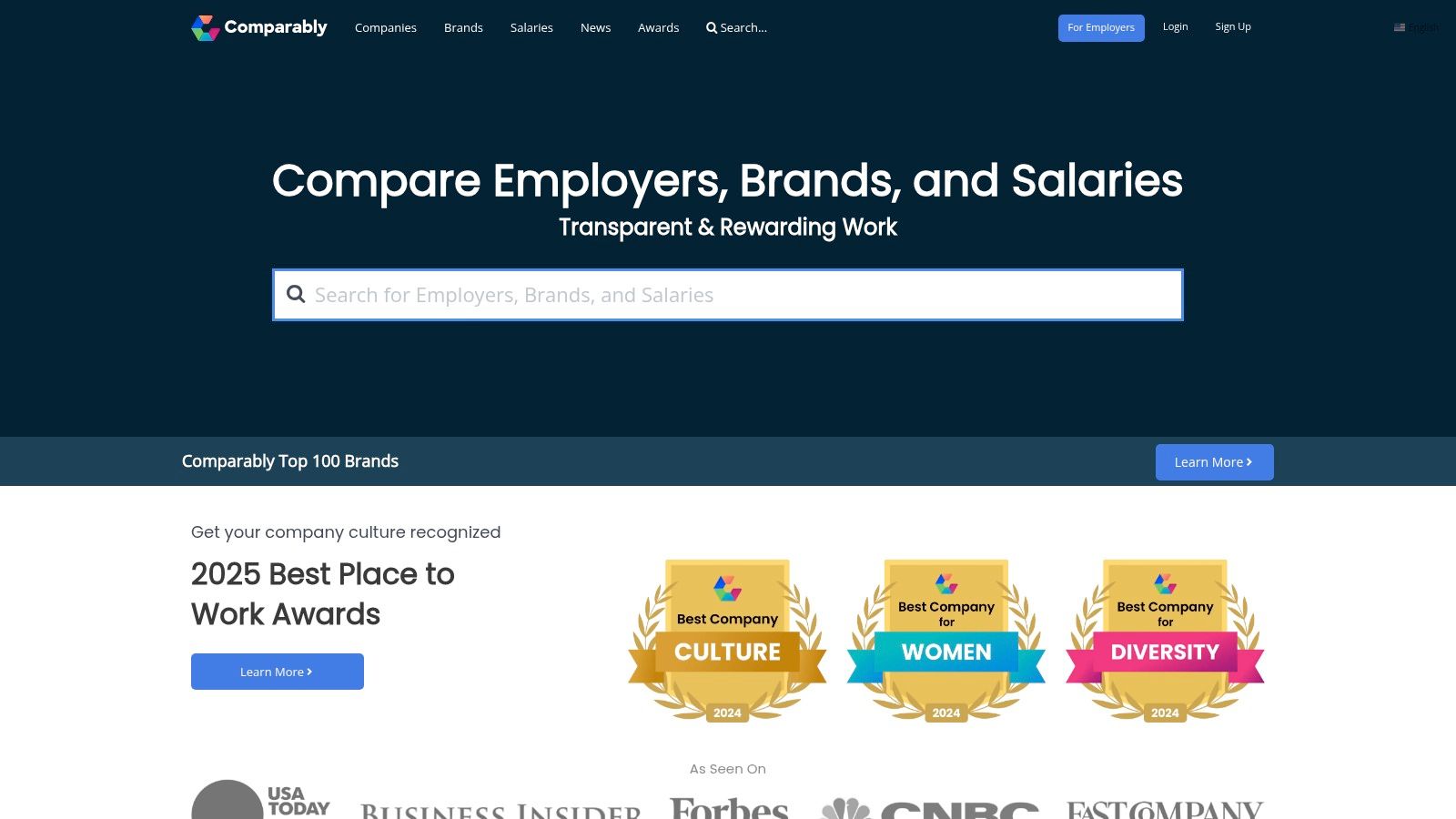
Comparably’s strength is its detailed, segmented data collected from anonymous employee reviews. Instead of a one-size-fits-all score, the platform publishes dozens of specific "Best Of" awards year-round, such as "Best Companies for Women," "Best Engineering Teams," and "Best Company Outlook." This granularity provides a much more nuanced view of an organization's internal health.
Key Features for Your Job Search
- Thematic Awards and Rankings: Explore lists of top-rated companies based on specific attributes like compensation, perks and benefits, and professional development opportunities. These awards are updated throughout the year, keeping the data fresh and relevant.
- Department-Specific Sentiment: Discover how employees in a specific department, such as engineering or marketing, rate their experience. This is crucial for understanding the sub-culture of the team you would actually be joining.
- Detailed Culture and Salary Data: Access comprehensive ratings on a 1-100 scale across nearly 20 different cultural dimensions. Salary data can be filtered by role, location, and even company size, giving you a powerful negotiation tool.
- Side-by-Side Employer Comparisons: Directly compare two companies on everything from CEO approval ratings to gender and diversity scores, helping you make an informed decision between competing offers.
How to Use Comparably Effectively
Go beyond the main company page and dive into the department-level data. A company might have a great overall score, but if its engineering department consistently rates leadership poorly, that's a significant red flag for a software developer. To truly understand a company's culture and retention, exploring insights from departing employees through measures like effective exit survey examples can provide another layer of truth that platforms like Comparably help uncover.
Pro Tip: Use the "Culture Score" breakdown to align your job search with your personal values. If you prioritize a collaborative environment, filter for companies that score highly in the "Team" and "Environment" categories.
The platform is free to use for job seekers, though contributing your own anonymous data can unlock more detailed insights. While it does list some jobs directly, it primarily functions as a research tool, linking out to companies' external career pages for applications.
Website: https://www.comparably.com
7. Levels.fyi: The Compensation Transparency Powerhouse
While company culture and reviews are critical, understanding your market value is a non-negotiable step in identifying the best tech companies to work for. This is where Levels.fyi becomes an indispensable tool, offering unparalleled transparency into compensation data. It moves beyond salary averages to provide detailed breakdowns of total compensation (TC), including base salary, stock grants, and bonuses, all verified by the community.
Levels.fyi’s core strength is its focus on standardized leveling across different companies. It allows you to compare an L5 role at Google to an E5 role at Meta or a Senior SDE role at Amazon, ensuring you're making a true apples-to-apples comparison. This demystifies the often-opaque world of tech compensation and empowers you to negotiate with data-backed confidence.
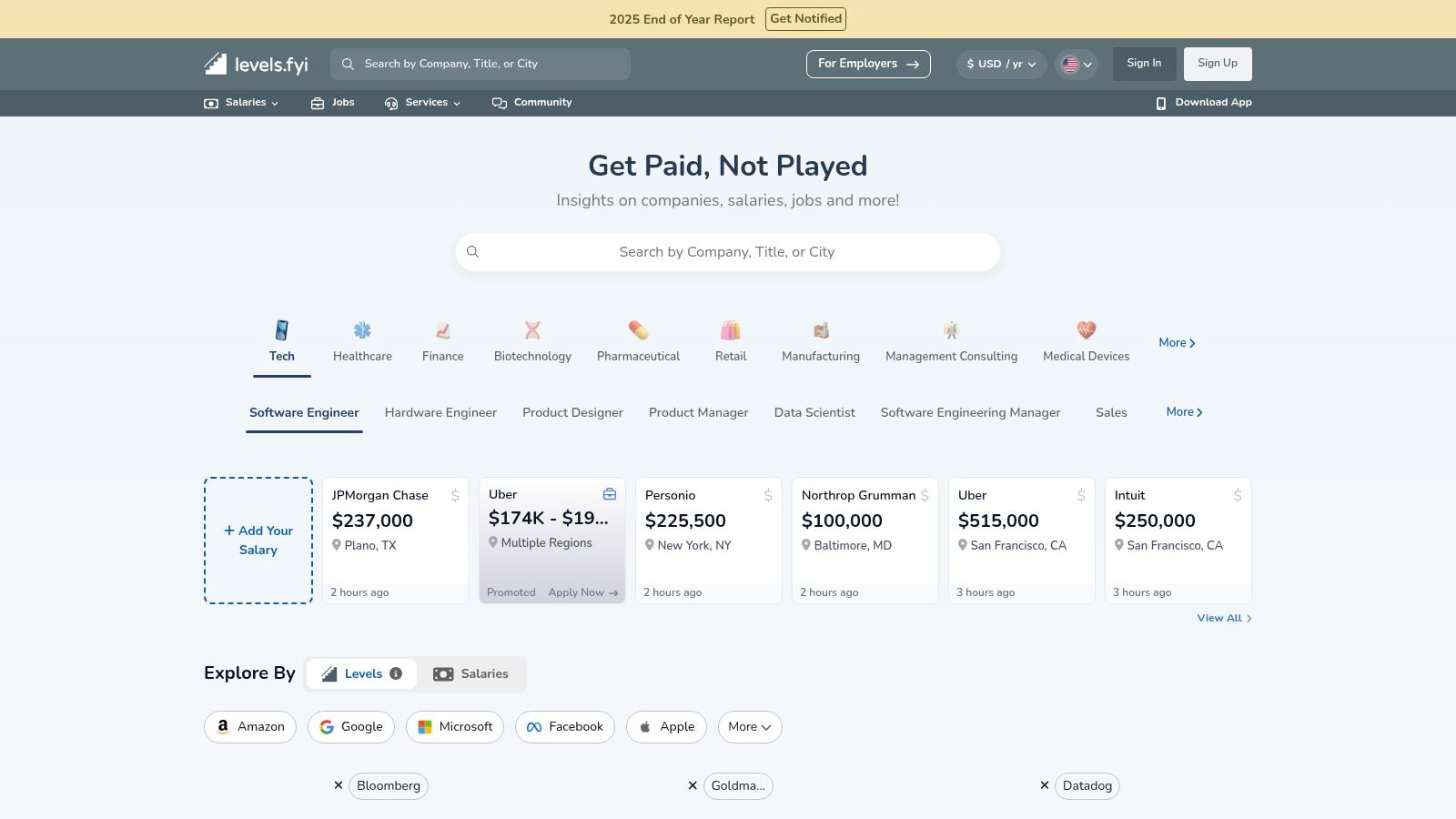
Key Features for Your Job Search
- Verified Compensation Data: Explore thousands of user-submitted salary data points, often verified with offer letters or pay stubs. You can filter by company, level, role, and location to find highly relevant benchmarks.
- Total Compensation Breakdowns: See the complete picture of what a role pays, including base salary, stock (equity), and annual bonuses. This is crucial for evaluating offers from companies with different compensation philosophies.
- Leveling Comparison Tool: Understand how job titles and seniority levels map across major tech companies. This feature helps you accurately gauge your career trajectory and potential earnings if you were to switch employers.
- Negotiation Resources and Community: Access a community forum and resources dedicated to offer negotiation. Learn from others who have successfully negotiated higher compensation packages for similar roles.
How to Use Levels.fyi Effectively
Start by benchmarking your current or expected role to understand your market rate. When you receive an offer, use the platform to validate whether it's competitive. Look beyond the median figures; analyze the data points within the 75th and 90th percentiles to see what top-tier compensation looks like for your level. While Levels.fyi focuses on salary data, understanding how companies approach benefits can offer further transparency into total compensation. For instance, you might want to consider how companies are actively designing attractive employee benefits packages to draw in talent.
Pro Tip: Use the "Compare Offers" tool to directly input details from multiple job offers. The platform will analyze them side-by-side, accounting for factors like stock vesting schedules and sign-on bonuses, giving you a clear picture of which offer is financially superior over a multi-year period.
The platform is free to use, as its data is crowd-sourced from the tech community. This collaborative model ensures the information remains fresh and relevant. Its singular focus on compensation makes it a powerful complement to culture-focused sites like Glassdoor, not a replacement.
Website: https://www.levels.fyi
Top 7 Tech Employer Rankings Comparison
| Resource | 🔄 Implementation complexity | ⚡ Resource requirements | 📊 Expected outcomes | 💡 Ideal use cases / ⭐ Key advantages |
|---|---|---|---|---|
| Glassdoor | Low — straightforward browse & reviews | Moderate — free account; some content gated | Candid employee reviews, role salary ranges, job alerts | Validate employer claims; one-click apply to openings / ⭐ Anonymous employee data + job integration |
| Medium — profile + network management; Premium optional | Moderate–High — free core; Premium for deeper insights | Network-driven referrals, high-volume active job listings | Leverage connections for warm intros and direct applications / ⭐ High employer activity & applicant tools | |
| Fortune (100 Best) | Low — curated annual list, easy to scan | Low — editorial content; not a job board | Shortlist of reputable employers with editorial context | Identify culturally strong employers to research further / ⭐ Recognized methodology & credibility |
| Great Place To Work | Low–Medium — certification pages and reports | Low — public survey-backed data; guides available | Certified culture metrics and tech-specific lists | Find certified tech employers and understand survey results / ⭐ Survey-based validation & sector lists |
| Built In | Medium — detailed profiles, filters, local hubs | Moderate — employer participation varies; tech-focused data | Tech-role matches with stacks, perks, and compensation ranges | Search tech jobs by city/remote and compare stacks / ⭐ Tech-focused listings + local market insights |
| Comparably | Low — rating platform with comparisons | Low — mostly public ratings; employer depth varies | Department-level sentiment and thematic rankings | Target employers by specific culture metrics (WLB, outlook) / ⭐ Thematic awards + side-by-side comparisons |
| Levels.fyi | Medium — compensation mapping and leveling guides | Moderate — community-verified salary submissions | Precise compensation benchmarks and negotiation guidance | Validate offers, map titles/levels across firms / ⭐ Deep compensation transparency & leveling guides |
Take the Next Step: Find Your Ideal Remote Tech Company Today
Navigating the modern job market, especially within the competitive tech landscape, can feel like searching for a signal in the noise. The sheer volume of opportunities, combined with the nuances of company culture, compensation, and remote work policies, makes it difficult to know where to begin. However, as this guide has demonstrated, finding your place among the best tech companies to work for is not a game of chance. It is a strategic process built on leveraging the right information from the right sources. By combining the strengths of platforms like Glassdoor, LinkedIn, Fortune, and Levels.fyi, you can move from hopeful applicant to empowered, well-informed candidate.
The key takeaway is that no single tool provides a complete picture. A truly effective job search strategy involves a multi-pronged approach, where each resource validates and enriches the others. You can think of it as assembling a detailed dossier on your potential future employer, ensuring there are no surprises after you sign the offer letter. This methodical research is your greatest asset in a remote-first world, where understanding a company's digital culture and support systems is just as crucial as understanding the role itself.
Your Action Plan: A Strategic Synthesis
To translate this knowledge into action, avoid aimlessly browsing and instead adopt a structured, data-driven methodology. The goal is to create a personalized, vetted list of target companies that truly align with your non-negotiables, from work-life balance and diversity initiatives to career trajectory and total compensation.
Here is a practical, step-by-step workflow to synthesize the insights from the tools we've covered:
- Build Your Initial Longlist: Start with high-level, reputable lists. Use Fortune's 100 Best Companies to Work For and Great Place To Work certifications to identify companies with a proven track record of employee satisfaction. This creates a high-quality foundation for your search.
- Validate Culture and Employee Voice: Take that longlist and dive deep into Glassdoor and Comparably. Filter reviews by job title and department to get a granular view of the day-to-day reality. Pay close attention to recent reviews, especially those that discuss remote work policies and management styles.
- Analyze Compensation and Growth: Cross-reference your shortlisted companies on Levels.fyi. This step is non-negotiable for understanding if a company’s compensation structure meets market standards and your personal financial goals. Look at salary bands, stock options, and bonus potential for your specific role and level.
- Network and Investigate: Use LinkedIn to find current and former employees at your target companies. Observe the company's posts, check the tenure of its employees, and look for insights into their projects and culture. Platforms like Built In can provide further context on a company’s tech stack, mission, and current hiring priorities.
By following this process, you transform your job search from a passive activity into an active investigation. You are no longer just looking for a job; you are identifying a strategic career move that aligns with your values, ambitions, and lifestyle. This empowers you to ask smarter questions in interviews and negotiate with confidence, knowing you have the data to back up your decisions.
Finding your ideal role at one of the best tech companies to work for is an achievable goal. It requires diligence, a clear strategy, and the right set of tools. You now have the blueprint to cut through the clutter and identify employers that don’t just offer a job, but offer a platform for you to thrive. The next step is yours to take.
Tired of sifting through endless job boards to find quality remote roles? RemoteWeek curates listings exclusively from top-tier, employee-focused tech companies, all with a verified Glassdoor rating of 3.5 or higher. Find your next great opportunity and apply with confidence by visiting RemoteWeek today.