
Top 10 Entry Level Tech Jobs Remote for 2025: Your Complete Guide

The tech industry continues to expand, and the widespread adoption of remote work has created unprecedented opportunities for newcomers. Landing one of the many available entry level tech jobs remote is more achievable than ever, but knowing precisely where to start can feel overwhelming. The path isn't always clear, with dozens of potential roles, varying skill requirements, and a competitive application process. This guide is designed to cut through that noise and provide a clear, actionable roadmap.
We will demystify the process by breaking down the 10 most accessible and in-demand remote tech roles for beginners. For each position, we'll go beyond just a title and explore what the job actually entails day-to-day, the specific skills you need to get hired, and realistic salary expectations for entry-level candidates. You'll also find practical, insider tips to make your application stand out from the crowd.
Whether you are a recent graduate, a career changer, or simply looking to break into the digital economy without being tied to an office, this comprehensive roundup will help you find a role that fits your strengths and ambitions. For those just starting their learning journey, a great way to jumpstart your qualifications is by earning one of the top entry-level IT certifications, which can significantly strengthen your resume for roles like IT Support or Systems Administration. This curated list is your first step toward launching a fulfilling and flexible tech career from anywhere.
1. Junior Frontend Developer
Frontend development is one of the most accessible and in-demand entry level tech jobs remote workers can land. In this role, you'll be responsible for building the visual, user-facing parts of websites and web applications. You will translate designs into functional, responsive code, ensuring a seamless experience across different devices and browsers.
This role is a gateway into the tech industry because the core technologies (HTML, CSS, and JavaScript) have abundant, high-quality learning resources, many of which are free. The work is also highly conducive to a remote setup, as most tasks are self-contained and collaboration can happen asynchronously through tools like GitHub and Slack.
What You'll Do & What to Learn
A Junior Frontend Developer typically works with UI/UX designers and senior developers to implement user interfaces. Your daily tasks involve writing code using languages and frameworks like:
- Core Fundamentals: HTML5, CSS3, and modern JavaScript (ES6+). A strong foundation here is non-negotiable.
- Popular Frameworks: React, Vue, or Angular. Most job descriptions will require proficiency in at least one of these.
- Essential Tools: Git for version control and a code editor like VS Code.
Key Insight: Don't just learn the syntax; focus on building actual projects. A portfolio of 3-5 high-quality projects on GitHub is more valuable than any certificate. Showcase your skills by building a personal site, a to-do list app, or a clone of a popular website.
How to Stand Out
The market for junior roles is competitive, but you can set yourself apart. Instead of just listing skills, demonstrate them.
- Prioritize Accessibility (a11y): Learn how to build websites usable by people with disabilities. This is a critical skill many beginners overlook.
- Master Responsive Design: Adopt a "mobile-first" approach, ensuring your projects look great on phones before scaling up to desktops.
- Contribute to Open Source: Find a small open-source project and contribute. This provides real-world experience and shows you can collaborate in a development environment.
For more guidance on positioning yourself for success, you can learn more about how a Junior Frontend Developer role fits into the broader landscape of remote work. Companies like Zapier and GitLab are known for hiring remote junior developers, offering excellent opportunities to start your tech career from anywhere.
2. Quality Assurance (QA) Tester
A Quality Assurance (QA) Tester role is an excellent entry point into tech, particularly for those without a coding background. As a QA tester, you are the gatekeeper of quality, responsible for finding bugs, defects, and usability issues in software before it reaches the end-user. You will follow test plans, document your findings, and ensure the product meets its requirements.
This position is ideal for remote work because testing tasks are often well-defined and can be performed independently from any location. It's one of the most accessible entry level tech jobs remote candidates can pursue, valuing meticulous attention to detail and clear communication over a computer science degree. Companies like Figma and Doist have robust, distributed QA teams, proving the model's effectiveness.

What You'll Do & What to Learn
An entry-level QA Tester executes test cases, reports bugs, and verifies that fixes work correctly. Your daily activities revolve around systematic evaluation using tools and methodologies like:
- Core Fundamentals: Understanding of the Software Development Life Cycle (SDLC) and different testing types (black-box, regression, usability).
- Essential Tools: Experience with bug tracking software like Jira and test management tools such as TestRail or Zephyr is crucial.
- Basic Technical Skills: While not always required, basic SQL for database verification and understanding of APIs can set you apart.
Key Insight: The quality of your bug reports is your currency. A great bug report is clear, concise, and includes screenshots, logs, and exact steps to reproduce the issue. This makes it easy for developers to understand and fix the problem, demonstrating your value to the team.
How to Stand Out
The junior QA field is broad, but you can distinguish yourself by showing a proactive, detail-oriented mindset. Go beyond just following a script.
- Think Like a User: Don't just test if a feature works; test if it's intuitive and provides a good user experience. Document usability friction points.
- Learn Basic Automation: While the role is manual, showing an interest in automation is a huge plus. Learn the basics of a framework like Selenium or Cypress to show you're forward-thinking.
- Create a Testing Portfolio: Offer to test a small open-source project or a friend's app. Document the bugs you find in a professional format and add it to your portfolio.
This role provides a solid foundation for a long-term tech career. For a deeper look at how a QA Tester role fits into a successful remote career, understanding the broader landscape is key. Companies such as Intercom and Slack are frequently hiring for these positions, offering a fantastic opportunity to break into the industry.
3. Junior Backend Developer
While frontend development focuses on what users see, backend development is the engine that powers it all, making it a robust choice for entry level tech jobs remote candidates can pursue. In this role, you'll be responsible for building and maintaining the server-side logic, databases, and APIs that applications rely on to function. You will write code that handles data, security, and the core business logic, ensuring everything runs smoothly behind the scenes.
This role is a fantastic gateway for those who enjoy deeper problem-solving and systems-thinking. While it often requires a stronger grasp of computer science fundamentals, the work is highly compatible with remote setups. Collaboration is typically managed through detailed documentation, version control systems, and asynchronous communication, minimizing the need for constant real-time meetings.
What You'll Do & What to Learn
A Junior Backend Developer works closely with frontend developers and product teams to ensure the application's infrastructure is reliable and scalable. Your daily tasks will revolve around writing server-side code and managing databases using languages and technologies like:
- Core Languages: Python (with Django/Flask) and Node.js (with Express) are the most popular and beginner-friendly choices. Java, Go, or Ruby are also common.
- Databases: A deep understanding of SQL (like PostgreSQL) is crucial. Familiarity with NoSQL databases like MongoDB is also valuable.
- Essential Concepts: You must understand HTTP, REST principles, and fundamental API design patterns to build effective services.
Key Insight: Focus on mastering one language and its ecosystem deeply rather than learning several superficially. Build and deploy a complete project with a real database and a functional API. Documenting your API (using tools like Swagger or Postman) will make your portfolio stand out significantly.
How to Stand Out
The backend interview process is often more technical, but you can prepare strategically to excel. Go beyond just writing code and show you understand the bigger picture.
- Practice System Design: Start learning basic system design concepts early. You don't need to design the next Netflix, but be able to explain how you would build a simple URL shortener or a blog platform.
- Learn to Deploy: Move your projects off your local machine. Deploying an application to a cloud platform like Heroku or AWS (using their free tier) demonstrates a critical real-world skill.
- Master Version Control: Go beyond
git add,commit, andpush. Learn about branching strategies, pull requests, and resolving merge conflicts. This shows you're ready for a collaborative environment.
To see how backend roles function in a remote-first setting, explore the engineering blogs from companies like Stripe or Airbnb. Companies such as Notion and Supabase are also known for investing in junior talent, offering excellent opportunities to start your backend career from anywhere.
4. Technical Support Engineer / Support Developer
A Technical Support Engineer role is a perfect entry point into the tech world, blending customer-facing communication with deep technical problem-solving. In this position, you act as the bridge between the user and the engineering team, troubleshooting software issues, documenting bugs, and providing clear, empathetic solutions to customers. This is one of the most accessible entry level tech jobs remote workers can secure because it values strong communication and logical thinking alongside technical aptitude.
The demand for this role is high and consistently remote-friendly, as companies need to provide support across different time zones. It serves as an excellent launchpad, offering direct exposure to a company’s product, codebase, and customer pain points, creating natural pathways into development, quality assurance, or product management roles.
What You'll Do & What to Learn
As a Technical Support Engineer, you’ll spend your days investigating customer-reported problems. This requires a systematic approach to debugging and a passion for finding answers. Your core tasks will involve:
- Core Fundamentals: Exceptional communication skills (written and verbal), systematic troubleshooting, and a solid understanding of web technologies.
- Technical Skills: Basic knowledge of SQL for querying databases, experience with APIs, and the ability to read and understand code (often JavaScript, Python, or Ruby).
- Essential Tools: Proficiency with ticketing systems like Zendesk or Intercom, and familiarity with browser developer tools for inspecting network requests and console errors.
Key Insight: The best support engineers don't just solve tickets; they identify patterns. If you notice multiple customers reporting the same issue, document it thoroughly and advocate for a permanent fix. This proactive approach demonstrates value far beyond basic ticket resolution.
How to Stand Out
Because this role is a popular entry point, you need to show you're more than just a good communicator. Demonstrate your technical curiosity and problem-solving prowess.
- Learn to Replicate Bugs: Master the art of systematically reproducing a customer's issue. Create detailed, step-by-step bug reports that engineers can act on immediately.
- Develop Basic Scripting Skills: Learning a language like Python or JavaScript to automate small, repetitive tasks can make you incredibly efficient and valuable to your team.
- Build Relationships with Engineers: Don’t just escalate tickets. Take time to understand the engineering team's workflow and build trust, which makes collaboration smoother and more effective.
Top companies like Zapier, Notion, and Stripe are known for their world-class remote support teams. To excel in this type of role, it's crucial to cultivate the right mindset and skills, which you can read more about to learn what skills are best for remote work. This position is less about knowing all the answers and more about knowing how to find them.
5. Data Analyst (Entry-Level)
Data analysis is a rapidly growing field and an excellent entry point for those seeking entry level tech jobs remote. In this role, you will be responsible for collecting, cleaning, and interpreting data sets to answer business questions and help organizations make better decisions. You'll translate raw numbers into actionable insights, creating reports and dashboards that tell a clear story.
This role is highly accessible because it prioritizes strong analytical and logical thinking over deep software engineering skills, making it a great fit for graduates from various quantitative backgrounds. The nature of the work, which involves focused individual analysis and asynchronous collaboration, is perfectly suited for a remote environment. Communication often happens through shared documents, dashboards, and messaging platforms.

What You'll Do & What to Learn
An entry-level Data Analyst works with stakeholders to understand their goals and then dives into data to find answers. Your daily tasks will require proficiency with specific tools and languages:
- Core Fundamentals: SQL is the most critical language for querying databases. A deep understanding of Excel or Google Sheets for data manipulation is also essential.
- Programming Languages: Basic proficiency in Python (with libraries like Pandas) or R is often required for more complex data processing.
- Visualization Tools: You'll need to know how to use tools like Tableau, Looker, or Power BI to create compelling charts and dashboards.
- Essential Concepts: A solid grasp of basic statistics, such as correlation and statistical significance, is fundamental.
Key Insight: Don't just show your technical skills; demonstrate your business acumen. In your portfolio, each project should answer a specific business question. Frame your analysis around a problem, like "Why did customer churn increase last quarter?" and conclude with actionable recommendations.
How to Stand Out
The demand for data analysts is high, but so is the competition. To differentiate yourself, focus on practical application and communication skills.
- Master Data Storytelling: Learn to present your findings to a non-technical audience. Your ability to explain what the data means is just as important as your ability to analyze it.
- Specialize in a Domain: Develop expertise in a specific area like marketing analytics, product analytics, or financial analytics. This makes you a more targeted and valuable candidate.
- Build a Public Portfolio: Use platforms like Kaggle or data.world to find public datasets. Create and publish 3-5 analysis projects that showcase your entire workflow, from data cleaning to final insights.
For hands-on practice, you can explore resources like the widely referenced SQL tutorial from Mode Analytics. Companies like Amplitude and Segment are known for building strong data cultures and hiring for junior analyst roles, providing excellent opportunities to launch your career in the data field.
6. Junior DevOps / Cloud Engineer
A Junior DevOps or Cloud Engineer role is a powerful entry point into one of the highest-demand sectors of the tech industry. This position focuses on managing the infrastructure, deployment pipelines, and cloud platforms that allow software to be built and delivered efficiently. You'll bridge the gap between development and operations, ensuring systems are scalable, reliable, and secure.
This role is ideal for those who enjoy systems thinking and automation over traditional application development. Because modern infrastructure is managed entirely through code and cloud-based dashboards, it’s a natural fit for a remote work environment. Companies need skilled engineers to manage their cloud presence globally, making this one of the most promising entry level tech jobs remote candidates can pursue.
What You'll Do & What to Learn
As a Junior DevOps Engineer, you'll work with senior engineers to automate processes, monitor system health, and deploy applications. Your daily tasks will involve a specific set of powerful tools and concepts:
- Cloud Platforms: Deep knowledge of at least one major provider like AWS, Google Cloud, or Azure is essential. AWS is the most common requirement.
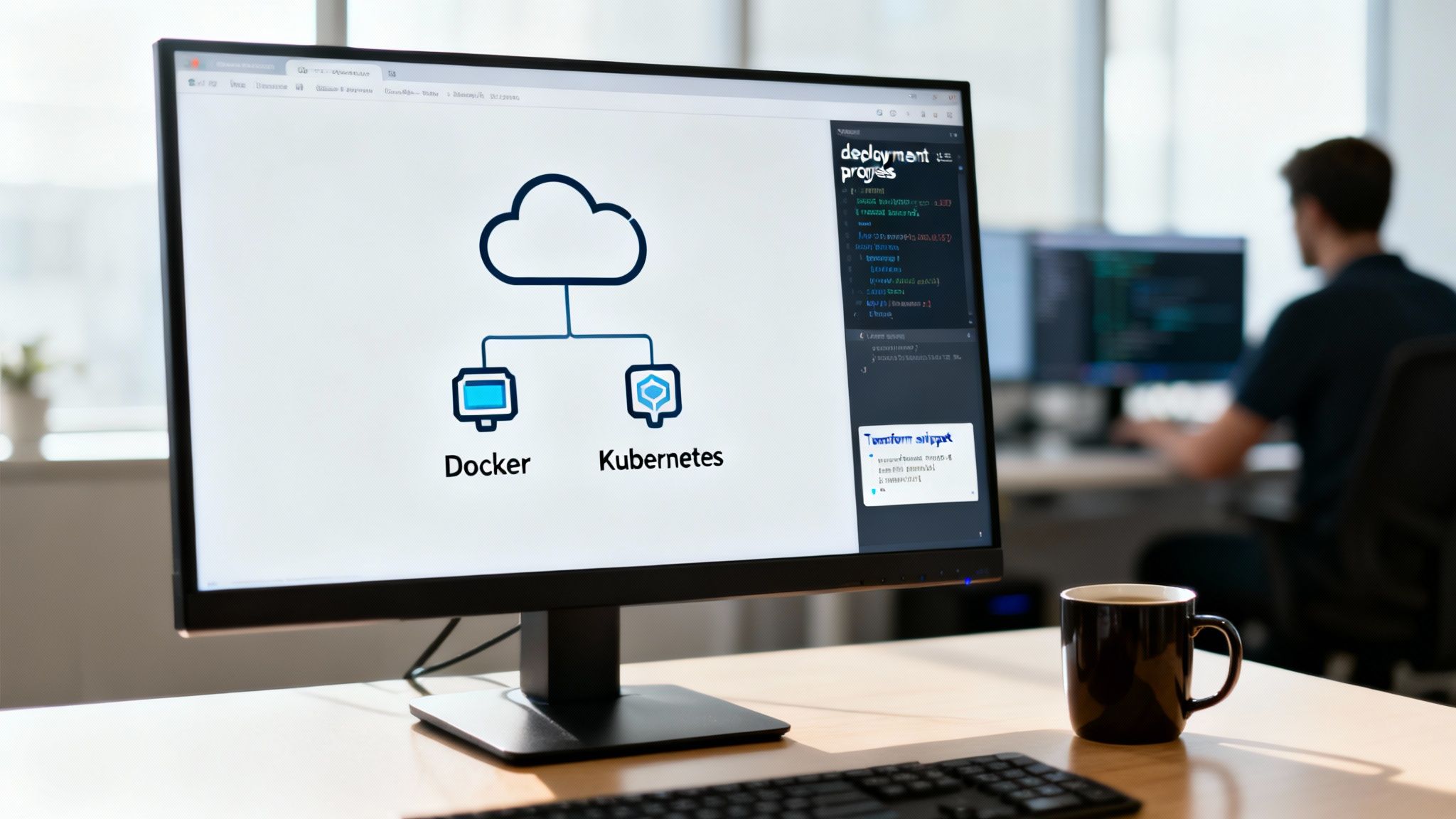
- Containers & Orchestration: Learn Docker for containerizing applications and get comfortable with the basics of Kubernetes for managing them.
- Infrastructure as Code (IaC): Master a tool like Terraform or AWS CloudFormation to manage infrastructure through code.
- CI/CD Pipelines: Understand how to build automated pipelines using tools like GitHub Actions or Jenkins to test and deploy code automatically.
Key Insight: Don't get stuck in "tutorial hell." The best way to learn is by building. Create a personal project, containerize it with Docker, write a Terraform script to deploy the necessary AWS infrastructure, and use GitHub Actions to automate the entire deployment process. Documenting this in your portfolio is a game-changer.
How to Stand Out
The DevOps field values practical, hands-on experience above all else. To differentiate yourself from other applicants, focus on demonstrating real-world skills.
- Get Certified: An entry-level certification like the AWS Certified Solutions Architect - Associate is highly respected and proves you have foundational knowledge.
- Master the Command Line: Become proficient with Linux and Bash scripting. This is a non-negotiable skill for managing servers and automating tasks.
- Focus on a Niche: Instead of learning a little about everything, go deep on one area first. Become the go-to person for Terraform, for example, before trying to master everything else.
Companies like HashiCorp, GitLab, and DigitalOcean are known for their strong remote culture and often have programs or openings for junior engineers. Their focus on DevOps and cloud infrastructure makes them excellent places to launch your career.
7. Technical Writer (Entry-Level)
Technical writing is a rapidly growing field perfect for those who excel at communication and have a knack for technology. As an entry-level technical writer, you'll be responsible for creating clear, concise, and accurate documentation, such as user guides, API references, and tutorials. You will translate complex technical information into easily understandable content for developers, customers, or internal teams.
This role is one of the most remote-friendly entry level tech jobs available because the work is almost entirely asynchronous and document-based. The increasing complexity of software products has created a huge demand for skilled writers who can make technology accessible, with companies like Stripe and Twilio building their reputations on the quality of their documentation.
What You'll Do & What to Learn
A Junior Technical Writer works closely with engineers, product managers, and support teams to understand the product and its users. Your main goal is to create content that helps users succeed. Key skills and tools to learn include:
- Core Fundamentals: Exceptional writing and editing skills are paramount. You must be able to explain intricate topics simply and clearly.
- Documentation Tools: Proficiency in Markdown is essential. Many companies also use static site generators like Hugo, Jekyll, or Docusaurus to build their documentation sites.
- Essential Tools: Basic knowledge of Git for version control is often required, as documentation is frequently treated like code (“docs-as-code”).
Key Insight: Your portfolio is your most powerful tool. Create 3-5 high-quality writing samples. You can write a tutorial for a piece of software you use, document a small personal project, or contribute to an open-source project's documentation on GitHub.
How to Stand Out
The best technical writers are not just great writers; they are advocates for the user. To distinguish yourself from other candidates, focus on demonstrating this user-centric mindset.
- Understand Your Audience: Always define who you are writing for. Documentation for a developer API will be very different from a setup guide for a non-technical customer.
- Study Information Architecture: Learn how to structure content logically. A well-organized documentation site is as important as well-written articles.
- Learn from the Best: Study the documentation of companies known for excellence, like Google Cloud or GitLab. Notice their tone, structure, and clarity, and apply those principles to your own work.
To dive deeper, explore free resources like Google's technical writing courses, which provide a comprehensive foundation. The Write the Docs community is also an invaluable place to connect with professionals and find resources to launch your remote technical writing career.
8. Junior Product Manager / Associate Product Manager
An Associate Product Manager (APM) or Junior Product Manager role is an excellent entry point for those fascinated by the "why" and "what" behind a product, not just the "how." In this position, you'll act as a hub between engineering, design, and business stakeholders, helping to define product vision, prioritize features, and represent the user. You will learn to blend user empathy with data-driven decision-making to guide a product's development.
This role is one of the most strategic entry level tech jobs remote workers can find, as it builds skills in leadership, communication, and business acumen. While highly collaborative, the work is well-suited for remote environments that prioritize strong documentation and asynchronous communication, allowing teams to align on product goals from anywhere.
What You'll Do & What to Learn
A Junior Product Manager supports senior PMs by conducting user research, analyzing data, and managing the product backlog. Your daily tasks involve translating business needs into technical requirements for the development team. Key areas to master include:
- Core Fundamentals: User research, market analysis, and writing clear product requirement documents (PRDs).
- Essential Skills: SQL for data analysis, a basic understanding of software development cycles, and proficiency with tools like Jira and Figma.
- Strategic Thinking: Learning to build and communicate a product roadmap and prioritize features based on user impact and business value.
Key Insight: You don't need a computer science degree. Build a "product portfolio" of case studies analyzing existing products. Suggest a data-backed improvement for an app you use, outline the user problem, propose a solution, and define success metrics.
How to Stand Out
The APM role is competitive, often attracting candidates from diverse backgrounds. To distinguish yourself, you must demonstrate a deep passion for product and an analytical mindset.
- Read "Inspired" by Marty Cagan: This book is considered the bible of modern product management and will give you the foundational knowledge to speak intelligently in interviews.
- Develop Business Acumen: Understand how a business operates. Follow tech business news, read quarterly earnings reports, and learn how product decisions impact revenue.
- Practice Communicating Decisions: Learn to present a product idea to different audiences. Practice explaining the same feature to a technical engineer, a non-technical marketing lead, and a senior executive.
Prestigious APM programs at companies like Google and Stripe are highly sought-after, but many other tech companies offer junior product roles with excellent growth potential. These opportunities provide a structured path to becoming a future product leader.
9. Digital Marketing / Growth Marketing Specialist
For those who are analytical and creative but not keen on coding, a role in digital marketing is one of the most dynamic entry level tech jobs remote work can offer. As a specialist, you'll execute digital campaigns, manage SEO, create content, and use data to drive user acquisition and engagement. Your goal is to help a tech company grow its audience and customer base.
This role is ideal for remote work because most marketing activities are performed online using distributed tools for analytics, content management, and collaboration. As tech companies scale, the need for skilled marketers who can fuel that growth becomes critical, creating numerous opportunities for junior talent. Companies like HubSpot and Buffer are well-known for hiring remote marketing specialists.
What You'll Do & What to Learn
A Junior Digital or Growth Marketing Specialist analyzes performance data and helps execute strategies across various channels. Your daily tasks will involve using specific platforms and developing key skills, including:
- Core Fundamentals: Understanding SEO principles, content marketing, and email marketing.
- Analytics & Data: Proficiency with Google Analytics is a must. You should be comfortable interpreting data to find actionable insights.
- Marketing Channels: Gaining experience in at least one specific area, such as paid advertising (Google Ads, Meta Ads), social media management, or marketing automation (e.g., Mailchimp, HubSpot).
- Essential Tools: Familiarity with marketing software like SEMrush or Ahrefs for SEO, and collaboration tools like Asana or Trello for project management.
Key Insight: Don't just list your skills; prove them with measurable results. Create a personal project or offer your services to a small business to build a portfolio. Document your process and showcase the results, like "Increased organic traffic by 20% in 3 months through targeted blog content" or "Achieved a 15% open rate improvement on an email campaign."
How to Stand Out
The digital marketing field is broad, so specializing can make you a more attractive candidate. Demonstrate your value beyond just knowing the tools.
- Master One Channel Deeply: Instead of being a generalist, become the go-to expert in one area like technical SEO, PPC ad optimization, or email automation sequences.
- Learn to Tell Stories with Data: It’s not enough to pull numbers. Practice communicating what the data means and recommending clear, strategic actions based on your findings.
- Understand Business Metrics: Go beyond marketing metrics like clicks and impressions. Learn about concepts like product-market fit and unit economics to show you understand how marketing drives business success.
To dive deeper into the strategies that drive modern tech companies, explore resources from communities like Growth Hackers or educational platforms like Reforge. This knowledge will help you position yourself as a strategic thinker, not just an executor, making you a top choice for entry level tech jobs remote and in-office.
10. Systems Administrator / IT Support Specialist
For those who enjoy solving complex technical puzzles and maintaining the digital backbone of an organization, a role as a Systems Administrator or IT Support Specialist is an excellent fit. These professionals manage and maintain computer networks, servers, and IT infrastructure. Entry-level positions often start with help desk support, providing a direct path to more advanced responsibilities in managing an organization's tech stack.
This career path offers stable, often recession-resistant employment and is increasingly remote-friendly as companies move their infrastructure to the cloud. It's a foundational role in IT that bridges user support with deeper operational tasks, making it one of the most reliable entry level tech jobs remote professionals can secure.
What You'll Do & What to Learn
An entry-level IT Support Specialist or Junior Systems Administrator handles user issues, manages accounts, and performs routine maintenance. Your daily tasks will require a strong understanding of both hardware and software systems, including:
- Core Fundamentals: A deep grasp of computer hardware, operating systems (Windows and Linux), and networking principles (TCP/IP, DNS, DHCP).
- Essential Tools: Experience with user management in systems like Active Directory or Azure AD. Familiarity with ticketing systems like Jira or Zendesk is also crucial.
- Automation Skills: Learning a scripting language like PowerShell or Bash to automate repetitive tasks is a key differentiator.
- Certifications: The CompTIA A+ is the industry-standard entry point, proving you have foundational knowledge.
Key Insight: Build a home lab. Using virtualization software like VirtualBox or VMware, you can create a safe environment to practice installing operating systems, configuring networks, managing user permissions, and even breaking and fixing things. This hands-on experience is invaluable and something you can talk about in interviews.
How to Stand Out
The competition for remote IT support roles is high, so demonstrating practical skills beyond basic troubleshooting is essential.
- Document Everything: Learn to create clear, concise documentation and runbooks. This shows you can create scalable solutions and help your team work more efficiently.
- Focus on Cloud Skills Early: Get a foundational cloud certification like AWS Certified Cloud Practitioner or Azure Fundamentals. This shows foresight and prepares you for the future of IT infrastructure.
- Develop Strong Communication Skills: As a support specialist, you are the face of the IT department. Practice explaining complex technical concepts to non-technical users patiently and effectively.
Companies like Microsoft and Amazon Web Services consistently hire for IT operations and support roles, while remote-first companies like Automated.com offer great opportunities to start your career. This path provides a solid foundation for future growth into roles like DevOps Engineer, Cloud Architect, or Cybersecurity Analyst.
10 Remote Entry-Level Tech Roles Compared
| Role | Implementation complexity 🔄 | Resource & tooling ⚡ | Expected outcomes 📊 | Ideal use cases 💡 | Key advantages ⭐ |
|---|---|---|---|---|---|
| Junior Frontend Developer | Moderate 🔄 (frameworks + browser quirks) | Low–Moderate ⚡ (IDE, browsers, Git, design tools) | Visual, responsive UIs; front-end polish 📊 | Consumer sites, SPAs, marketing pages 💡 | High demand; portfolio-driven hiring ⭐ |
| Quality Assurance (QA) Tester | Low–Moderate 🔄 (test plans, repetition) | Low ⚡ (test tools, devices, bug trackers) | Fewer bugs; improved product quality 📊 | Release validation, regression testing 💡 | Low entry barrier; measurable impact ⭐ |
| Junior Backend Developer | High 🔄 (systems, APIs, databases) | Moderate–High ⚡ (servers, DBs, cloud) | Scalable APIs and reliable data services 📊 | Data-heavy apps, complex business logic 💡 | Strong pay and deep problem-solving growth ⭐ |
| Technical Support Engineer / Support Developer | Low–Moderate 🔄 (troubleshooting, escalation) | Low ⚡ (ticketing, KB, remote access tools) | Fast customer issue resolution; retention 📊 | Customer-facing products, onboarding support 💡 | Direct customer insight; career gateway to PM/Eng ⭐ |
| Data Analyst (Entry-Level) | Moderate 🔄 (data cleaning, stats) | Moderate ⚡ (SQL, BI tools, Python/R) | Actionable insights and dashboards 📊 | Business metrics, analytics reporting, A/B analysis 💡 | Wide demand; measurable business impact ⭐ |
| Junior DevOps / Cloud Engineer | High 🔄 (infra, orchestration, IaC) | High ⚡ (cloud, CI/CD, monitoring) | Reliable deployments and system uptime 📊 | Scalable production systems, SRE tasks 💡 | Top entry salaries; critical business impact ⭐ |
| Technical Writer (Entry-Level) | Low–Moderate 🔄 (tech → prose translation) | Low ⚡ (Markdown, Git, docs tooling) | Clear documentation; lower support load 📊 | APIs, user guides, onboarding docs 💡 | Remote-friendly; visible product impact ⭐ |
| Junior Product Manager / Associate Product Manager | High 🔄 (strategy, stakeholder alignment) | Moderate ⚡ (analytics, user research tools) | Prioritized roadmap; product-market fit signals 📊 | New features, roadmap planning, user research 💡 | High growth trajectory; strategic influence ⭐ |
| Digital Marketing / Growth Marketing Specialist | Moderate 🔄 (channels + experiments) | Moderate ⚡ (ad platforms, analytics, CRM) | User acquisition and engagement growth 📊 | Launch campaigns, growth experiments, SEO 💡 | Creative + analytical role; measurable ROI ⭐ |
| Systems Administrator / IT Support Specialist | Moderate–High 🔄 (networks, servers, security) | Moderate ⚡ (hardware, virtualization, cloud tools) | Operational stability and secure infrastructure 📊 | Enterprise IT, infrastructure maintenance, backups 💡 | Stable, recession-resistant career; path to DevOps ⭐ |
Your Next Move: Finding the Right Remote Role for You
We've explored a wide spectrum of entry-level remote tech jobs, from the creative problem-solving of a Junior Frontend Developer to the critical thinking of a QA Tester and the foundational work of a Technical Support Engineer. Each path offers a unique gateway into the technology sector, proving that you don't need a decade of experience to launch a rewarding remote career. The roles we've covered, including Data Analyst, Junior DevOps Engineer, and Technical Writer, demonstrate the diverse opportunities available to newcomers.
The common thread connecting these positions is a demand for foundational skills, a proactive learning mindset, and the ability to communicate effectively in a distributed environment. Your first step isn't just about choosing a title; it's about aligning your inherent interests and skills with the core functions of a role. If you enjoy solving puzzles and ensuring quality, QA might be your calling. If you are passionate about user experience and visual design, a frontend path could be a perfect fit.
Charting Your Course: Actionable Next Steps
Transitioning from aspiring tech professional to a hired remote employee requires a strategic, focused approach. Generic applications rarely succeed. Instead, concentrate your efforts on a clear, actionable plan to stand out.
Here are the critical next steps to take on your journey to find entry level tech jobs remote:
Select Your Target Role: Based on the descriptions in this article, choose one or two roles that genuinely excite you. Trying to be a jack-of-all-trades will dilute your efforts. Focusing allows you to tailor your resume, portfolio, and learning path effectively.
Build a Project Portfolio: Theoretical knowledge is good, but practical application is what lands you the job. Create 2-3 small but polished projects directly related to your target role. For a data analyst, this could be a public dataset analysis; for a frontend developer, a responsive website for a fictional business.
Refine Your Digital Presence: Your online footprint is your modern-day business card. It's crucial to present a professional and compelling narrative across platforms. A key part of this is learning how to optimize your LinkedIn profile for success, ensuring it highlights your new skills and clearly states your career goals. This single step can dramatically increase your visibility to recruiters.
Network with Intention: Join online communities (like Slack or Discord channels) related to your chosen field. Don't just ask for a job; contribute to conversations, ask intelligent questions, and build genuine connections. This is how you find mentors and learn about unlisted opportunities.
The Power of a Vetted Job Search
As you begin applying, you will quickly discover that the sheer volume of job listings can be overwhelming. Many platforms are filled with outdated posts, vague descriptions, or companies with poor remote work cultures. This is where a strategic approach to your job search becomes a competitive advantage.
Key Insight: Your time is your most valuable asset during a job search. Wasting it on low-quality listings or companies that aren't truly remote-first will lead to burnout and frustration. Prioritize platforms that do the initial vetting for you.
By focusing on curated job boards, you bypass the noise and connect directly with companies that have been vetted for their commitment to remote work and employee well-being. This is especially vital for entry-level candidates, as your first role will shape your skills, confidence, and long-term career trajectory. A supportive, well-structured remote environment is not a luxury; it's a necessity for growth.
The path to your first remote tech job is a marathon, not a sprint. It requires dedication, continuous learning, and strategic action. By choosing a path, building tangible proof of your skills, and using the right tools for your search, you are not just looking for a job; you are building the foundation for a flexible, fulfilling, and future-proof career. Your journey starts now.
Ready to skip the endless scrolling and find high-quality, vetted remote opportunities? RemoteWeek hand-curates the best remote job listings, focusing on companies that value their employees and offer genuine remote-first cultures. Start your focused search for entry level tech jobs remote today and connect with companies that are truly worth your time.