
7 Job Sites Like Indeed That Actually Work (2026 Guide)

While Indeed is a powerhouse in the job search world, relying on it exclusively is like only fishing in one part of a vast ocean. You might catch something, but you're missing out on countless other opportunities swimming just below the surface. The sheer volume on a single massive platform can lead to application fatigue, intense competition, and a flood of roles that don't quite match your specific skills or career goals. To truly optimize your job hunt, you need a multi-platform strategy.
This guide is designed to help you expand your toolkit with the best job sites like Indeed, each offering a unique advantage. We'll move beyond the one-size-fits-all approach and dive into platforms tailored for specific needs, from specialized tech roles to government positions and flexible remote work. For every site we cover, you'll find a clear breakdown of what makes it stand out, who it’s best for, and its key features.
Our goal is to provide a practical, actionable resource. You will learn how to:
Discover specialized job boards that align with your industry.
Identify which platforms offer the best tools for your specific search.
Leverage niche sites to reduce competition and find higher-quality listings.
Each entry includes direct links and screenshots to help you navigate these platforms efficiently. By diversifying your search, you gain access to a wider range of curated opportunities, connect with different employer networks, and significantly increase your chances of landing a role that's a perfect fit. Let's explore the best alternatives to broaden your horizons.
1. RemoteWeek: Best for Vetted Remote Tech Roles

For professionals navigating the remote job market, the sheer volume of listings on massive aggregators can be overwhelming. RemoteWeek distinguishes itself from other job sites like indeed by adopting a curated, quality-first approach specifically tailored to the tech industry. It serves as a specialized platform where job seekers can bypass the noise and discover opportunities at companies that are genuinely committed to remote work and employee well-being.
The platform’s core mission is to enhance the safety and quality of remote job searching. It achieves this through a unique vetting process: every company listed must have a Glassdoor rating of 3.5 or higher. This requirement acts as a powerful filter, ensuring that the opportunities presented come from organizations with a proven track record of positive workplace culture. This focus on employer reputation allows candidates to apply with greater confidence, knowing they are targeting teams that value their people.
Key Features and User Experience
RemoteWeek is designed to be highly intuitive and free for job seekers. The interface is clean and focused, prioritizing a straightforward search experience. Users can leverage advanced filters to narrow down roles by skill, timezone, and benefit preferences, while salary information is included whenever available.
Daily Updates & Job Alerts: New, verified remote roles are added daily, and users can set up customized job alerts to receive notifications for positions that match their specific criteria.
Company Profiles: Each listing is linked to a company profile, providing deeper insights into the employer’s culture, mission, and the benefits they offer. This transparency helps candidates make more informed decisions.
Global Reach: The platform supports hiring across major global markets, including the USA, UK, Canada, the EU, and more, making it a valuable resource for a geographically diverse talent pool.
Tech-Focused Roles: Job seekers will find a high concentration of roles in engineering, product management, design, marketing, and customer success from well-known companies like Dropbox and HubSpot, as well as fast-growing startups.
A Unique Model for Employers
For companies, RemoteWeek offers an attractive alternative to the pay-per-post model common on larger job boards. It operates on a monthly subscription basis, allowing employers to post an unlimited number of job openings. This model provides a clear and predictable return on investment, especially for teams hiring multiple remote roles throughout the year.
Expert Insight: The subscription model benefits both sides. It encourages employers to keep their listings fresh and detailed, while the high bar for entry (the Glassdoor rating requirement) ensures that job seekers are only seeing high-quality, pre-vetted opportunities.
Pros and Cons
| Strengths | Weaknesses |
|---|---|
| Curated & Trusted: Only lists verified remote roles from companies with strong Glassdoor ratings (≥ 3.5). | Excludes Some Startups: The review-based curation can exclude promising early-stage companies that don't have an established Glassdoor presence. |
| Free for Job Seekers: No cost to search, apply, or set up job alerts. The platform is supported by employers. | Subscription Model: The employer subscription may not be ideal for companies that hire very infrequently and prefer a pay-as-you-go option. |
| High ROI for Employers: Unlimited job posts on a monthly subscription offer significant savings over single-post fees. | Niche Focus: While excellent for tech, it's less suitable for those seeking remote roles in non-tech industries. |
| Global & Tech-Focused: Strong inventory of engineering, product, and design roles across major international markets. |
How to Use RemoteWeek Effectively
To maximize your search, start by creating a detailed profile and setting up specific job alerts. Use the timezone and benefits filters to find roles that genuinely align with your lifestyle. Before applying, thoroughly review the company profiles and their Glassdoor ratings to get a complete picture of their culture and values. This due diligence is a key advantage the platform provides.
Website: RemoteWeek.io
2. LinkedIn Jobs
Website: https://www.linkedin.com/jobs
More than just a social network for professionals, LinkedIn has evolved into one of the most powerful job sites like Indeed, transforming from a passive resume repository into an active, dynamic marketplace. Its core strength lies in its massive user base, creating an unparalleled network effect where recruiters, hiring managers, and candidates coexist.
The platform's true differentiator is its integration of job searching with professional networking. You can see who works at a company, find connections who can provide a warm introduction, and follow companies to stay updated on their latest openings and news. This ecosystem makes the job search less transactional and more relational.
Key Features and User Experience
LinkedIn Jobs offers a robust suite of tools designed to streamline the application process and provide valuable insights. The user interface is clean and integrated directly into the main LinkedIn experience, making it easy to switch between networking and job hunting.
Integrated Networking: See your first and second-degree connections at a company, making it easier to ask for referrals or inside information.
AI-Powered Search: LinkedIn's search algorithm has improved significantly. You can now use natural language queries like "remote marketing manager roles in Texas paying over $100k" to find relevant positions.
"Easy Apply" Functionality: This feature allows you to submit your LinkedIn profile as your application with a single click. To combat application spam, LinkedIn has introduced limits on how many "Easy Apply" jobs you can apply to, encouraging more thoughtful applications.
Premium Insights: For subscribers, LinkedIn Premium offers valuable data, including how you stack up against other applicants, salary insights for roles, and access to more InMail credits to contact recruiters directly.
Key Insight: The power of LinkedIn isn't just in applying for jobs listed. It's in the ability to get noticed by recruiters who are actively searching for candidates. An optimized profile acts as a magnet for opportunities.
Pros, Cons, and Getting Started
| Pros | Cons |
|---|---|
| Direct Recruiter Outreach: A strong profile can lead to recruiters contacting you directly about open roles. | High Competition: Popular roles, especially those with "Easy Apply," receive a huge volume of applicants. |
| Trust and Verification: Enhanced verification for recruiters helps reduce the likelihood of encountering scams. | External ATS Portals: Many applications still redirect you to a company's external applicant tracking system. |
| Comprehensive Career Tool: It's a one-stop shop for job searching, networking, and professional branding. | Pay-to-Play Elements: The most powerful insights and outreach tools are locked behind a Premium subscription. |
To get started, focus on building a comprehensive, keyword-rich profile. This is your digital resume and personal brand. To maximize your success on this platform, explore these valuable LinkedIn tips and features you should be using to stand out. Ensuring your profile is fully optimized is the first and most critical step; learn how to optimize your LinkedIn profile for the job hunt to attract the right kind of attention from hiring managers.
3. ZipRecruiter
Website: https://www.ziprecruiter.com
ZipRecruiter positions itself as a smarter, faster way to get hired, making it one of the most efficient job sites like Indeed for active job seekers. The platform's core advantage is its powerful matching technology, which actively works to connect the right candidates with the right roles, often notifying users within minutes of a relevant job being posted.
The platform distinguishes itself by proactively sending curated job matches directly to your inbox and mobile device. Instead of relying solely on user-initiated searches, ZipRecruiter's AI, "Phil," learns your preferences and skills to deliver a steady stream of opportunities. This makes the job search feel less like a hunt and more like a curated service.
Key Features and User Experience
ZipRecruiter's interface is built for speed and simplicity, aiming to reduce the friction between discovering a job and submitting an application. The experience is heavily optimized for mobile users who want to apply on the go.
AI-Powered Matching: The platform's algorithm analyzes your resume and job preferences to find and recommend highly relevant positions, often before you even search for them.
"1-Tap Apply" Functionality: Similar to Indeed and LinkedIn's quick apply features, this allows candidates to submit their application with a single click using their saved ZipRecruiter profile.
Rapid Job Alerts: You can opt-in for email, push, and even text message notifications when a new job that matches your profile is posted, giving you a competitive edge by allowing you to apply early.
Broad Distribution Network: When employers post a job on ZipRecruiter, it's often syndicated across hundreds of other job boards, creating a vast pool of diverse opportunities for job seekers.
Key Insight: ZipRecruiter's greatest strength is its speed. The almost-instant notifications for new, relevant job postings allow you to be among the first applicants, which can significantly increase your chances of getting noticed by a recruiter.
Pros, Cons, and Getting Started
| Pros | Cons |
|---|---|
| Very fast notifications: The alert system helps you apply to new roles almost as soon as they post. | Variable listing quality: Because of its broad reach, it's important to vet employers and listings carefully. |
| Simple, guided application process: Many applications can be completed on-site without redirection. | Less focus on networking: Unlike LinkedIn, it's purely a transactional job board, with no integrated professional network. |
| Completely free for job seekers: All features for candidates are available without a subscription. | May lean toward U.S.-centric roles: While it has international listings, its strongest presence is in the United States. |
To get started, create a detailed profile and upload a well-crafted resume. The more information and keywords you provide, the better the AI can match you with suitable roles. Be sure to enable notifications for your most important job searches to take full advantage of the platform's speed.
4. Glassdoor
Website: https://www.glassdoor.com
While many job boards focus solely on the "what" and "where" of a job, Glassdoor excels at answering the "why" and "how." It has established itself as one of the most indispensable job sites like Indeed by combining millions of U.S. job listings with a massive, user-generated database of company reviews, salary data, and interview intelligence. This unique blend empowers job seekers with unparalleled transparency.
Glassdoor's core value proposition is its "give-to-get" model, where users contribute their own experiences to access the platform's full suite of insights. This creates a virtuous cycle of information sharing, providing a candid, real-world look into a company's culture, compensation, and hiring process before you even submit an application.
Key Features and User Experience
Glassdoor integrates its rich data directly into the job search experience, allowing you to filter and evaluate opportunities based on much more than just a job description. The interface is straightforward, presenting job listings alongside company ratings and salary estimates.
In-Depth Company Reviews: Access detailed, anonymous reviews from current and former employees covering culture, work-life balance, senior management, and compensation.
Salary and Benefits Transparency: Compare salary data for specific roles at different companies, helping you calibrate your expectations and prepare for negotiations. Users also contribute information about benefits packages, from health insurance to PTO.
Interview Intelligence: Prepare for interviews by reading about the experiences of other candidates. This includes common interview questions, the difficulty of the process, and the overall timeline from application to offer.
Integrated Job Search: The platform features a robust job board with advanced filters, alerts, and a simplified application process for many roles, often powered by its sister company, Indeed.
Key Insight: Use Glassdoor not just to find jobs, but to vet them. A high salary at a company with a 2.5-star rating might be a red flag. This platform helps you target companies that align with your career goals and your personal values.
Pros, Cons, and Getting Started
| Pros | Cons |
|---|---|
| Excellent for Research: Unmatched for researching company culture and compensation to target better-fit roles. | Inconsistent Data: Salary and review coverage can be sparse for smaller companies or less common, niche positions. |
| Active Community: A large, active user base provides a continuous stream of fresh reviews and data. | Potential for Bias: Reviews can sometimes be skewed by very positive or very negative experiences. |
| Empowers Negotiation: Arming yourself with salary data gives you a significant advantage in negotiations. | Privacy Concerns: Newer identity verification rules have raised privacy concerns for some anonymous contributors. |
To get started, create an account and consider contributing an anonymous review of a past or current employer to unlock full access. When searching for jobs, pay close attention to the overall company rating, CEO approval rating, and recurring themes in the reviews. For those who value this level of transparency, you can explore other sites like Glassdoor for deeper company insights to build a comprehensive picture of any potential employer.
5. USAJOBS
Website: https://www.usajobs.gov
For those seeking stable, mission-driven careers, USAJOBS stands as a unique and authoritative platform among job sites like Indeed. It is the official and exclusive online portal for U.S. federal government employment, connecting job seekers with opportunities across hundreds of agencies and organizations, from the Environmental Protection Agency to the Department of Veterans Affairs.
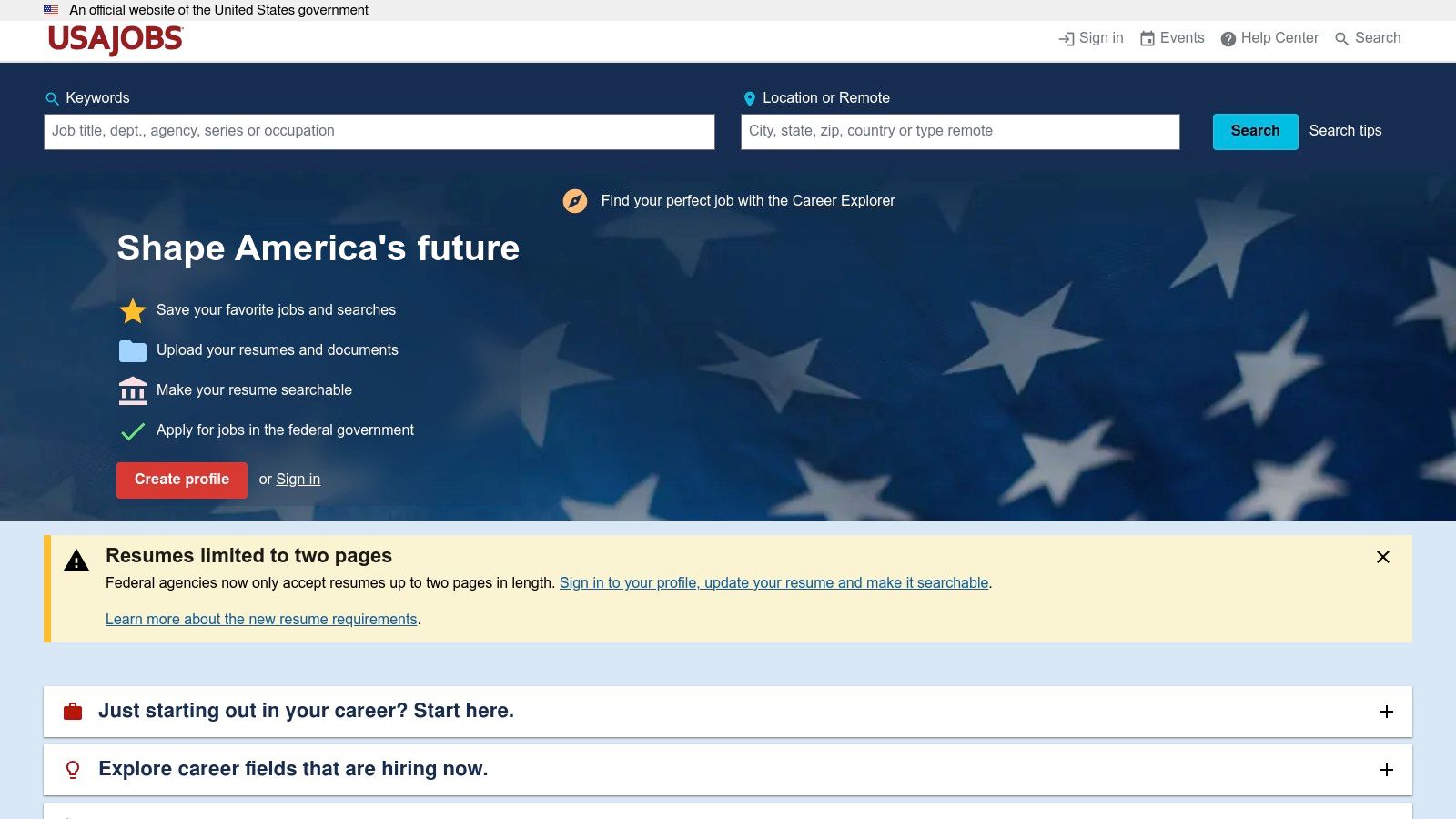
Unlike general job boards that aggregate listings from various sources, every posting on USAJOBS is a direct, verified federal vacancy. The platform’s key differentiator is its structured approach to hiring, with clear pay bands (the General Schedule or GS pay scale), comprehensive benefits, and defined hiring paths for different groups, including veterans, students, recent graduates, and the general public. This transparency demystifies the application process in a way the private sector rarely matches.
Key Features and User Experience
USAJOBS is a centralized hub designed to manage the complexities of federal hiring. The interface is functional and security-focused, requiring users to sign in via the secure login.gov system to manage their applications and personal information.
Targeted Hiring Paths: Easily filter jobs based on your eligibility, such as "Open to the public," "Veterans," "Students & recent graduates," or "Federal employees," ensuring you only see relevant roles.
Comprehensive Job Announcements: Each listing provides exhaustive detail on duties, qualifications, required documents, and evaluation criteria, leaving little room for ambiguity.
Built-in Resume Builder: The platform includes a specific resume builder tailored to the detailed requirements of a federal resume, which often requires more information than a standard private-sector CV.
Application Tracking: Your dashboard allows you to save jobs, manage applications, and track your status as you move through each agency's specific hiring process.
Key Insight: Success on USAJOBS requires a different mindset. Federal resumes must be extremely detailed and directly address every required qualification listed in the job announcement. Generic resumes are almost always rejected.
Pros, Cons, and Getting Started
| Pros | Cons |
|---|---|
| Verified, Scam-Free Postings: Every job is legitimate, with transparent requirements and closing dates. | Lengthy Application Process: The multi-step applications and timelines can be significantly longer than in the private sector. |
| Clear Pay and Benefit Structures: Salary grades and benefits are clearly defined and publicly accessible. | Time-Consuming Customization: Federal resumes and questionnaires must be meticulously tailored to each job announcement. |
| Mission-Driven Opportunities: Offers a direct path to public service careers with strong job security. | Bureaucratic Hurdles: The process can feel slow and bureaucratic, with less direct communication than private hiring. |
To get started, create a secure profile via login.gov. The most critical step is adapting your resume to the federal format; be prepared to write a multi-page document that explicitly details how your experience meets each qualification. Pay close attention to application deadlines and required documents, as the process is highly structured and unforgiving of incomplete submissions.
6. Dice
Website: https://www.dice.com
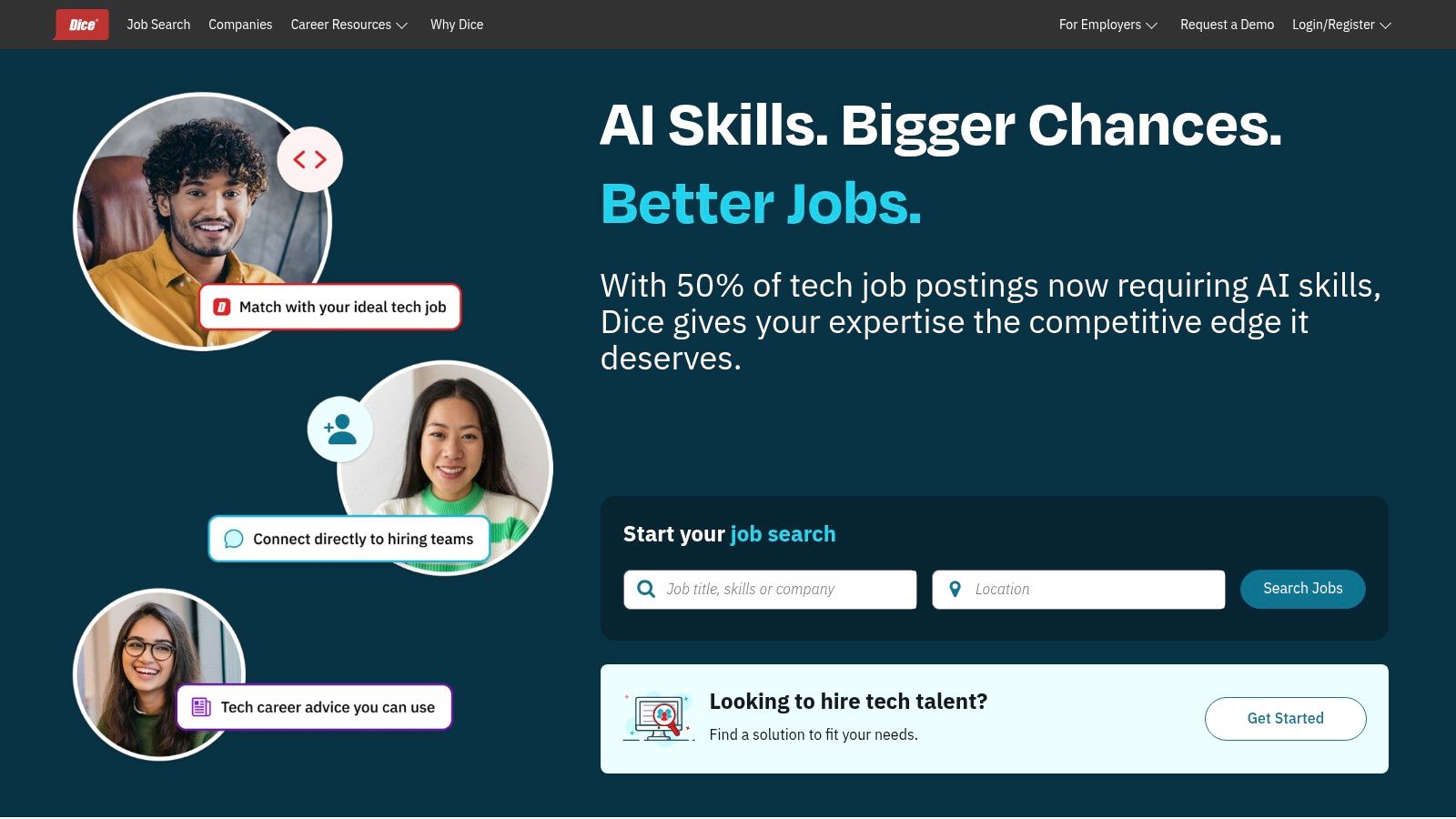
For technology professionals navigating the job market, generalist boards can often feel like searching for a needle in a haystack. Dice cuts through the noise by being one of the most established and specialized job sites like Indeed for tech and IT roles in the United States. It has carved out a niche by focusing exclusively on positions in software engineering, data science, cloud computing, DevOps, and cybersecurity.
Its long-standing reputation in the tech industry means it attracts a high concentration of relevant employers and recruiters actively seeking specialized talent. This focus provides a higher signal-to-noise ratio, ensuring that job seekers are seeing opportunities that align with their technical skill sets rather than wading through irrelevant listings.
Key Features and User Experience
Dice is built around the specific needs of tech candidates, offering tools and data that are highly relevant to their career paths. The platform is straightforward, prioritizing function over flash, with a search interface that allows for granular filtering based on technical requirements.
Tech-Focused Search: The core of Dice is its powerful search engine, which includes specific filters for skills (e.g., Python, AWS), security clearances, and employment types.
Salary and Market Insights: The annual Dice Tech Salary Report is a valuable resource, providing data on compensation trends, in-demand skills, and salary premiums. This information is crucial for negotiation and career planning.
Specialized Recruiter Network: Recruiters on Dice are typically specialists in the tech field, leading to more informed and relevant conversations compared to generalist recruiters.
Career Tools: While some tools are reportedly being revamped, Dice provides content and resources tailored to tech career progression, interview preparation, and skill development.
Key Insight: Use Dice's salary data not just to evaluate offers, but to proactively identify which skills command the highest premium in the market. This can guide your learning and development efforts to maximize future earning potential.
Pros, Cons, and Getting Started
| Pros | Cons |
|---|---|
| High Signal-to-Noise Ratio: Far fewer non-tech roles to sift through, making the search more efficient. | Niche Focus: Limited opportunities for roles outside of core technology, IT, or engineering functions. |
| Valuable Compensation Data: The Tech Salary Report provides actionable intelligence for salary negotiations. | User Interface in Transition: Some career tools and parts of the site may be in a state of flux as they are updated. |
| Strong U.S. Market Presence: A go-to platform for U.S.-based companies hiring for technical talent. | Fewer Entry-Level Roles: The platform tends to have more mid-level to senior positions compared to entry-level ones. |
To get started on Dice, build a detailed profile that goes beyond job titles and lists specific technologies, frameworks, and programming languages you've mastered. This keyword-rich approach will make you more visible to recruiters using the platform's search filters. As a tech professional, you can explore guides on how to land remote software developer jobs to better position yourself for the opportunities available on specialized boards like Dice.
7. Snagajob
Website: https://www.snagajob.com
While many job aggregators cast a wide net, Snagajob has carved out a powerful niche as one of the largest job sites like Indeed specifically for hourly and shift-based work. It is the go-to platform for roles in retail, food service, hospitality, and logistics, connecting millions of job seekers with employers who need to hire quickly and at volume. Its primary strength is its focus on the unique needs of the hourly workforce.
The platform excels at location-based searching, making it simple to find opportunities within a specific commute distance. For those needing work immediately, Snagajob's "Urgently Hiring" tags and streamlined application process help bridge the gap between applying and starting a new job faster than most generalist sites. It’s built for speed and local relevance.
Key Features and User Experience
Snagajob’s interface is designed for simplicity and mobile-first access, recognizing that many hourly job seekers apply on the go. The experience is centered around finding local jobs quickly and applying with minimal friction, which is a significant advantage in this fast-paced market.
Hourly and Shift Focus: The entire platform is optimized for hourly roles, from search filters (full-time, part-time, seasonal) to the types of employers featured.
"Urgently Hiring" Indicators: A clear visual tag helps job seekers identify employers who need to fill positions immediately, increasing the likelihood of a fast response.
One-Click Apply & Profiles: Users can create a Snagajob profile that acts as a standardized resume, allowing them to apply to many jobs with a single click, although some roles still redirect to an employer's own system.
Location-Based Search: The search functionality is heavily weighted toward geography, allowing users to find jobs by zip code, city, or even a specific address, with map views to visualize commute times.
Key Insight: Snagajob's value is in its concentration. By focusing solely on the hourly job market, it provides a much higher signal-to-noise ratio for both job seekers and employers in that space, eliminating the need to sift through irrelevant salaried or corporate roles.
Pros, Cons, and Getting Started
| Pros | Cons |
|---|---|
| Excellent for Service/Retail: Unmatched inventory of jobs in restaurants, retail, warehouses, and delivery. | Limited to Hourly Work: Not suitable for professional, corporate, or salaried career paths. |
| Fast Time-to-Interview: The "Urgently Hiring" feature often leads to quicker callbacks and interviews. | "Evergreen" Postings: Some large chains have continuous job postings that may not reflect an immediate need. |
| Free for Job Seekers: Creating a profile, searching for jobs, and applying is completely free of charge. | Pay Transparency Varies: While improving, not all listings disclose the hourly wage upfront, as it depends on the employer. |
To get started, create a simple but complete profile highlighting your availability, relevant experience, and reliability. Use the location filters aggressively to narrow your search to a realistic commute radius. When you see "Urgently Hiring" roles that fit your skills, apply immediately, as these positions are often filled on a first-come, first-served basis.
Top 7 Job Sites Comparison
| Platform | 🔄 Complexity | ⚡ Resources | 📊 Expected outcomes | Ideal use cases 💡 | ⭐ Key advantages |
|---|---|---|---|---|---|
| RemoteWeek | Low for job seekers; moderate for employers (subscription setup) | Low for seekers (free); employers pay monthly subscription | High-quality, vetted remote leads with lower noise | Remote-first professionals; companies hiring multiple remote roles | Curated verified remote listings; Glassdoor ≥3.5 filter; global tech focus |
| LinkedIn Jobs | Moderate — profile/network optimization and recruiter interactions | Medium–high: free reach; Premium/ads add cost | Very broad exposure and recruiter outreach; high application volume | Network-driven job searches, executive/recruiter-led hiring | Massive network effects; AI matching; ATS integrations |
| ZipRecruiter | Low — guided AI matching and one-tap applies | Low for seekers; employers use paid distribution | Fast alerts and early-apply advantage; variable listing quality | Fast applicants who want quick alerts; employers hiring quickly | Rapid notifications; conversational AI search; simple on-site applies |
| Glassdoor | Low for research; medium when applying via external ATS | Low for users; rich review and salary data available | Better-informed applications and realistic salary expectations | Researching company culture, salary benchmarking, interview prep | Deep company reviews, salary ranges, interview insights |
| USAJOBS | High — multi-step federal applications and eligibility checks | Moderate time/resource investment; secure login required | Verified, stable federal roles with clear pay/benefit info | Candidates seeking federal careers, veterans, students | Official federal listings; transparent requirements and benefits |
| Dice | Low–moderate — focused tech filters and recruiter network | Low for tech job seekers; employers target specialized hires | Higher signal for tech roles and better compensation intel | Software, data, DevOps, cloud, cybersecurity professionals | Tech-specialized listings; salary reports and skills-demand data |
| Snagajob | Low — simple location-based hourly search and quick applies | Low for seekers; employers often hiring at volume | Fast local hiring and quick time-to-interview; wage transparency varies | Hourly, shift, seasonal, retail, restaurant, logistics roles | Large hourly-job catalog; "Urgently hiring" indicators; local focus |
Choosing the Right Platform for Your Career Goals
Navigating the modern job market requires more than just a polished resume; it demands a strategic approach to selecting the platforms where you invest your time and energy. While Indeed serves as a powerful, generalist starting point, the most successful job seekers understand that a multi-platform strategy is essential. This comprehensive exploration of job sites like Indeed has shown that the ideal choice depends entirely on your specific career objectives, industry, and desired work style.
Your journey began by understanding the distinct value propositions of each platform. From the professional networking powerhouse of LinkedIn Jobs to the rapid-fire application process of ZipRecruiter, each tool offers a unique advantage. We've seen how specialized boards like Dice cater exclusively to the tech industry, while USAJOBS opens the door to stable government careers and Snagajob connects you with immediate hourly opportunities. This diversity is your greatest asset.
Key Takeaways for a Smarter Job Search
To distill this information into actionable steps, remember these core principles:
Diversify Your Search: Don't rely on a single platform. Create profiles on a primary generalist site (like LinkedIn or ZipRecruiter) and at least one niche site relevant to your field (like Dice for tech or RemoteWeek for remote work).
Tailor Your Approach: Your application strategy for LinkedIn, which emphasizes networking and personal branding, should be vastly different from a straightforward application on ZipRecruiter. Adapt your materials and your mindset for each platform.
Prioritize Quality Over Quantity: Sending out a hundred generic applications is less effective than submitting ten highly tailored ones. Use the insights from platforms like Glassdoor to customize your cover letter and prepare for interviews, demonstrating genuine interest.
Leverage Automation Wisely: As you manage applications across multiple sites, staying organized is crucial. For those looking to manage applications across various job sites efficiently, exploring tools with robust integration capabilities can be a game-changer. Investigating jobcopilot's integration capabilities can help streamline your workflow, ensuring you never miss a follow-up or an interview request.
Your Next Steps: Building a Personalized Strategy
So, where do you go from here? The path forward involves a conscious, deliberate selection process. Instead of blindly signing up for every job site, take a moment to assess your needs.
Define Your Non-Negotiables: Are you strictly looking for remote work? Do you need a government job with federal benefits? Are you targeting a specific salary range? Your answers will immediately narrow the field.
Match the Platform to Your Industry: A software developer will find more relevant, high-quality leads on Dice and RemoteWeek than on Snagajob. Conversely, a retail manager will have more success with Snagajob. Align your efforts with where your industry's recruiters are active.
Set Up Strategic Alerts: Once you've chosen your platforms, configure precise job alerts. Use Boolean search operators and filters for location, salary, and experience level to ensure your inbox is filled with relevant opportunities, not noise.
Ultimately, the search for job sites like Indeed is a search for the right key to unlock your next career chapter. The digital landscape offers a wealth of resources, but they are only as powerful as the strategy you employ. By moving beyond a one-size-fits-all approach and thoughtfully selecting the platforms that align with your unique goals, you transform a daunting search into a targeted, efficient, and ultimately more successful endeavor. Your ideal role is out there; now you have the map to find it.
If your primary goal is to find a role that offers flexibility and work-life balance, your search should start with a dedicated remote-first platform. RemoteWeek cuts through the noise of traditional job boards by curating only the best remote opportunities from trusted companies worldwide. Find your next great remote job faster by exploring the curated listings on RemoteWeek today.