
The Top 10 Remote Work Options to Explore in 2026
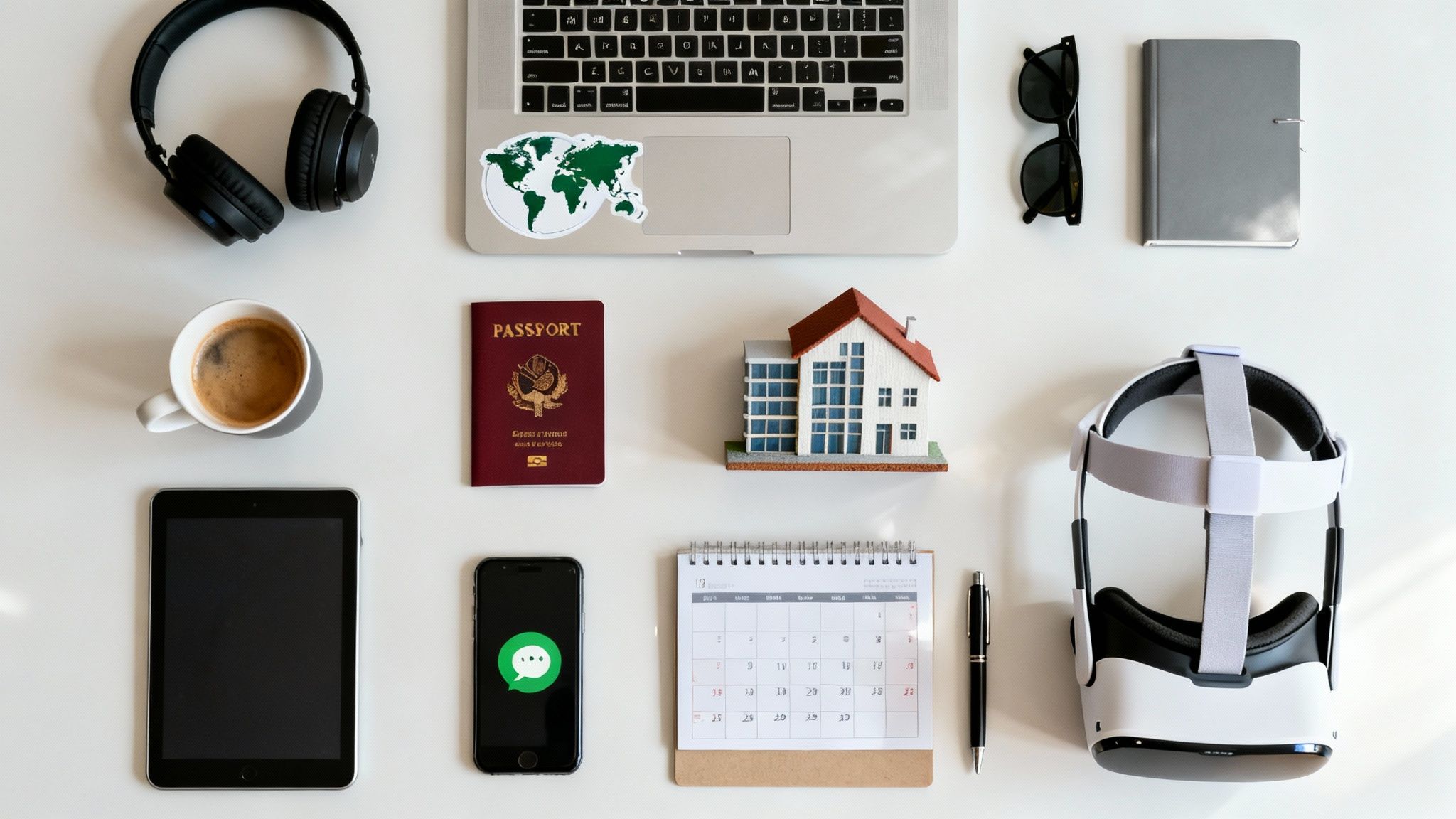
The world of work has transformed, moving beyond the traditional office to a spectrum of flexible arrangements. Today, the term 'remote work' encompasses much more than just working from home; it represents a fundamental shift in how we approach our careers, productivity, and work-life integration. The sheer variety of available models means that finding the right fit is more complex, yet more important, than ever before. To truly thrive in this environment, companies and individuals must adopt crucial remote work best practices.
Understanding the different remote work options is the first step toward finding a role that truly aligns with your personal and professional goals. This guide breaks down the 10 most common models, from fully distributed teams to hybrid setups, giving you the clarity needed to make your next career move with confidence. We'll explore the nuances, benefits, and challenges of each option, helping you identify which arrangement best suits your ideal lifestyle and how platforms like RemoteWeek can connect you with companies that champion these modern ways of working.
Instead of a one-size-fits-all approach, this article provides a detailed roadmap. For each remote model, we will define what it is, outline its pros and cons, and describe the ideal candidate profile. You will gain actionable insights on how to evaluate these opportunities during your job search and where to find them. By the end, you'll be equipped to not just find a remote job, but to find the right kind of remote job for your specific needs, ambitions, and work style. This detailed breakdown ensures you can navigate the landscape of remote work effectively and build a career on your own terms.
1. Fully Remote (Work From Anywhere)
The fully remote, or "work from anywhere," model is the gold standard for location independence in the professional world. In this arrangement, there is no physical office, and employees are empowered to work from any location with a stable internet connection. This could be a home office, a co-working space in a new city, or even a temporary setup while traveling.

This is one of the most transformative remote work options available, as it allows companies to build globally distributed teams, hiring the best talent regardless of geographic boundaries. Pioneering companies like GitLab, Automattic (the force behind WordPress.com), and Zapier have built their entire organizational structures around this model, proving its scalability and success.
Who It's For
This model is ideal for highly autonomous, self-disciplined individuals who thrive with minimal direct supervision. It’s also a perfect fit for "digital nomads" who wish to combine their career with travel. For companies, it’s a strategic choice for accessing a global talent pool and significantly reducing overhead costs associated with physical office spaces.
Keys to Success
For a fully remote setup to function effectively, a company’s culture must be built on trust and crystal-clear communication. Documentation becomes paramount.
- Asynchronous Communication: Invest in and master tools like Slack for quick chats and Linear or Asana for project management. The goal is to reduce reliance on immediate responses.
- Documentation Culture: Create a central source of truth, like a company wiki in Notion or Confluence. Every process, decision, and project update should be documented and easily accessible to all team members across different time zones.
- Intentional Connection: With no "water cooler" moments, building team rapport requires deliberate effort. Schedule regular, informal video calls for non-work-related chats and virtual team-building activities to foster personal connections.
- Mind the Time Zones: Establish core overlapping hours for essential collaborative meetings, but empower teams to complete the majority of their work on their own schedule.
Key Insight: Success in a fully remote model isn't just about technology; it's about building a culture of radical transparency, explicit communication, and intentional relationship-building.
For those interested in the logistics of this lifestyle, you can learn more about the practicalities of working remotely abroad to understand the tax and legal considerations.
2. Hybrid Remote (Flexible Office Days)
The hybrid remote model strikes a balance between total remote freedom and the traditional office environment. In this popular arrangement, employees work from home or another remote location for a portion of the week and commute to a central office for the remaining days, typically one to three times per week. This approach aims to capture the "best of both worlds," offering flexibility while preserving opportunities for in-person collaboration.
As one of the most widely adopted remote work options post-pandemic, it's favored by established companies looking to retain talent without completely abandoning their physical infrastructure. Major tech players like Google and Microsoft have implemented structured hybrid policies, demonstrating its viability at scale for companies that value face-to-face interaction for specific tasks like strategic planning and team building.
Who It's For
This model is an excellent fit for professionals who appreciate the focus and work-life balance of remote work but also value the social connection and spontaneous collaboration that an office provides. It’s also ideal for companies that want to offer flexibility and reduce commute-related burnout while maintaining a strong, cohesive company culture rooted in a physical space.
Keys to Success
A successful hybrid model hinges on intentionality and equity, ensuring that neither remote nor in-office employees feel disadvantaged.
- Strategic Office Use: Designate office days for specific purposes, such as collaborative brainstorming sessions, team-wide meetings, or cross-functional project kickoffs. Avoid mandating office attendance for tasks that can be done more effectively from home.
- Equitable Experience: Invest in high-quality video conferencing technology to ensure remote participants are just as engaged in meetings as those in the room. This prevents a "two-tier" system from developing.
- Clear Expectations: Communicate the hybrid policy clearly. Define which days are required in-office, the level of flexibility, and the purpose of in-person time so everyone understands the expectations.
- Regular Feedback Loops: Continuously solicit feedback from employees to understand what’s working and what isn't. Be prepared to iterate on the policy based on team needs and productivity outcomes.
Key Insight: The purpose of the office transforms in a hybrid model. It is no longer the default place for individual work, but a deliberate destination for connection, collaboration, and culture-building.
3. Remote-First with Optional Office
The remote-first model represents a significant evolution in workplace flexibility, establishing remote work as the default standard for all employees. Unlike a hybrid approach where office attendance is often expected, this arrangement empowers employees to work from home or anywhere they choose, while providing physical office spaces as an optional resource for collaboration, meetings, or a change of scenery.
This approach acknowledges that different tasks require different environments. The office is treated not as a daily requirement but as a tool to be used strategically. This is one of the most balanced remote work options, blending the autonomy of fully remote work with the option for in-person connection. Companies like Figma and Notion champion this model, designing their hubs as centers for collaborative work rather than rows of individual desks.
Who It's For
This model is perfect for companies looking to attract top talent without geographic restrictions while still fostering a sense of community and facilitating high-stakes collaboration. It suits employees who value the freedom of remote work but occasionally desire the structure, social interaction, or specific resources a physical office provides. It’s an excellent compromise that supports diverse work styles and preferences.
Keys to Success
Success in a remote-first model hinges on treating all employees as remote employees, ensuring no one is disadvantaged by their location.
- Design for Collaboration: The office should be a destination for teamwork. Optimize physical spaces with whiteboards, large screens, and flexible seating arrangements designed for group work, not silent, individual tasks.
- Level the Playing Field: All meetings should be "hybrid-by-default," meaning even if most attendees are in a conference room, they join via their own laptops with individual cameras. This prevents remote participants from feeling like passive observers.
- Provide Flexible Alternatives: For employees who live far from a physical hub, offer a co-working space stipend. This gives them a third space to work from, maintaining the flexibility and choice central to this model.
- Communicate with Intention: Clearly define the purpose of office usage. Schedule specific "on-site" days or weeks for team-building events, project kickoffs, and strategic planning sessions to maximize the value of in-person time.
Key Insight: A remote-first culture succeeds when the office is treated as an intentional, collaborative tool available to everyone, rather than a default location for a privileged few. Equality of experience is the ultimate goal.
4. Async-First Remote (Asynchronous Communication Model)
The async-first model is a sophisticated approach to remote work where asynchronous communication is the default, not the exception. Rather than relying on instant responses and real-time meetings, teams collaborate on their own schedules. This is achieved through meticulous documentation, thoughtful written updates, and recorded videos, making it one of the most flexible remote work options for globally distributed teams.

This method empowers employees with deep focus time and accommodates diverse time zones and personal schedules. Companies like GitLab, which makes its entire company handbook public, and Doist, the creator of Todoist, have championed this model. They demonstrate that high productivity and strong company culture can be achieved without constant, real-time interaction.
Who It's For
This model is perfect for methodical thinkers, excellent writers, and individuals who perform best when given long, uninterrupted periods for deep work. It’s also the only truly scalable model for companies that are serious about hiring the best talent from anywhere in the world, as it eliminates time zone friction.
Keys to Success
Success in an async-first environment hinges on discipline, clarity, and the right toolset. Communication must be intentional and transparent.
- Document Everything: Every decision, process, and piece of feedback should be recorded in a central, searchable knowledge base like Notion or a company wiki.
- Master Written Communication: Teams must develop clear writing standards. For teams adopting an asynchronous communication model, understanding how to manage efficient async updates is paramount.
- Use Video for Nuance: Instead of scheduling a meeting, use tools like Loom to record a quick video update or explanation to convey tone and context.
- Set Clear Expectations: Establish and communicate expected response times (e.g., within 24 hours) to eliminate anxiety and the pressure to be "always on."
- Strategic Synchronous Time: Use real-time meetings sparingly and for high-value activities like brainstorming, complex problem-solving, or team bonding.
Key Insight: Async-first isn't about eliminating meetings; it's about making them a deliberate choice rather than a default. It prioritizes focused work and thoughtful, well-documented collaboration over reactive communication.
For a deeper dive into the technology that powers this model, you can explore the best asynchronous communication tools that top remote companies use.
5. Remote with Occasional Travel (Travel-Friendly Remote)
This model strikes a balance between a stable, fully remote role and the freedom to travel. In this arrangement, employees are hired for a standard remote position but are explicitly permitted to work while traveling for personal leisure, client meetings, or company offsites. It’s a formalized acknowledgment that "work from home" can also mean "work from anywhere temporarily," without the full commitment of a digital nomad lifestyle.
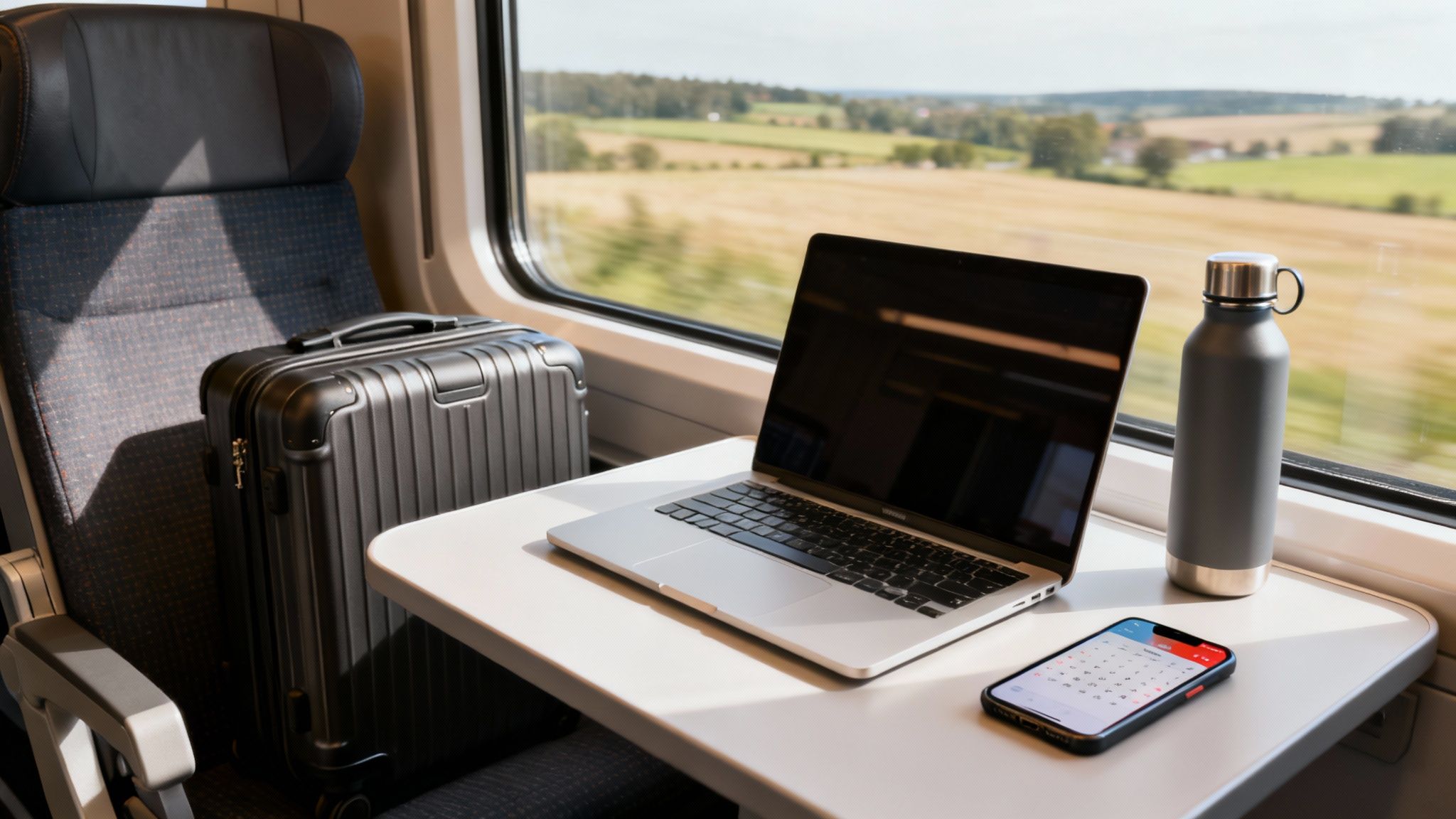
This is one of the more modern and flexible remote work options, blending the stability of a permanent role with the location independence many professionals crave. Companies like Tropicalize have built their culture around this lifestyle, while communities like We Roam support professionals who embrace it. This approach allows employees to take "workations" or extend personal trips without using all their paid time off.
Who It's For
This setup is perfect for individuals who value both a consistent career path and the flexibility to explore new places for short to medium durations. It's also ideal for roles that involve client-facing travel, allowing employees to blend business trips with personal exploration. Companies adopt this model to attract and retain top talent who prioritize work-life integration and autonomy.
Keys to Success
Trust and clear policies are the cornerstones of a successful travel-friendly remote model. The focus shifts from location to consistent output and reliable connectivity.
- Establish Clear Travel Policies: Create a straightforward process for employees to notify their team about travel plans, including locations and time zones. This isn't about asking for permission but ensuring operational transparency.
- Prioritize Security: Mandate the use of company-provided VPNs on all networks, especially public Wi-Fi in cafes, airports, and hotels, to protect sensitive company data.
- Set Communication Expectations: Define core hours or expected response times, regardless of the employee's current time zone. This ensures collaboration doesn't suffer.
- Support with Resources: Offer stipends for co-working space passes or portable tech like travel monitors and mobile hotspots to ensure employees have a reliable and productive setup on the go.
Key Insight: A travel-friendly remote policy is a powerful retention tool. It shows a company trusts its employees to manage their freedom responsibly, focusing on results over physical presence.
6. Freelance and Contract Remote (Project-Based Work)
Freelance and contract remote work represents the pinnacle of professional autonomy. In this model, individuals are not employees but independent business owners who provide services to clients on a project-by-project or contract basis. This arrangement gives professionals complete control over their schedule, workload, and choice of clients, all from a remote setting.
This is one of the most entrepreneurial remote work options, allowing skilled individuals to build a business around their expertise. Major platforms like Upwork and Toptal have created global marketplaces where freelancers connect with clients, while specialized networks cater to high-demand skills, proving this model's versatility and economic power.
Who It's For
This model is ideal for disciplined, self-starting professionals with a marketable skill who crave variety and ultimate control over their career path. It's a great fit for experts in fields like software development, graphic design, writing, and consulting. For businesses, it offers a flexible way to access specialized talent for specific projects without the long-term commitment and overhead of hiring a full-time employee.
Keys to Success
Thriving as a remote freelancer requires a blend of professional skill and business acumen. The focus shifts from being an employee to being a service provider.
- Build a Powerful Portfolio: Your portfolio is your primary marketing tool. Showcase your best work, highlight results, and include client testimonials to build credibility and attract high-quality projects.
- Establish Ironclad Contracts: Always use a detailed contract that clearly outlines the scope of work, deliverables, timelines, payment terms, and revision rounds to protect both you and the client.
- Diversify Your Client Base: Relying on a single client is risky. Aim to build a roster of several clients to ensure a steady stream of income and reduce financial vulnerability if one project ends.
- Price for Profitability: Your rates must cover not just your work time but also non-billable hours spent on marketing, administration, and taxes, as well as costs for insurance and retirement savings.
Key Insight: Success in remote freelancing is less about finding a job and more about building a business. It requires a proactive mindset focused on marketing, client relationships, and financial management.
For those ready to explore this path, you can find a wealth of opportunities and get started by looking into freelance remote jobs and building your client pipeline.
7. Co-Working Space Remote (Community-Based Remote Work)
The co-working space remote model offers a compelling middle ground between the isolation of a home office and the structure of a traditional workplace. In this arrangement, employees perform their duties remotely but use a shared, professionally managed office space. This provides the infrastructure of an office, like high-speed internet, meeting rooms, and printing services, without being tied to a specific company headquarters.
This setup is one of the more structured remote work options, providing a dedicated environment designed for productivity. It effectively separates home and work life while fostering a sense of community. Companies often support this by providing stipends for co-working memberships, allowing employees to choose a space that suits their location and work style. Global providers like Regus and Impact Hub have capitalized on this need, offering flexible membership plans worldwide.
Who It's For
This model is perfect for remote workers who struggle with the distractions or isolation of working from home. It's also ideal for those who crave a professional environment and the networking opportunities that come from being around other motivated individuals. For companies, offering a co-working stipend is a powerful perk that supports employee well-being and productivity, especially for those in smaller living spaces.
Keys to Success
Thriving in a co-working environment involves leveraging the space's unique benefits while maintaining focus on your primary work responsibilities.
- Choose Wisely: Don't commit long-term without a trial. Test different spaces to find one with the right atmosphere, amenities, and community that aligns with your professional needs and work style.
- Leverage the Community: Co-working spaces are natural networking hubs. Actively participate in community events, workshops, and social gatherings to build your professional circle and find collaborative opportunities.
- Establish a Routine: Treat your co-working space like a traditional office. Set regular work hours to create a clear boundary between your professional and personal life, which can significantly boost focus and productivity.
- Evaluate the Amenities: Ensure the space has the practical tools you need. Consider factors like the availability of private call booths, the quality of conference rooms, and access to essential office equipment.
Key Insight: The co-working model's greatest strength is its ability to combat remote work's biggest challenges: loneliness and a lack of professional structure. It's about intentionally choosing your work environment for optimal focus and connection.
For those looking to explore this option, you can find a global directory of spaces on platforms like Coworker.com to compare locations and amenities in your area.
8. Remote with Core Hours (Flexible Schedule Remote)
The remote with core hours model strikes a balance between total schedule freedom and necessary team synchronization. In this arrangement, employees work remotely but are required to be online and available for a specific block of time each day, typically four to six hours. Outside of these "core hours," they have the flexibility to structure the rest of their workday as they see fit.
This approach is one of the most practical remote work options for teams spread across multiple time zones. It guarantees a window for real-time collaboration, client meetings, and quick problem-solving sessions. Companies like Shopify have successfully implemented core collaboration hours to ensure teams can connect, while many tech startups use this model to blend asynchronous efficiency with synchronous creativity.
Who It's For
This model is perfect for teams that require regular, predictable collaboration but still want to offer significant personal flexibility. It suits individuals who appreciate having a structured part of their day for meetings and teamwork, freeing up other parts for deep work, personal appointments, or family commitments. It's a common and effective setup for roles in customer support, sales, and agile development teams.
Keys to Success
Success with core hours depends on clear communication and mutual respect for everyone's time, both during and outside the designated window.
- Clearly Define and Document: The core hours (e.g., 10 AM to 3 PM EST) should be officially documented and communicated to all team members. There should be no ambiguity.
- Protect Core Time: This window should be reserved for high-priority synchronous activities like critical meetings, brainstorming sessions, and pair programming. Avoid filling it with tasks that could be done asynchronously.
- Respect Off-Hours: Just as important as being available during core hours is respecting team members' time outside of them. Encourage asynchronous communication tools like Slack or email for non-urgent matters.
- Accommodate Time Zones: When setting core hours for a distributed team, find a window that creates the least disruption for the majority. For example, a 1-4 PM GMT window works well for teams spanning Europe and the US East Coast.
Key Insight: The core hours model isn't about monitoring activity; it's about creating a predictable daily touchpoint for collaboration while empowering individual autonomy for the rest of the workday.
9. Remote with Quarterly Retreats (Periodic In-Person Gatherings)
The "remote with quarterly retreats" model offers a compelling blend of deep work autonomy and intentional in-person connection. In this arrangement, day-to-day operations are fully remote, but the entire team gathers at regular intervals, typically quarterly or semi-annually, for multi-day events. These retreats are designed to strengthen bonds, align on strategy, and re-energize the company culture.
This is one of the most effective remote work options for companies aiming to capture the best of both worlds: the flexibility and global talent access of remote work, combined with the powerful rapport built through face-to-face interaction. Companies like Buffer, Basecamp, and Automattic have famously used this model to build highly cohesive, distributed teams, proving that physical distance doesn't have to mean cultural disconnection.
Who It's For
This model is ideal for remote-first companies that value strong interpersonal relationships and recognize that some strategic conversations and creative brainstorming sessions are amplified by being in the same room. It appeals to employees who love the freedom of remote work but also crave periodic, structured opportunities to connect with their colleagues on a deeper, more personal level.
Keys to Success
For a retreat-focused model to succeed, the in-person time must be purposeful, well-planned, and inclusive. The goal is to supplement, not disrupt, the remote-first culture.
- Plan with Purpose: Schedule retreats well in advance and create a balanced agenda that mixes strategic work sessions (like roadmapping or a hackathon) with purely social team-building activities.
- Remove Financial Barriers: The company should cover all essential travel, accommodation, and meal costs for attendees. This ensures that participation is equitable and not a financial burden on employees.
- Build in Downtime: Don't overschedule every minute. Unstructured free time is often where the most authentic connections and memorable moments happen. Allow people to explore, rest, or socialize informally.
- Document and Share Outcomes: Key decisions, strategic plans, and insights from the retreat should be thoroughly documented and made accessible to everyone, reinforcing the company's commitment to transparency.
Key Insight: This model succeeds when retreats are treated as a strategic investment in culture and alignment, not just a company-paid vacation. The energy and relationships built in person are designed to fuel collaboration and trust for months to come.
10. Remote with Professional Development (Learning-Focused Remote)
A learning-focused remote arrangement elevates the standard remote job by integrating continuous professional development into the core of the work experience. This model goes beyond simple flexibility, positioning remote work as a vehicle for career growth. Companies with this structure actively invest in their employees' skills through dedicated learning time, sponsored courses, conference attendance, and robust mentorship programs.
This is one of the most attractive remote work options for ambitious professionals who refuse to let distance stifle their career progression. Companies like Google, which offer generous development budgets, and AWS, with its intense focus on certifications, exemplify this approach. They use learning as a key tool for employee retention and innovation, attracting top talent who are motivated by growth.
Who It's For
This model is perfect for growth-minded individuals who see their career as a long-term journey of skill acquisition. It’s also ideal for professionals in rapidly evolving fields like tech or digital marketing, where staying current is essential for success. For companies, it’s a powerful strategy to build a highly skilled, adaptable, and loyal workforce that can meet future challenges.
Keys to Success
A successful learning-focused remote culture requires more than just a budget; it demands a strategic framework that connects learning to both individual and company goals.
- Structure the Growth: Don't just offer a stipend; create clear career development paths. Map out the skills needed for advancement and link them to specific courses, certifications, or internal projects.
- Invest Strategically: Sponsor attendance at relevant industry conferences (virtual or in-person) and provide access to premium learning platforms. Many tech companies leverage programs like Reforge for targeted team development.
- Foster Internal Expertise: Encourage a culture of knowledge sharing. Host internal "lunch and learns" or create a mentorship program that pairs seasoned experts with emerging talent to transfer institutional knowledge.
- Align Learning with Impact: Ensure that professional development goals are tied directly to business objectives. This proves the ROI of the investment and keeps employees engaged with learning that has a real-world application.
Key Insight: In a learning-focused remote model, professional development isn't a perk; it's a core business strategy that treats employee growth and company growth as two sides of the same coin.
Comparison of 10 Remote Work Options
| Option | 🔄 Implementation Complexity | ⚡ Resource Requirements | 📊 Expected Outcomes | 💡 Ideal Use Cases | ⭐ Key Advantages |
|---|---|---|---|---|---|
| Fully Remote (Work From Anywhere) | High — global policies, legal compliance | Moderate — comms, documentation, HR/legal support | High flexibility; reduced office costs; global hiring | Distributed teams; roles not location-bound | Maximum flexibility; global talent access; strong retention ⭐⭐⭐ |
| Hybrid Remote (Flexible Office Days) | Medium — scheduling and facility coordination | Moderate — maintained office space; scheduling tools | Better in-person collaboration; reduced real-estate costs | Teams needing periodic face-to-face work | Balance of collaboration and flexibility; culture preservation ⭐⭐ |
| Remote-First with Optional Office | Medium — booking systems and optional-space policies | Moderate — flexible offices or hubs; hot-desking tools | High autonomy; efficient office utilization | Remote-centric companies offering hubs | Employee choice; lower fixed overhead; optional in-person space ⭐⭐ |
| Async-First Remote (Asynchronous Communication Model) | High — cultural shift; strong documentation practices | Low–Moderate — documentation tools, recorded-media | Fewer meetings; improved deep work; timezone scalability | Global, multi-timezone teams; focus-intensive roles | Scales across time zones; better focus; durable documentation ⭐⭐⭐ |
| Remote with Occasional Travel (Travel-Friendly Remote) | Medium–High — travel policies, compliance, security | Moderate — travel stipends, mobile equipment, VPNs | High employee satisfaction; location flexibility; complexity in scheduling | Digital nomads; client-facing roles; travel-oriented talent | Appeals to travel seekers; differentiator in hiring ⭐⭐ |
| Freelance and Contract Remote (Project-Based Work) | Medium — contract management and payment systems | Low–Moderate — freelance platforms, invoicing tools | Flexible capacity; variable continuity; cost control per project | Short-term projects; specialist skills on demand | Access to specialized talent; cost and schedule flexibility ⭐ |
| Co-Working Space Remote (Community-Based Remote Work) | Low–Medium — stipend and vendor arrangements | Moderate — membership fees or partnerships | Improved structure and social connection; commute required | Employees wanting separation from home; community seekers | Professional environment; networking; routine support ⭐⭐ |
| Remote with Core Hours (Flexible Schedule Remote) | Low — policies to define overlap windows | Low — scheduling tools and clear expectations | Predictable collaboration window; retained flexibility | Teams needing regular synchronous time | Balances async and sync work; reliable overlap for meetings ⭐⭐ |
| Remote with Quarterly Retreats (Periodic In-Person Gatherings) | Medium — event planning and logistics | High — travel, accommodations, event costs | Stronger culture and trust; periodic alignment bursts | Distributed teams seeking intentional bonding | Deep team cohesion; focused strategic planning ⭐⭐⭐ |
| Remote with Professional Development (Learning-Focused Remote) | Medium — program design and management | High — learning budgets, mentors, training platforms | Increased skills, engagement, and retention | Companies prioritizing growth and retention | Attracts ambitious talent; builds internal capability ⭐⭐⭐ |
Choosing Your Ideal Remote Work Model
The landscape of work has fundamentally shifted, moving beyond a simple binary of "office" versus "home." As we've explored, the world of remote work is a rich tapestry of diverse models, each offering a unique blend of autonomy, structure, and connection. From the complete freedom of a fully remote, async-first role to the structured community of a hybrid model with quarterly retreats, the sheer variety of remote work options available today means there is no longer a one-size-fits-all solution. The power now lies with you to architect a career that aligns precisely with your personal and professional needs.
The journey to finding your perfect remote fit begins with introspection. The core takeaway from this guide is that the "best" remote setup is deeply personal. It requires an honest assessment of your own work style, communication preferences, and life priorities. Are you a self-directed individual who thrives with minimal supervision and values deep, uninterrupted focus? An asynchronous model might be your ideal environment. Or do you draw energy from collaborative brainstorming and regular face-to-face interaction? A remote-first company with optional office hubs or a hybrid schedule could provide that essential balance.
From Theory to Action: Your Strategic Next Steps
Understanding the different models is only the first step. The real challenge, and opportunity, lies in evaluating specific job openings to see if a company’s proclaimed culture matches its daily practices. Here’s a practical, step-by-step framework to guide your search:
Define Your Non-Negotiables: Before you even start browsing job boards, create a personal checklist. What are your absolute must-haves? This could include a flexible schedule without core hours, a commitment to asynchronous communication, or opportunities for in-person connection. Knowing your deal-breakers prevents you from wasting time on roles that are a poor long-term fit.
Scrutinize Job Descriptions: Look for specific language. Do they mention "asynchronous," "flexible hours," or "quarterly offsites"? Vague terms like "remote-friendly" can be a red flag. Companies that are truly committed to a specific remote model will articulate it clearly and proudly in their job postings. They understand that transparency is key to attracting the right talent.
Ask Targeted Interview Questions: The interview is your chance to dig deeper. Move beyond generic questions and get to the heart of their remote philosophy.
- “Can you describe a recent project and how the team collaborated on it asynchronously?”
- “What tools do you use to facilitate both synchronous and asynchronous communication?”
- “How do you measure productivity and success for remote employees, and how does it differ from in-office staff?”
Seek Out Social Proof: Research the company on platforms like Glassdoor and LinkedIn. Look for reviews from current or former remote employees. Do their experiences align with the company's official statements? Pay close attention to comments about communication, management style, and work-life balance, as these are critical indicators of a healthy remote culture.
Mastering these remote work options is more than just a job-seeking tactic; it's a career-defining skill. By intentionally choosing a work environment that complements your personality and lifestyle, you set yourself up for greater engagement, higher productivity, and long-term professional fulfillment. You move from simply having a job to building a sustainable and integrated life. The future of work is not about where you work, but how you work best. Armed with this knowledge, you are now equipped to navigate the modern job market with confidence and find a role that doesn't just offer a paycheck, but empowers you to thrive.
Ready to find a company that truly understands and embraces your ideal remote work style? Stop sifting through vague "remote-friendly" listings and start your search on RemoteWeek. Our platform is dedicated to curating high-quality remote roles from companies that are transparent about their specific remote work options, making it easier than ever to find a perfect match. Explore verified remote opportunities on RemoteWeek today.