
What Are Employee Wellness Programs? Key Benefits for Remote Teams
At its core, an employee wellness program is a company-backed initiative designed to support the overall health and well-being of its people. It's much more than a simple perk; think of it as a strategic investment a company makes in its most valuable asset—its team.
Beyond the Buzzwords: What Are Wellness Programs, Really?
Let’s cut through the jargon. A wellness program is essentially a support system a company puts in place to help its team stay healthy, engaged, and resilient.
Imagine a professional sports team. They don't just expect athletes to show up and perform; they provide trainers, nutritionists, and mental coaches to ensure everyone is at their peak. A smart company applies that same logic to its own workforce.
This kind of structured support has quickly become a must-have. In fact, 85% of large companies and 54% of small businesses now offer at least one type of wellness initiative. It's clear they're no longer a "nice-to-have" but a core part of a competitive business strategy.
The Anatomy of a Modern Wellness Program
Today's best wellness programs are multifaceted, addressing different areas of an employee’s life to create a truly supportive environment. The most effective ones are built on several key pillars.
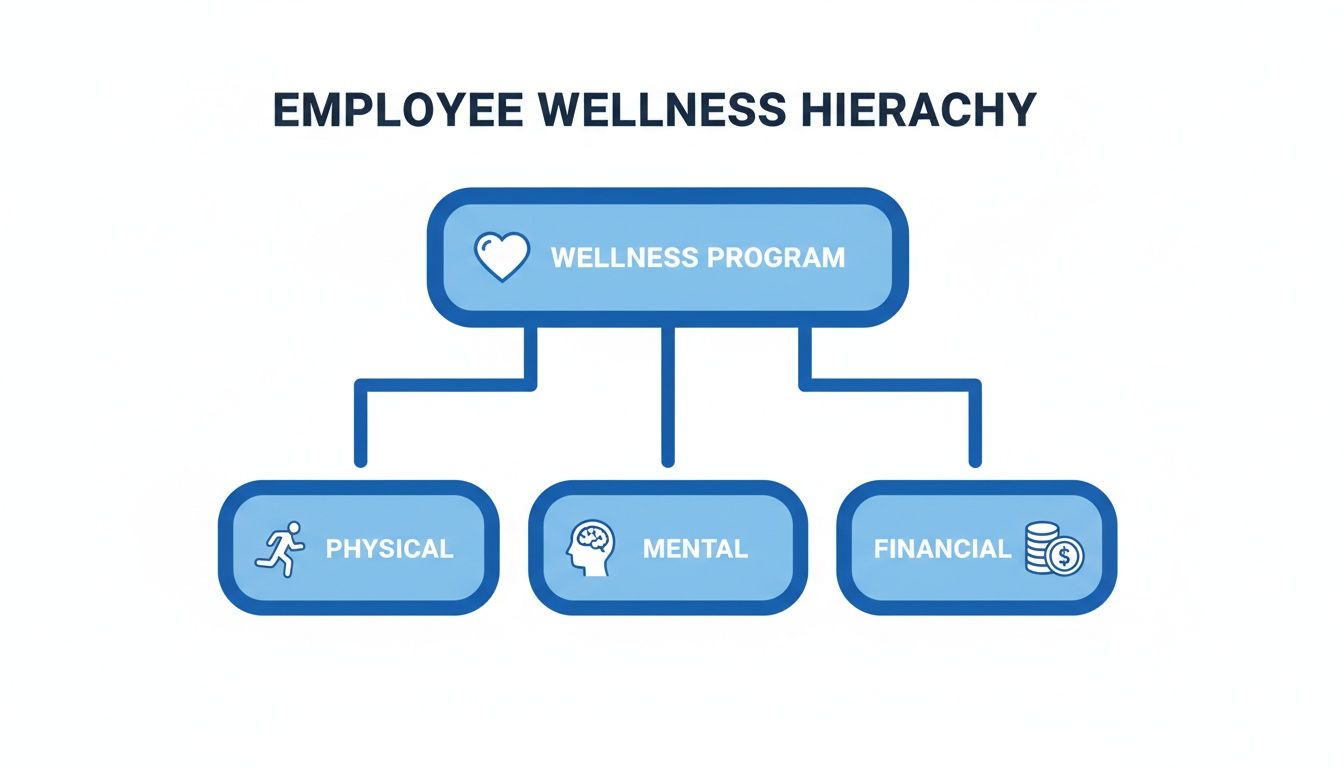
As you can see, a solid program balances physical, mental, and financial health to provide genuinely comprehensive support. This holistic approach is crucial for remote teams, where the lines between work and life often get blurry, making true work-life integration a top priority.
A great wellness program signals that a company sees its employees as whole people, not just cogs in a machine. It’s an investment in sustainable success, acknowledging that personal well-being is the foundation of professional achievement.
These programs are not just about offering gym memberships or meditation apps. They are a direct reflection of company culture, showing a deep commitment to creating an environment where people can truly thrive.
To better understand this, here's a quick summary of the core components that make up a comprehensive wellness program, helping you grasp its true scope and purpose.
The Five Pillars of Modern Employee Wellness
| Wellness Pillar | What It Covers | Example for Remote Teams |
|---|---|---|
| Physical Wellness | Nutrition, fitness, sleep, and preventative care. | Subsidized standing desks, virtual yoga classes, and stipends for healthy meal delivery services. |
| Mental & Emotional Wellness | Stress management, resilience, and access to mental health support like therapy. | Free subscriptions to mindfulness apps like Calm and access to on-demand virtual counseling sessions. |
| Financial Wellness | Budgeting, debt management, retirement planning, and financial literacy. | Webinars with financial planners, access to student loan repayment tools, and 401(k) matching programs. |
| Social Wellness | Fostering connection, community, and a sense of belonging among colleagues. | Virtual coffee chats, online team-building games, and dedicated Slack channels for non-work hobbies. |
| Professional Wellness | Career growth, skill development, and finding purpose and satisfaction at work. | Mentorship programs, funding for online courses, and clear career pathing discussions with managers. |
By weaving these five pillars together, you move beyond basic perks and start building a genuinely supportive ecosystem.
This philosophy is about creating a workplace where every team member is empowered to bring their best self to work. You can explore a ton of great ideas for designing, launching, and measuring modern worksite wellness programs that deliver real results.
The Real Impact of Wellness on Employees and a Company's Bottom Line
Let's get down to what really matters: the true value of these programs. For employees, the benefits of a thoughtfully designed wellness program go way beyond a free yoga class or a meditation app subscription. It’s about building a workplace that actively fights burnout, offers real mental health support, and helps people create a work-life balance that actually works.
When a company invests in your well-being, it sends a powerful message: you're seen and valued as a whole person, not just a cog in a machine. This simple act of support can radically change how people feel about their jobs, leading to less stress, higher satisfaction, and a much stronger connection to their work and their team.

Driving Business Success Through Well-Being
For employers, this isn't just about doing the right thing; it’s a smart business move with tangible returns. Pouring resources into employee wellness has a direct and measurable effect on productivity, morale, and—crucially—employee retention. In today's competitive job market, a robust wellness culture isn't a perk; it's a major differentiator that helps attract and keep top-tier talent.
Happy, healthy employees are simply better at their jobs. They’re more focused, more creative, and more collaborative, which is what pushes a company forward. This creates a fantastic feedback loop where individual well-being fuels collective success.
The financial argument is just as compelling. Companies that make wellness a priority often see significant drops in costs tied to turnover and absenteeism. The investment starts paying for itself through smoother operations and a healthier, more present team.
A supportive wellness program is not an expense—it's an investment in the engine of the company: its people. It nurtures the human capital that drives innovation, growth, and long-term stability.
This link between employee health and business performance isn't just a theory; it's backed by solid data. The financial returns on these programs are hard to ignore, delivering an average ROI of $1.50 to $3 per dollar spent over a few years. Digging deeper, for every single dollar invested, companies can save an average of $5.82 on absenteeism and $3.27 on medical costs. If you're interested in the numbers, you can explore the latest research on corporate wellness program ROI.
The Cultural and Financial Payoff
Ultimately, the impact of a great wellness program is a clear win-win. Employees get the support they need to thrive both personally and professionally, while the company builds a resilient, high-performing culture that’s built to last.
Here’s a quick look at the core benefits for everyone involved:
For Employees:
- Reduced Burnout: Proactive support helps manage stress before it snowballs.
- Better Health Outcomes: Easy access to physical and mental health resources improves overall well-being.
- Increased Job Satisfaction: Feeling cared for leads to a more positive and fulfilling work experience.
For Employers:
- Higher Employee Retention: A supportive culture gives your best people a reason to stay for the long haul.
- Improved Productivity: A healthy, engaged workforce is a productive one. It's that simple.
- Stronger Employer Brand: A reputation for genuinely caring about your people is a magnet for top talent.
This symbiotic relationship is really the foundation of any modern, successful organization. A company's investment in its people's health is a direct investment in its own future, creating a powerful cycle of growth and well-being.
What a Great Remote Wellness Program Actually Looks Like
Forget the on-site gyms and catered lunches. When your team is spread across different cities, countries, and time zones, a truly effective wellness program needs a completely different playbook. It has to move beyond physical office perks and focus on providing flexible, accessible support that meets people exactly where they are.
The best remote wellness programs are built on a foundation of trust and autonomy. They recognize that a distributed team has incredibly diverse needs. Instead of a one-size-fits-all, top-down approach, they offer a menu of options that empower individuals to take control of their own well-being in a way that actually works for them. This shift is at the heart of what a modern wellness program is all about.
Core Elements of a Remote-First Program
A forward-thinking remote company doesn't try to just replicate the office online—that never works. Instead, it innovates by focusing on outcomes and genuine flexibility. This means providing resources that directly address the real-world challenges of remote work, like social isolation, the risk of burnout, and the constant struggle to unplug.
Here’s what a top-tier remote wellness program often includes:
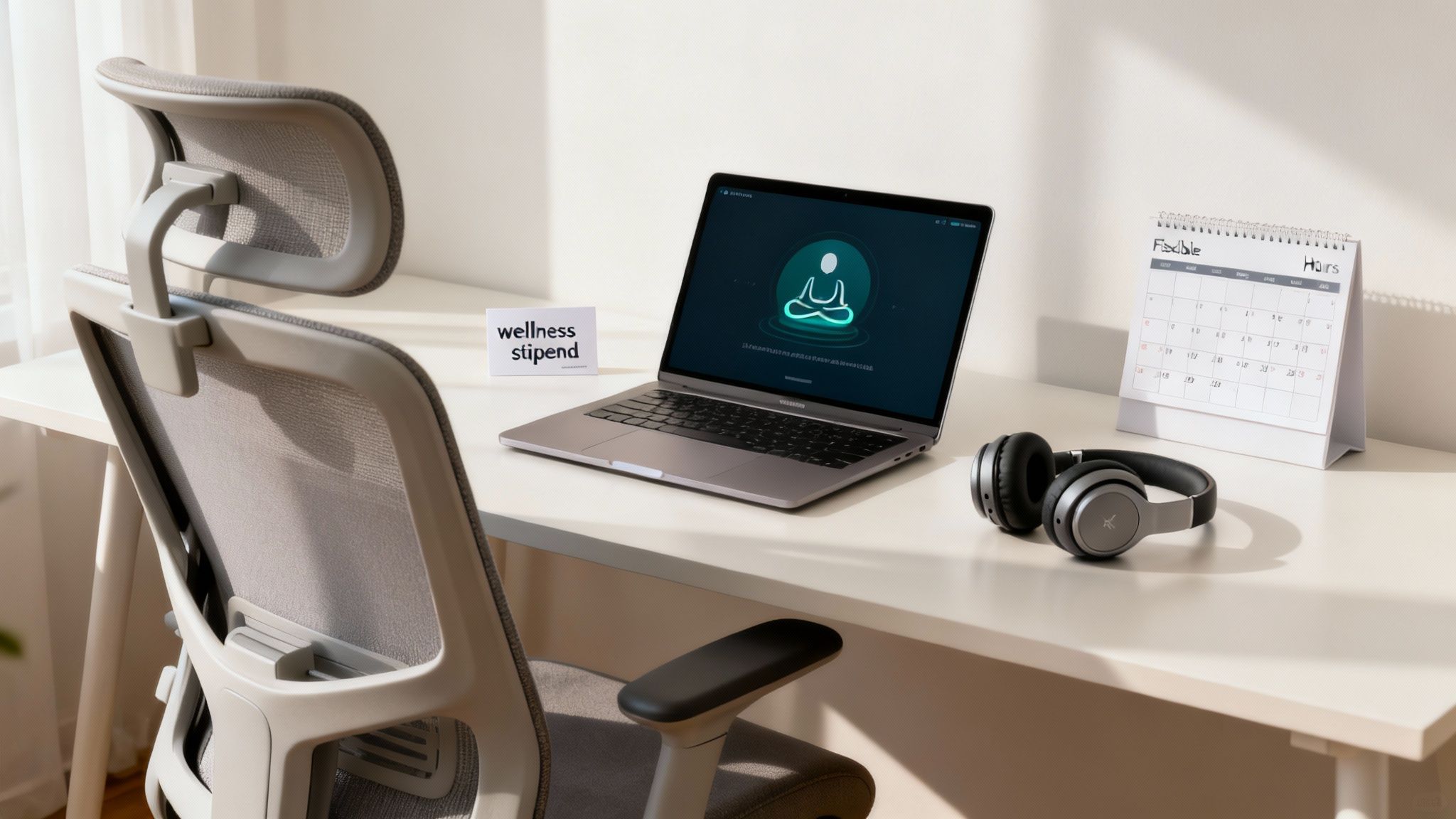
- Truly Flexible Working Hours: This is non-negotiable. Real flexibility means letting people structure their day around their life, not the other way around. It respects different energy levels, family commitments, and personal responsibilities.
- Accessible Mental Health Support: A subscription to an app like Calm or Headspace is a good start. But leading companies go further, offering confidential access to virtual therapy through platforms like BetterHelp.
- Home Office Stipends: This acknowledges a simple reality: the home is the office now. Providing funds for a proper ergonomic chair, a standing desk, or a good monitor is a direct investment in your team's physical health and comfort.
- Wellness & Learning Allowances: This is all about empowerment. A monthly or annual stipend can be used for anything from a gym membership or yoga classes to financial planning workshops or professional development courses. The choice belongs to the employee.
The goal of a remote wellness program isn’t to track activity but to provide the tools and freedom for employees to build healthy, sustainable work habits on their own terms. It’s a shift from mandated participation to genuine empowerment.
Comparing On-Site vs Remote Wellness Initiatives
The evolution from on-site perks to remote support isn't just a change in logistics; it signals a much deeper shift in company culture. It shows a genuine understanding that well-being is personal and can't be contained within the four walls of an office.
Here’s a look at how those old-school office perks are being reimagined for the remote world.
Comparing On-Site vs Remote Wellness Initiatives
| Traditional Perk | Modern Remote Equivalent | Key Benefit for Remote Workers |
|---|---|---|
| On-Site Gym | Stipend for a local gym or subscriptions to fitness apps like Peloton. | Choice & Accessibility: Employees can choose a fitness routine that fits their lifestyle and location. |
| Catered Lunches | Allowances for healthy meal delivery services or grocery stipends. | Personalization: Supports individual dietary needs and preferences without being tied to a single office menu. |
| In-Person Workshops | Virtual financial planning seminars and access to on-demand learning platforms. | Flexibility: Team members across time zones can participate live or watch recordings at their convenience. |
| Team Happy Hours | Virtual social events, online gaming sessions, and budgets for virtual coffee chats. | Inclusivity: Fosters connection and combats isolation for employees regardless of their physical location. |
Ultimately, a great remote wellness program is one of the clearest indicators that a company trusts its people. By providing the resources for employees to thrive both professionally and personally, you create a culture of support that pays dividends in higher engagement, better retention, and a happier, healthier workforce.
How to Spot a Genuinely Supportive Company Culture
Any company can create a flashy careers page that promises the world. But figuring out if their commitment to well-being is the real deal requires you to look a little closer. True support is woven into the very fabric of daily work life, not just listed on a benefits PDF.
The trick is to see past the surface-level perks and dig into how the company actually behaves when things get tough. A genuinely supportive culture reveals itself in leadership decisions, team interactions, and the real flexibility offered to employees. It’s all about proactive support, not just reactive benefits.
Questions That Reveal the Truth
The interview process is your best chance to peek behind the curtain. Instead of asking about the free snacks or gym memberships, focus on questions that probe their real commitment to a healthy workplace. You want to understand how their policies actually play out for the people who work there every day.
Here are a few sharp questions to get you started:
- "How does your leadership team actively model and support work-life balance?" This gets to the heart of whether wellness is a core value driven from the top or just a forgotten HR initiative.
- "Can you share a specific example of how the company has supported an employee through a challenging personal or professional period?" This cuts through the corporate-speak and asks for proof.
- "What does the company do to proactively prevent burnout, especially during intense project cycles?" This tests whether their approach is preventative or if they only react once people are already fried.
- "How do you collect feedback on your wellness initiatives, and can you give an example of a change made based on that feedback?" This shows whether they actually listen to their team and are willing to improve.
Asking the right questions is your superpower. For a deeper dive, check out our guide on the best questions to ask about company culture to really get to the bottom of things.
Red Flags to Watch For
Just as important as asking good questions is knowing which warning signs to look out for. Vague policies and inconsistent messaging are often tell-tale signs that a wellness program is more for show than genuine support.
A company that talks a big game about flexibility but micromanages your schedule with rigid 9-to-5 monitoring isn’t practicing what it preaches. A true wellness culture is built on a foundation of trust and autonomy, not surveillance.
Keep your eyes peeled for these red flags:
- Vague Language: Be skeptical of generic phrases like "we value wellness" or "a culture of support" if they can't provide specific programs or examples to back them up.
- Inflexible Policies: Rigid rules around working hours, taking time off, and communication expectations are often in direct conflict with claims of supporting employee well-being.
- Glassdoor and Forum Reviews: Do your homework. Dig into employee reviews and look for patterns. Recurring complaints about burnout, bad management, or a lack of support can reveal the reality behind the marketing spin.
By combining sharp questions with some careful background research, you can get a much clearer picture and find a company that doesn’t just talk about wellness, but actively builds a healthy and supportive place to work.
Building a Wellness Program Your Remote Team Will Actually Use
Let's be honest: launching an employee wellness program that people actually use isn't about guesswork. It’s about listening. For HR pros and leaders, the most successful initiatives start from the ground up, built on what your team truly needs—not what you think they want. The whole point is to create something that feels like a genuine perk, not another corporate mandate.
The best way to start? Just ask. Anonymous surveys are your secret weapon here. They create a safe space for people to open up about their real challenges without any pressure. Are they battling burnout? Is financial stress keeping them up at night? Feeling isolated? Their answers will give you a crystal-clear roadmap.
From Feedback to Framework
Once you have a handle on your team's needs, your next mission is getting leadership on board. A wellness program only works if it has visible champions at the top. When executives openly participate and talk about the importance of well-being, it sends a powerful signal that the company is truly committed.
With that buy-in secured, it's time to set some clear, measurable goals. What does success actually look like? Maybe it’s a 10% increase in participation in mental health workshops or a noticeable drop in voluntary turnover over the next six months. Concrete goals transform a fuzzy idea into a real business objective.
Communication and Flexibility Are Key
How you roll out the program is just as important as what’s in it. Ditch the corporate-speak and frame it around the benefits to your employees. Talk about how it can help them slash stress, get healthier, and reclaim some work-life balance.
More than anything, offer a flexible menu of options. A one-size-fits-all approach is dead on arrival for a diverse, global workforce. Instead of forcing everyone onto a single fitness app, consider a wellness stipend. Let your team use it for a gym membership, a meditation app, or even a session with a financial planner.
A successful remote wellness program is built on choice and trust. It empowers employees to select the resources that are most meaningful to them, fostering a sense of ownership and boosting engagement significantly.
This approach recognizes that wellness is deeply personal. Giving your team autonomy is one of the most effective employee engagement best practices because it shows you trust them to know what's best for their own well-being.
Startup Quick Start: High-Impact Ideas
Even if you're working with a shoestring budget, you can make a big impact. Just focus on low-cost initiatives that deliver serious value.
- Implement "No-Meeting Fridays": Give everyone a dedicated day for deep work and catching up. This one simple change can drastically cut down on calendar fatigue.
- Promote Mental Health Days: Actively encourage your team to use personal days for mental rest, and have leadership set the example by doing it themselves.
- Organize Virtual Socials: Host optional online coffee chats or game sessions. It’s a low-effort way to fight loneliness and build genuine connections.
- Create a Wellness Slack Channel: Carve out a space for people to share healthy recipes, fitness tips, or mindfulness resources. It helps build a supportive community from the inside out.
Ultimately, the best wellness programs are never "finished." They're an ongoing conversation. Keep gathering feedback, measure what’s working, and don't be afraid to adapt. By putting listening and flexibility first, you’ll build a program your remote team doesn’t just use, but truly values.
The Future of Work Is a Culture of Well-Being
Let's be clear: employee wellness programs are no longer a nice-to-have perk. They've become a central pillar of any resilient, modern company. When you get right down to it, what is an employee wellness program if not a direct investment in the very people who make your business run?
For professionals working remotely, actively looking for employers who genuinely care about wellness isn't just a preference—it’s a strategy for building a sustainable and fulfilling career. And for companies, putting real resources behind your team's well-being is the single best way to attract and keep the talent you need to succeed in a distributed world.
The bottom line is this: a genuine focus on employee health creates a powerful win-win, paving the way for a future where both people and businesses flourish together.
For any company serious about building this kind of culture, weaving in comprehensive and effective workplace stress management strategies is non-negotiable. This isn't just about supporting individuals; it’s about strengthening the entire organization from the ground up.
Ultimately, this whole shift points to a new kind of agreement between a company and its people. It's an agreement built on mutual respect and the shared belief that when people are at their best, the business thrives right alongside them. This creates a more sustainable and human-centered workplace for everyone.
Common Questions About Employee Wellness Programs
When you start digging into employee wellness programs, a few questions always seem to pop up. Let's tackle some of the most common ones to clear things up.
Are Wellness Programs Just for Big Tech Companies?
Absolutely not. It's a common myth that you need a massive budget to create a meaningful wellness program. While big corporations might offer flashy perks, startups and smaller companies can make a huge difference with low-cost, high-impact initiatives.
Think about it: offering flexible work hours, encouraging mental health days, or providing subscriptions to mindfulness apps costs very little but sends a powerful message of support. Even simple things like organizing virtual coffee chats or online game sessions can build connection and combat isolation, all without breaking the bank. It's less about expensive perks and more about creating a genuinely supportive culture.
What's the Real Difference Between a Wellness Program and Standard Benefits?
This is a great question. Standard benefits, like health insurance and a 401(k), are the essential safety nets. They're the foundation. A wellness program, on the other hand, is a proactive strategy built on top of that foundation to actively boost an employee's quality of life.
Here's a simple way to look at it: Health insurance is there to help you fix a problem once it occurs. A wellness program is designed to prevent that problem in the first place by encouraging healthy habits, building mental resilience, and reducing stress. One is a first-aid kit; the other is a personal trainer.
How Do You Actually Measure if a Wellness Program Is Working?
Measuring success isn't just about one number; it's about looking at the complete picture using both hard data and human feedback. This gives you a real sense of the program's impact.
Here are a few key things to track:
- Participation Rates: Are people actually using what you're offering? Low engagement is a clear sign something needs to change.
- Anonymous Survey Feedback: The best way to know if a program is valuable is to ask your team directly. What do they love? What’s missing?
- Retention and Turnover: Are the people who engage with your wellness initiatives more likely to stick around long-term? This is a powerful indicator of value.
- Sick Day Trends: A noticeable drop in sick leave can often point to a healthier, less burned-out workforce.
You can also get more specific by looking at things like how many people are using the mental health resources or signing up for virtual fitness challenges. The goal is to see where the energy is and double down on what works.
Finding a remote company that genuinely invests in its people can completely change your work life. At RemoteWeek, we focus exclusively on listing jobs from companies known for their positive, supportive cultures. You can be confident that you're applying to a place that truly values its team.