
The 7 Best Job Boards for Tech Jobs in 2026

The tech job market is both vast and competitive, making the search for the right role feel like searching for a needle in a haystack. For job seekers, the challenge is cutting through the noise to find high-quality opportunities that match their skills and career goals. For employers, attracting top-tier talent requires posting on platforms where these skilled professionals are actively looking. Choosing the wrong platform can lead to a frustrating, prolonged search with mismatched applications, while the right one can accelerate the entire process.
This guide is designed to solve that problem by providing a comprehensive breakdown of the best job boards for tech jobs. We dive deep into the unique strengths and weaknesses of each platform, moving beyond generic descriptions to offer actionable insights. You'll learn which site is best for landing a role at a fast-growing startup, which one excels at remote-only positions, and where to find senior-level engineering opportunities.
Inside this curated list, you will find:
- Detailed analysis of each job board's audience and specialties.
- Actionable application tips tailored to each platform.
- Clear pros and cons to help you decide where to focus your energy.
- Screenshots and direct links to get you started immediately.
Whether you are a junior developer seeking your first role, a seasoned engineer targeting a specific industry, or a hiring manager building a world-class team, this breakdown will equip you with the strategic knowledge needed to make your search more effective. Let's explore the platforms that will connect you with your next great opportunity.
1. RemoteWeek: The Curated Choice for High-Quality Remote Roles
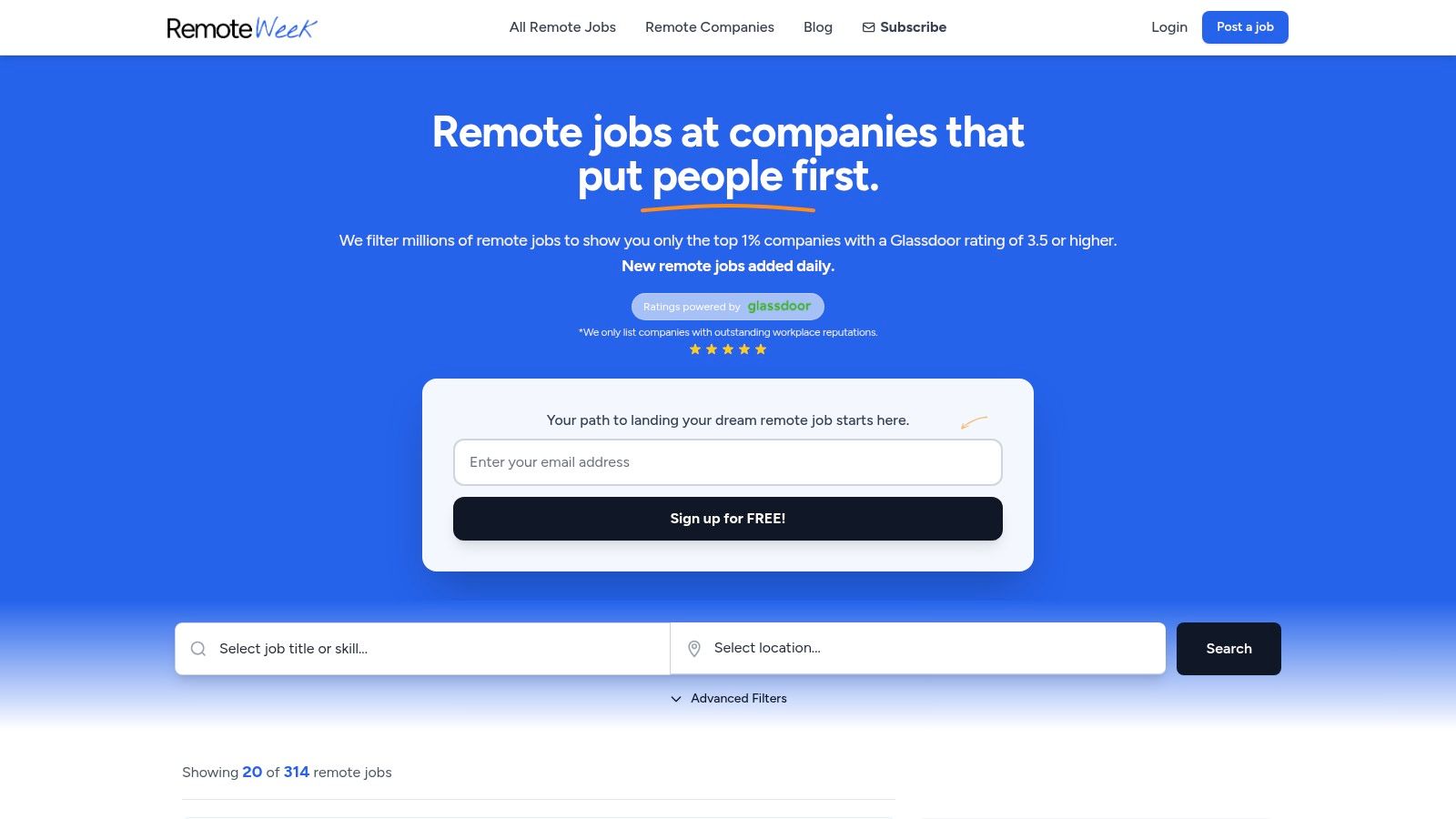
In a digital landscape saturated with countless job listings, RemoteWeek distinguishes itself as a premier destination for tech professionals seeking high-caliber remote opportunities. Instead of overwhelming users with sheer volume, the platform adopts a curated, quality-first approach. This focus makes it one of the best job boards for tech jobs, particularly for candidates who prioritize company culture and workplace integrity.
RemoteWeek's core differentiator is its stringent vetting process. The platform exclusively features roles from companies with an overall Glassdoor rating of 3.5 or higher. This simple yet powerful filter is designed to weed out toxic work environments, potential job scams, and low-quality opportunities, providing a safer and more reliable search experience. By showcasing what it calls the "top 1% of companies," RemoteWeek directly addresses a primary concern for remote job seekers: the uncertainty of a company's true culture.
Why It Stands Out for Tech Professionals
RemoteWeek is meticulously designed for the modern tech job seeker. The user experience is clean, intuitive, and entirely free for candidates. Daily updates ensure a constant flow of fresh opportunities from globally recognized, remote-first companies like Dropbox, GitLab, and Stripe. This visible social proof reinforces the platform's credibility and attracts top-tier talent.
The platform offers robust filtering options, allowing users to narrow their search by specific roles, required skills, country, and even salary ranges when available. This functionality saves valuable time, enabling you to pinpoint roles that align perfectly with your career goals and compensation expectations.
Key Insight: RemoteWeek's emphasis on company reputation (via Glassdoor ratings) fundamentally shifts the job search dynamic. It empowers candidates to start their search from a foundation of trust, knowing every listed company has a proven track record of employee satisfaction.
Platform Features and Benefits
| Feature | For Job Seekers (Candidates) | For Employers (Companies) |
|---|---|---|
| Cost Structure | Completely Free: No fees for searching, applying, or setting up alerts. | Subscription-Based: A single monthly fee for unlimited job postings. |
| Job Curation | Access to verified remote roles from companies with a 3.5+ Glassdoor rating. | Reach a highly engaged audience of top-tier, remote-focused tech talent. |
| Search & Alerts | Advanced filters for role, country, and salary. Customizable daily email alerts. | Showcase company culture and employee satisfaction to attract values-aligned candidates. |
| Global Reach | Opportunities from companies hiring across dozens of countries. | Tap into a global talent pool without the geographical limitations of traditional boards. |
Practical Tips for Job Seekers
To maximize your success on RemoteWeek, take a proactive approach:
- Set Up Precise Job Alerts: Don't just subscribe to general alerts. Create highly specific alerts for your target roles, like "Senior Backend Engineer" or "Remote Product Manager," to ensure you see the most relevant openings first.
- Leverage the Quality Signal: When you apply, mention that you discovered the role on RemoteWeek. This signals to the employer that you are a discerning candidate who values company culture and reputation.
- Research the Glassdoor Profile: Before applying, click through to the company's Glassdoor page. Use the detailed reviews and ratings to tailor your cover letter and prepare for interview questions about company culture.
Pros and Cons
Pros:
- Highly Curated: The 3.5+ Glassdoor rating requirement significantly improves the quality and trustworthiness of listings.
- Free for Job Seekers: No hidden fees or premium accounts are needed to access all features.
- Employer-Friendly Pricing: Unlimited job postings under one subscription offer a strong ROI for hiring companies.
- Strong Brand Recognition: Features well-known, respected remote-friendly companies, adding to its credibility.
Cons:
- Opaque Employer Pricing: Companies must inquire for subscription costs, as prices are not listed publicly.
- Niche Focus: The reliance on Glassdoor may exclude smaller, promising startups or companies in regions where the platform has limited traction.
Website: https://www.remoteweek.io
2. LinkedIn Jobs
LinkedIn Jobs transcends being just a job board; it's an integrated ecosystem where professional networking, company research, and job searching converge. Its primary strength lies in its sheer scale, offering unparalleled access to both passive and active candidates in the tech industry. For tech professionals, it’s a platform where your professional identity, network, and career opportunities all live in one place.
What sets LinkedIn apart from other best job boards for tech jobs is its deep integration with professional profiles. Instead of just submitting a resume, you often apply with your comprehensive LinkedIn profile, which acts as a dynamic, living document showcasing skills, experience, recommendations, and connections. This creates a richer, more holistic view for recruiters.
Key Features and Capabilities
LinkedIn’s platform is built around leveraging its massive professional network for recruitment and job seeking.
- Massive Reach: With over a billion members globally, the platform provides unmatched access to tech talent, including those not actively looking but open to new opportunities.
- Profile-Based Applications: The "Easy Apply" feature allows candidates to submit their LinkedIn profile directly, streamlining the application process.
- Powerful Filtering: Job seekers can filter by seniority level, company size, remote options, and even specific skills, making it easier to narrow down relevant tech roles.
- Company Insights: Candidates can follow target companies, see who works there from their network, and gain insights into company culture directly on the platform.
Pricing and Access
For job seekers, using LinkedIn Jobs is completely free. A "Premium Career" subscription (starting around $29.99/month) offers additional benefits like InMail credits to message recruiters directly, insights into who viewed your profile, and how you compare to other applicants.
For employers, pricing is typically a pay-per-click (PPC) model. You set a daily or total budget for your job post, and you're charged when candidates click on it. Costs can vary significantly based on the role's competitiveness and location.
Pros and Cons for Tech Job Seekers
| Pros | Cons |
|---|---|
| Unmatched Volume: Access to the largest number of tech job listings from global companies. | High Competition: Popular tech roles receive hundreds, sometimes thousands, of applicants. |
| Integrated Networking: Easily connect with recruiters, hiring managers, and current employees. | Signal-to-Noise Ratio: The sheer volume can make it difficult to find quality listings. |
| Company Research: A one-stop-shop to research companies, culture, and potential team members. | "Easy Apply" Fatigue: Recruiters can be overwhelmed, potentially overlooking applications. |
Actionable Tip: Don’t just apply. Use LinkedIn to connect with a recruiter or someone in a relevant team at the company. A personalized message referencing the role can dramatically increase your visibility. For more strategies on standing out, you can learn more about an effective remote job search on remoteweek.io.
Best For: All levels of tech professionals who want to combine their job search with active networking and company research, and for employers looking for the broadest possible reach.
Website: https://www.linkedin.com/jobs
3. Indeed
Indeed operates as one of the world's largest job aggregators, functioning like a massive search engine for career opportunities. Its immense scale means it scrapes and lists jobs from thousands of company career pages, ATS platforms, and other job boards, making it a comprehensive first stop for many. For tech professionals, this translates to an unparalleled volume of listings, from entry-level IT support roles to senior software architect positions.
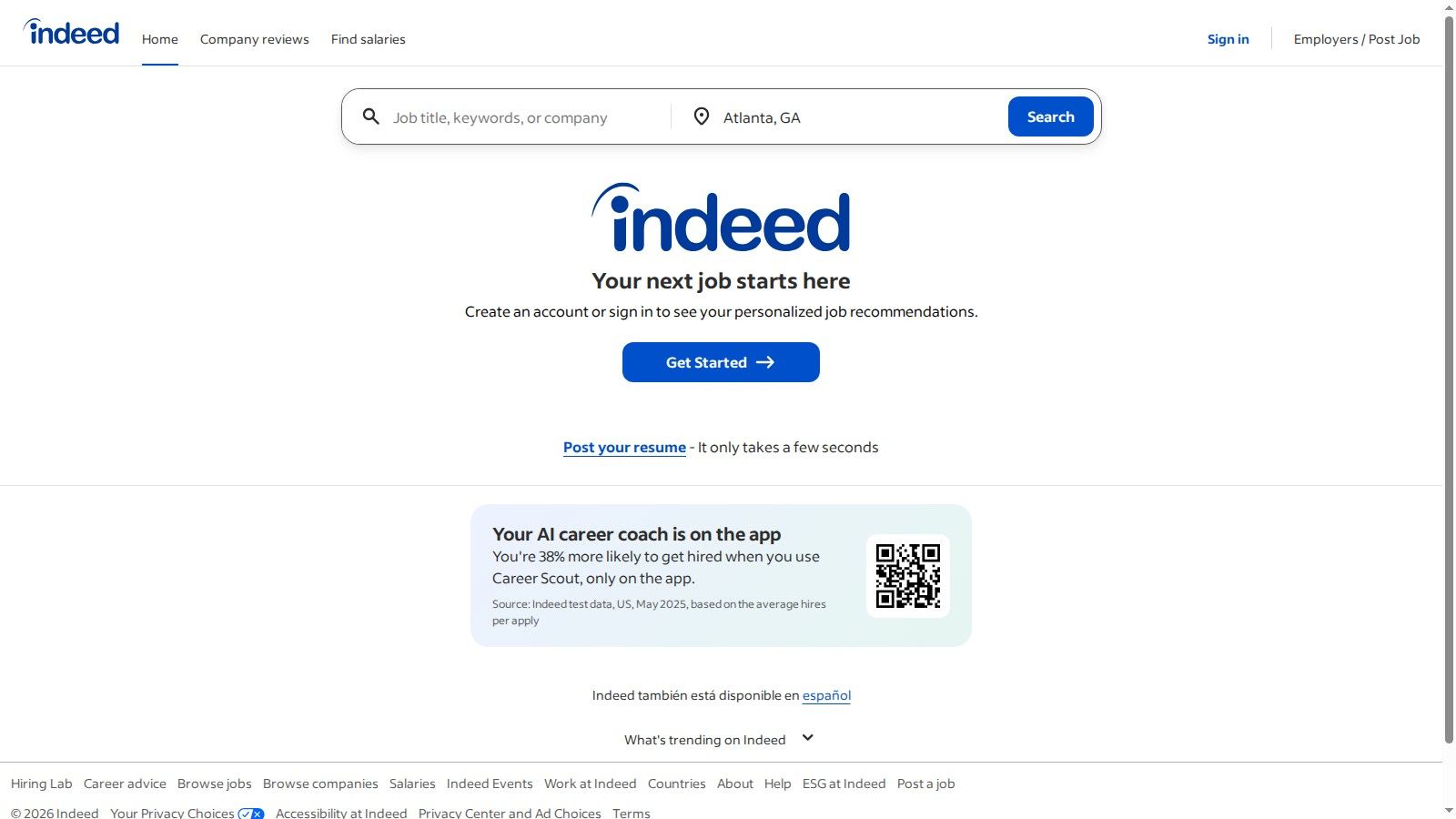
What differentiates Indeed in the landscape of the best job boards for tech jobs is its sheer, unfiltered volume and familiar, search-engine-like interface. While other platforms focus on curating a specific type of role or professional community, Indeed's strength is its breadth. It provides a high-level view of the entire tech job market, allowing job seekers to see almost everything available in one place.
Key Features and Capabilities
Indeed's platform is designed for high-volume searching and application management, catering to both employers and job seekers.
- Enormous Reach: As a top job aggregator, it offers a vast inventory of tech jobs, often more than specialized boards.
- Resume Hosting: Job seekers can upload their resumes to create an Indeed Profile, enabling quick applications for many roles.
- Robust Filtering: Users can effectively narrow searches by keywords, location, salary range, and crucially for tech, remote or hybrid work options.
- Company Reviews: Integrated company pages feature reviews and salary data from current and former employees, offering valuable research tools.
Pricing and Access
For job seekers, Indeed is completely free to use. You can search for jobs, set up email alerts, and host your resume at no cost.
For employers, Indeed offers both free and sponsored job postings. A free listing appears in general search results but can quickly get pushed down by newer or sponsored posts. Sponsored Jobs operate on a flexible pay-per-application (PPA) or pay-per-click (PPC) model. Employers set a budget and are charged when they receive applications from qualified candidates or when a candidate clicks, ensuring their tech roles get priority visibility.
Pros and Cons for Tech Job Seekers
| Pros | Cons |
|---|---|
| Highest Volume of Listings: Unmatched quantity of tech jobs from across the entire web. | High Application Volume: Popular tech roles can attract a flood of applicants, making it hard to stand out. |
| Familiar Search Interface: The simple, powerful search functionality is intuitive for everyone. | Signal-to-Noise Ratio: The sheer volume can include outdated, duplicate, or low-quality listings. |
| Company Insights: Access to millions of company reviews and salary data aids in research. | Less Curation: Unlike niche boards, there's less curation, requiring more effort to vet opportunities. |
Actionable Tip: Tailor your Indeed Resume for each application by adjusting the headline and summary to mirror the keywords in the job description. To maximize your success on this platform, ensure you understand how to apply effectively on Indeed, leveraging all its features.
Best For: Tech job seekers at all levels looking for the widest possible net of opportunities and employers aiming for maximum visibility in a high-volume hiring funnel.
Website: https://www.indeed.com
4. Dice
Dice has carved out a niche as one of the original and most respected tech-specific job boards. For decades, it has been a go-to resource for US-based employers searching for highly skilled professionals in software development, data science, cybersecurity, cloud computing, and engineering. Its laser focus on technology makes it a high-signal platform, attracting a concentrated audience of serious tech talent.
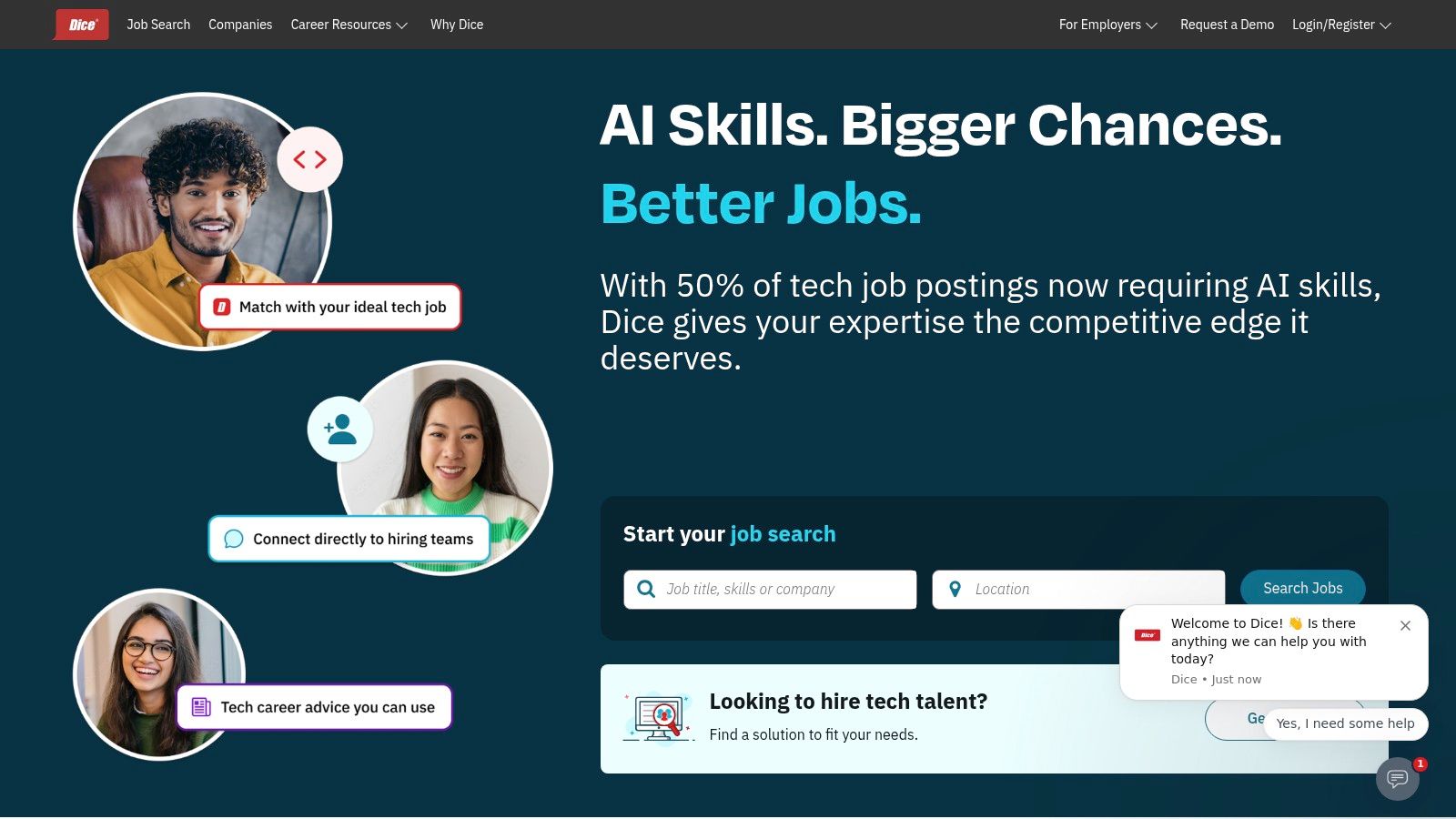
What makes Dice one of the best job boards for tech jobs is its commitment to the tech community. Unlike generalist platforms where tech roles can get lost in the noise, every feature on Dice is tailored to the needs of tech professionals and the recruiters trying to reach them. This creates a more efficient and relevant search experience for both sides of the hiring equation.
Key Features and Capabilities
Dice’s platform is built to connect specialized tech talent with relevant opportunities through a suite of targeted tools.
- Tech-Focused Audience: The platform caters exclusively to tech professionals, ensuring that job listings reach a qualified and relevant candidate pool.
- Intelligent Search: Dice uses AI-powered search to match candidates with jobs based on their skills, experience, and job titles, improving the quality of matches.
- Candidate Profile Visibility: Job seekers can create detailed profiles that highlight their specific tech skills, certifications, and project experience, making them more discoverable.
- Career Insights: The platform provides valuable content, including salary predictors and career pathing tools, to help tech professionals manage their careers.
Pricing and Access
For job seekers, creating a profile, searching for jobs, and applying on Dice is completely free. They can also upload their resumes to be discoverable by recruiters who are actively sourcing candidates.
For employers, Dice offers several subscription-based packages. Pricing is typically based on the number of job slots needed, access to the resume database, and employer branding features. Single job postings are also available, often starting at a few hundred dollars for a 30-day listing.
Pros and Cons for Tech Job Seekers
| Pros | Cons |
|---|---|
| High-Quality Listings: Focus on tech means less noise and more relevant, specialized roles. | Geographic Focus: Primarily concentrated on the US market, with fewer international roles. |
| Less Competition: A smaller, more focused audience than massive generalist boards like LinkedIn. | Smaller Volume: Fewer total listings compared to larger, multi-industry platforms. |
| Specialized Tools: Salary predictors and career resources are tailored specifically for tech. | Niche Roles Can Be Limited: May have fewer listings for very niche or emerging tech fields. |
Actionable Tip: Your Dice profile is more than a resume upload. Treat it like a technical portfolio. Use the skills section to list every relevant technology, framework, and language you know. Recruiters use these specific keywords to search the database, so a comprehensive skills list significantly boosts your visibility. You can also explore writing a good resume headline on remoteweek.io to make your profile stand out even more.
Best For: US-based tech professionals, from mid-level to senior, who are looking for specialized roles and want to connect with companies actively recruiting for a dedicated tech workforce.
Website: https://www.dice.com
5. Wellfound (formerly AngelList Talent)
Wellfound, formerly known as AngelList Talent, has carved out a crucial niche as the go-to platform for tech professionals aspiring to join the startup world. It's more than a job board; it's a dedicated ecosystem connecting innovative companies, from early-stage ventures to high-growth scale-ups, with ambitious talent in engineering, product, design, and data science. Its focus on transparency, particularly around compensation, sets it apart.
What makes Wellfound a top contender among the best job boards for tech jobs is its deep-rooted connection to the startup community. The platform prioritizes direct communication and provides rich, contextual information about each company, including its funding stage, investors, and team size. This allows candidates to make highly informed decisions that align with their career goals and risk appetite.
Key Features and Capabilities
Wellfound is designed to facilitate meaningful connections within the fast-paced startup environment.
- Startup-Centric Ecosystem: The platform is almost exclusively populated by startups and tech companies, ensuring that every listing is relevant to tech professionals looking for that specific environment.
- Transparent Compensation: Many job listings include clear salary ranges and equity options, a refreshing and valuable feature that saves time for both candidates and employers.
- Rich Company Profiles: Go beyond a simple job description with detailed profiles that include funding information, team photos, and insights into company culture.
- Direct Access: Candidates can often see and communicate directly with founders and hiring managers, cutting through layers of HR and getting straight to the decision-makers.
Pricing and Access
For job seekers, creating a profile and applying for jobs on Wellfound is entirely free. The platform is built to be candidate-friendly, offering a streamlined user experience without hidden costs.
For employers, Wellfound offers a highly attractive free tier that includes unlimited job postings, provided they disclose compensation details. For more advanced features, they offer paid plans like "Recruit Pro," which provides advanced sourcing filters and messaging tools, and "Promoted Jobs" to increase the visibility of critical roles.
Pros and Cons for Tech Job Seekers
| Pros | Cons |
|---|---|
| High-Quality Startup Roles: Direct access to vetted, often high-equity roles at exciting startups. | Niche Focus: Limited opportunities from large, established enterprise companies. |
| Salary and Equity Transparency: Compensation data is often provided upfront, reducing guesswork. | Varied Company Maturity: Roles can range from stable scale-ups to very early, risky ventures. |
| Direct Founder/Hiring Manager Access: Facilitates more personal and impactful interactions. | Geographic Concentration: While remote-friendly, many roles are centered in major tech hubs. |
Actionable Tip: Tailor your Wellfound profile to highlight your entrepreneurial spirit. Mention side projects, contributions to open-source, or any experience that shows you're adaptable and can thrive in a less-structured startup environment. This is what hiring managers on this platform look for.
Best For: Engineers, product managers, and designers who are specifically targeting roles at startups and growth-stage tech companies and value transparency and direct communication.
Website: https://wellfound.com
6. Built In
Built In is more than a job board; it's a community-driven platform for tech professionals primarily in the United States. It masterfully combines job listings with rich editorial content and detailed company profiles, focusing on major tech hubs and remote opportunities. Its core value lies in its emphasis on employer branding, allowing companies to showcase their culture, benefits, and values to attract talent that truly fits.
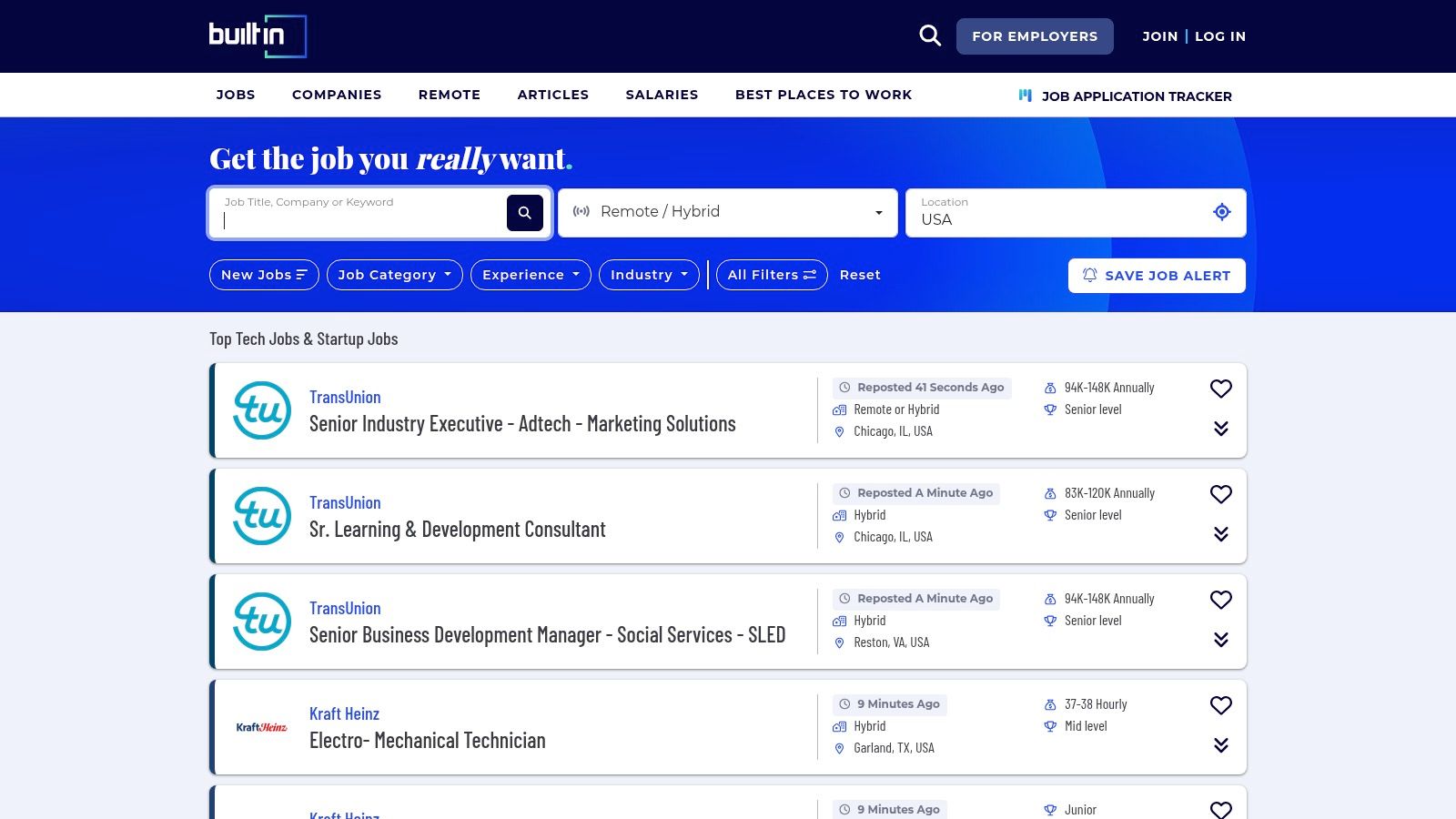
What makes Built In one of the best job boards for tech jobs is its culture-first approach. For candidates weary of generic job descriptions, the platform offers a transparent look into what it’s actually like to work at a company. This focus on perks, benefits, and employee testimonials helps tech professionals make more informed career decisions based on cultural alignment, not just salary.
Key Features and Capabilities
Built In’s platform is designed to connect culture-minded tech talent with companies that invest in their employer brand.
- Detailed Company Profiles: Companies can create in-depth profiles highlighting their mission, tech stack, benefits, diversity initiatives, and employee perks, giving candidates a comprehensive overview.
- Curated Job Listings: The platform features roles from startups to enterprise-level companies, with strong filters for remote work, specific tech hubs, and job categories.
- Editorial Content: Built In publishes news, articles, and reports on tech trends, salaries, and company culture, providing valuable context for job seekers.
- Salary Transparency: Many listings and company profiles include salary ranges, empowering candidates with crucial information upfront.
Pricing and Access
For job seekers, browsing jobs and company profiles on Built In is completely free.
For employers, Built In offers a tiered approach. While some jobs are aggregated for free, paid plans unlock premium features. These "Employer Plans" include unlimited job postings, enhanced company profiles, and content marketing solutions to attract top talent. Specific pricing is customized and provided through a sales consultation rather than being listed publicly.
Pros and Cons for Tech Job Seekers
| Pros | Cons |
|---|---|
| Culture-Focused Insights: In-depth company profiles offer a clear view of workplace culture and benefits. | US-Centric: The platform's primary focus is on the US market, with limited international listings. |
| High-Quality Listings: The focus on employer branding attracts serious, well-established tech companies. | Niche Audience: Its total volume of listings is smaller than massive, generalist boards like LinkedIn. |
| Salary Transparency: Many roles include salary information, aiding in the decision-making process. | Opaque Employer Pricing: The lack of public pricing for employers can be a barrier for smaller companies. |
Actionable Tip: Use the "Companies" section to build a target list based on factors you care about, like "Best Places to Work" or specific perks. Follow these companies to get notified immediately when they post new roles that fit your criteria. If you are looking for more opportunities, you can find a list of top tech companies hiring remotely on remoteweek.io.
Best For: US-based tech professionals who prioritize company culture, benefits, and mission alignment in their job search, and for employers who want to invest in showcasing their unique employer brand.
Website: https://builtin.com/jobs
7. We Work Remotely
We Work Remotely (WWR) is one of the original and largest remote-specific job communities on the internet. It has established itself as a premier destination for companies committed to remote work and for tech professionals seeking location-independent careers. Its reputation is built on curating high-quality listings from legitimate remote-first or remote-friendly companies, filtering out the noise often found on broader job boards.
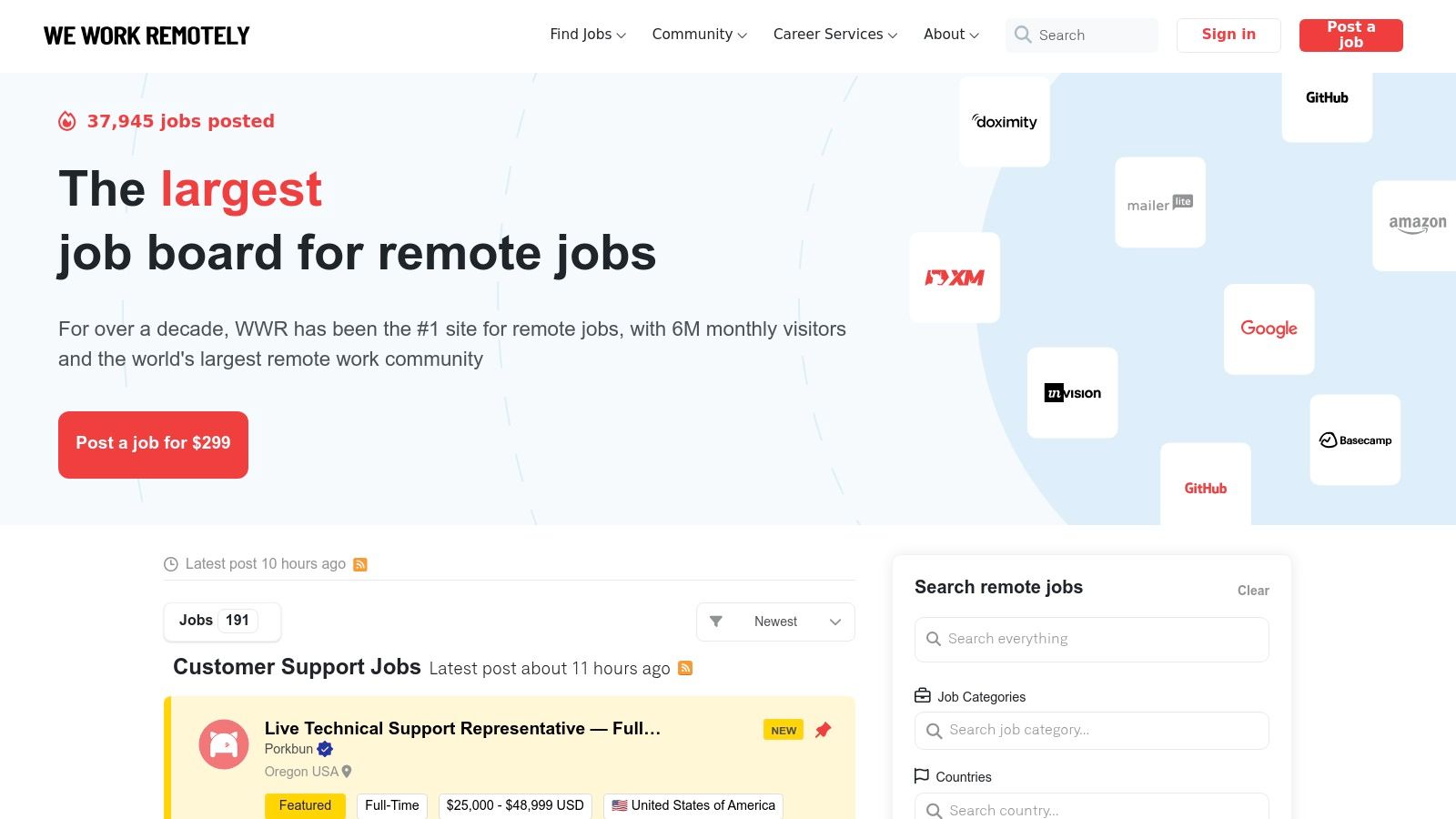
What makes WWR a standout among the best job boards for tech jobs is its unwavering focus. Unlike generalist platforms that simply add a "remote" filter, every role on WWR is inherently remote. This attracts a highly engaged audience of candidates who are not just open to remote work but actively prioritizing it, ensuring employers connect with a dedicated talent pool.
Key Features and Capabilities
WWR's platform is streamlined and purpose-built for connecting remote companies with remote talent, especially in the tech sector.
- Dedicated Tech Categories: The site is clearly organized into core tech disciplines like Programming, Design, and DevOps/Sysadmin, allowing for easy browsing.
- Simple, Flat-Fee Postings: Employers pay a single flat fee for a 30-day listing, providing cost predictability without complex pricing models.
- Broad Distribution: Job posts are automatically distributed to partner sites and aggregators, including Google Jobs, increasing their visibility.
- Quality Curation: WWR has a reputation for vetting companies, leading to a higher concentration of legitimate, high-quality remote tech roles.
Pricing and Access
For job seekers, browsing and applying to jobs on We Work Remotely is entirely free. There are no premium accounts or paid features for candidates, ensuring equal access to all listings.
For employers, the pricing model is straightforward. A standard 30-day job post costs a flat fee of $299. This includes distribution to their partner network. Employers can purchase optional add-ons like highlighting the post, adding a company logo, or pinning the listing to the top of its category for increased visibility.
Pros and Cons for Tech Job Seekers
| Pros | Cons |
|---|---|
| High-Quality, Vetted Listings: Strong focus on legitimate remote roles from established companies. | Niche Focus: Not suitable for those seeking hybrid or on-site tech positions. |
| High-Intent Audience: Connects with companies genuinely committed to remote-first cultures. | Pricey for Some Employers: The single-post fee can be a barrier for early-stage startups. |
| Simple, Clean Interface: Easy to navigate and search for jobs without distracting features. | Fewer Listings Than Giants: The curated nature means a smaller volume of jobs than LinkedIn. |
Actionable Tip: Use the site’s well-defined categories to your advantage. If you're a full-stack developer, don't just browse the general "Programming" section. Check adjacent categories like "DevOps" or "Product" where your hybrid skills might be a perfect, standout fit for a role.
Best For: Tech professionals who are 100% committed to finding a fully remote role and employers looking to hire from a dedicated pool of experienced remote talent.
Website: https://weworkremotely.com
Top 7 Tech Job Boards Compared
| Platform | 🔄 Implementation complexity | ⚡ Resource requirements | ⭐ Expected outcomes | 💡 Ideal use cases | 📊 Key advantages |
|---|---|---|---|---|---|
| RemoteWeek | Low — simple subscription posting plus employer vetting | Moderate — monthly fee (inquire); minimal admin | ⭐⭐⭐⭐ — high-quality, culture-fit applicants | Remote tech roles; candidates prioritizing work-life balance | Curated Glassdoor 3.5+ listings; daily updates; trusted brands |
| LinkedIn Jobs | Medium — ad setup, targeting and ATS integration | High — variable ad spend and profile upkeep | ⭐⭐⭐⭐ — massive reach, variable applicant quality | Broad discovery, senior hires, passive talent sourcing | Largest professional network; networking + company research |
| Indeed | Low–Medium — direct post or ATS import; sponsor tuning | Variable — sponsored budgets; monitoring click vs apply | ⭐⭐⭐ — high volume applicants; requires screening | High-volume tech hiring across seniorities | Enormous distribution; familiar UX; robust search filters |
| Dice | Low — tech-focused posting/packages and ATS links | Moderate — subscription/packages for slots and views | ⭐⭐⭐⭐ — high-intent technical candidates | Specialist software, data, security, engineering hires | Tech-only audience; resume database; employer branding tools |
| Wellfound (AngelList) | Low — free posting available; optional paid sourcing | Low–Moderate — free tier; Recruit Pro for paid sourcing | ⭐⭐⭐ — strong fit for startup roles with comp transparency | Startups and growth-stage companies, product/engineering roles | Startup-centric ecosystem; free posting; compensation disclosure |
| Built In | Medium — set up company profile and premium listings | Moderate — paid premium plans; content/profile maintenance | ⭐⭐⭐ — strong brand-driven candidate engagement | US tech hubs; culture- and benefits-focused hiring | Branding-first profiles, editorial audience, perks spotlight |
| We Work Remotely | Low — flat-fee 30-day posting, simple workflow | Low–Medium — single post fee; optional upgrades | ⭐⭐⭐⭐ — high-intent remote applicants | Remote-first engineering, product, design, DevOps roles | Large remote-only audience; predictable flat pricing |
Choosing the Right Platform for Your Tech Job Search
Navigating the landscape of tech job boards can feel overwhelming, but the right strategy can transform your search from a stressful marathon into a targeted sprint. As we've detailed, the best job boards for tech jobs are not one-size-fits-all. Your ideal platform depends entirely on your specific career goals, experience level, and personal priorities. The key to success is moving beyond a scattergun approach and adopting a deliberate, multi-platform strategy.
Think of these job boards as different tools in your professional toolkit. For casting the widest possible net and tapping into a vast ocean of opportunities, giants like LinkedIn Jobs and Indeed are indispensable. Their sheer volume and diverse listings make them a foundational part of any comprehensive job search, especially for roles at large, established corporations.
Tailoring Your Search for Niche Opportunities
However, the true power lies in specialization. If your passion is in the fast-paced, innovative world of startups, a platform like Wellfound offers direct access to founders and early-stage companies that you simply won't find elsewhere. For those with highly specialized technical skills, such as cybersecurity or data science, Dice provides a focused environment where your expertise is the main event, cutting through the noise of generalist platforms.
Similarly, if you're looking to join a company with a strong local tech presence and a vibrant culture, a hub like Built In gives you an insider's view of specific tech ecosystems. This targeted approach ensures your application lands in front of the right people at companies that align with your professional interests.
Prioritizing Quality and Work-Life Balance
For a growing number of tech professionals, the "where" and "how" of work are just as important as the "what." This is where curated, remote-first platforms shine. While a site like We Work Remotely offers a broad range of remote roles, a vetted board like RemoteWeek adds a crucial layer of quality control. By focusing on hand-picked, fully remote positions at companies that truly embrace distributed work, it helps you avoid the pitfalls of "remote-in-name-only" jobs and connects you with organizations that prioritize genuine work-life balance and a healthy remote culture.
Ultimately, your strategy should be a blend of these approaches. Use the large boards for discovery and market research, then pivot to specialized platforms to hone in on roles that perfectly match your skills and aspirations.
Actionable Next Steps for Your Job Hunt
Finding the perfect role on one of these boards is a major milestone, but it's only the first step. The next phase is preparation. Once you've successfully identified promising roles on these boards, it's crucial to also know how to confidently answer business analyst interview questions with confidence or prepare for a technical coding challenge. A well-crafted resume gets you in the door; a well-prepared interview gets you the offer.
As you move forward, consider these final thoughts:
- Define Your Non-Negotiables: Before you start applying, list your top three priorities. Is it a fully remote setup, a specific technology stack, or a particular company culture? Use this list to filter your search.
- Quality Over Quantity: Sending out 10 highly tailored applications on the right platforms will always yield better results than 100 generic applications on the wrong ones.
- Stay Organized: Use a spreadsheet or a simple project management tool to track your applications, interviews, and follow-ups across different boards. This prevents confusion and ensures you never miss an opportunity.
Your dream tech job is out there. By strategically leveraging the best job boards for tech jobs and focusing your efforts where they will have the most impact, you are not just searching for a new role; you are actively designing the next chapter of your career.
Ready to find a remote tech job that truly values your time and talent? RemoteWeek curates the best remote-first opportunities from vetted companies, so you can stop searching and start applying with confidence. Explore top remote roles on RemoteWeek today!