
The 7 Best Websites for Remote Jobs in 2025: A Curated Guide

The remote job market is bigger than ever, but so is the noise. With thousands of listings spread across countless platforms, finding a high-quality, legitimate remote role can feel overwhelming. Many job seekers face the challenge of sifting through low-paying gigs, potential scams, and misleading 'remote' positions that still require office visits. The key isn't just knowing where to look, but how to look strategically.
This guide cuts through the clutter, offering a curated roundup of the best websites for remote jobs, each with its unique strengths and target audience. We'll explore platforms that prioritize quality over quantity, offer specialized roles, and provide the tools you need to connect with employee-first companies. From niche tech boards like Wellfound to massive aggregators like Indeed, this is your roadmap to finding a remote job that truly fits your career goals and lifestyle.
Instead of a generic list, we provide a detailed breakdown of each platform. You will find:
- Actionable insights on how to maximize your profile on each site.
- Pros and cons to help you decide where to focus your energy.
- Screenshots and direct links for easy navigation.
- Pricing and usage notes for both job seekers and employers.
This resource is designed to be your one-stop-shop for navigating the job search. For an even deeper dive into the overall process of securing your next great role, explore this comprehensive ultimate guide on how to find remote jobs. Let's explore the top platforms that will connect you with your next opportunity.
1. RemoteWeek
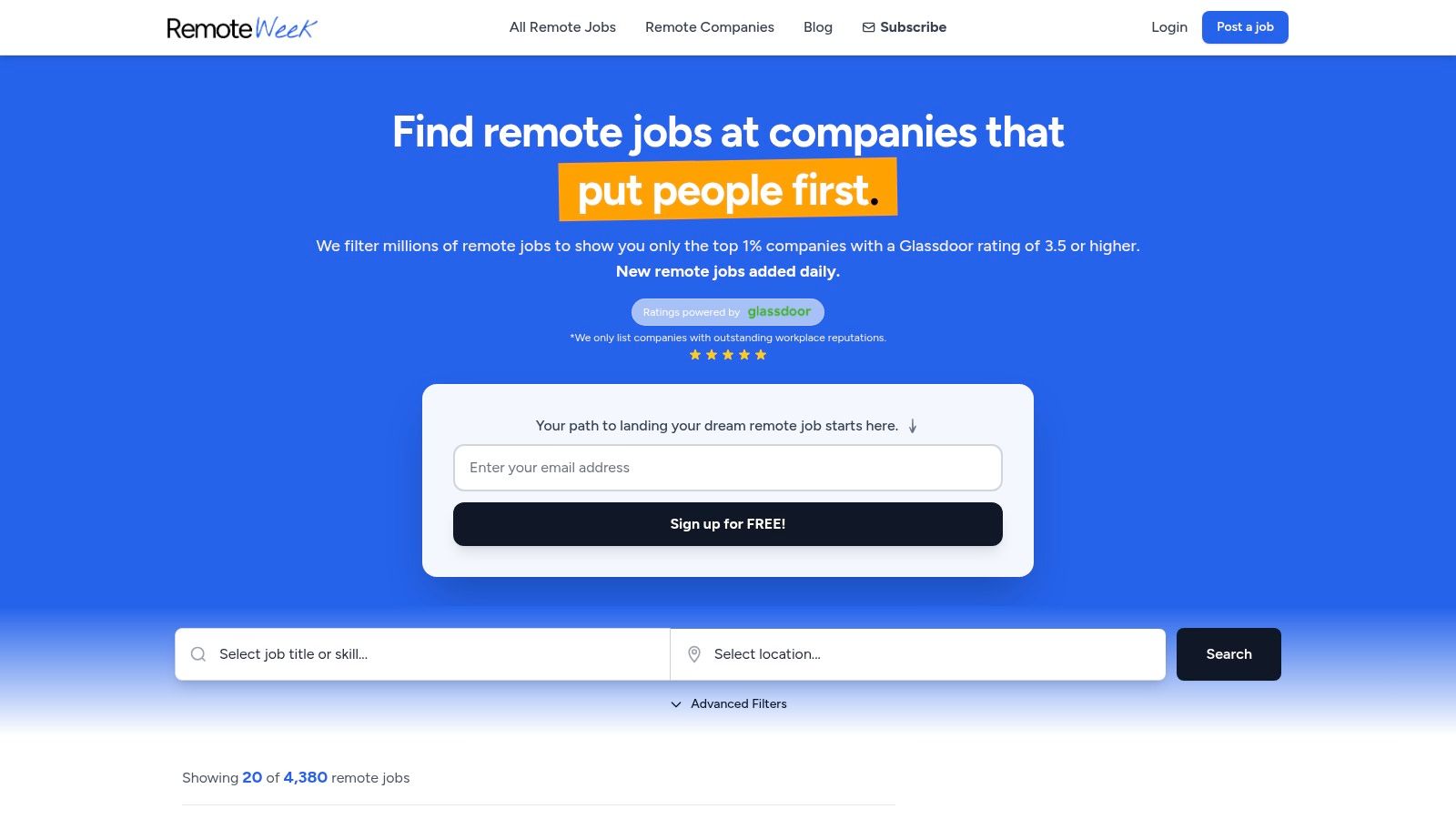
RemoteWeek stands out in the crowded market of remote job boards by prioritizing quality over quantity. It carves a unique niche by focusing on company culture and employee satisfaction, making it a premier destination for tech professionals seeking not just a remote job, but a healthy and transparent work environment. The platform’s core philosophy is to reduce the noise and inherent risks of the remote job search by pre-vetting employers.
This is accomplished through a simple yet powerful mechanism: RemoteWeek exclusively lists openings from companies with a Glassdoor rating of 3.5 or higher. This filter immediately elevates the quality of listings, connecting job seekers with established, well-regarded companies like Dropbox, HubSpot, Reddit, Twilio, and DoorDash. For job seekers, this curation provides a layer of trust and confidence, helping them avoid toxic workplaces and misleading job posts right from the start.
Key Features and User Experience
RemoteWeek is completely free for job seekers, offering an intuitive interface designed for efficiency. The user experience is clean and straightforward, allowing for quick navigation and application.
- Powerful Search and Filtering: Candidates can easily narrow down the 4,300+ active roles using filters for job title, specific skills (e.g., Python, Figma), location, and salary ranges. This precision saves valuable time.
- Detailed Company Profiles: Beyond job descriptions, the site provides company profiles that highlight remote-friendly policies and link to employee reviews, giving applicants a more holistic view of a potential employer.
- Daily Updates and Job Alerts: The platform is updated daily with fresh listings. Users can set up personalized job alerts to receive notifications for new roles that match their criteria, ensuring they never miss a relevant opportunity.
For employers, RemoteWeek offers a compelling, high-ROI alternative to traditional per-post pricing models. Companies pay a flat monthly subscription for unlimited job postings, making it a cost-effective solution for scaling teams. This model also encourages a steady stream of high-quality listings from serious, committed employers.
Why It’s a Top Choice for Remote Jobs
RemoteWeek excels by directly addressing a major pain point in the remote job market: the lack of transparency around company culture. By using Glassdoor ratings as a primary filter, it empowers candidates with crucial information upfront, shifting the power dynamic in their favor. It’s more than just a job board; it’s a curated career platform for discerning professionals who value work-life balance and psychological safety.
| Feature Analysis | Benefit for Job Seeker |
|---|---|
| Glassdoor 3.5+ Vetting | Reduces risk of applying to toxic or unstable companies. |
| Free for Candidates | No financial barrier to accessing high-quality opportunities. |
| Unlimited Employer Posts | Ensures a consistent flow of new roles from committed companies. |
| Advanced Search Filters | Allows for a highly targeted and efficient job search. |
Pros and Cons
Pros:
- Trust-First Curation: Only features jobs from companies with proven positive employee feedback.
- High-Quality Employer Pool: Access to roles at well-known and respected tech companies.
- Completely Free for Job Seekers: No fees to browse, apply, or set up alerts.
- Clean, User-Friendly Interface: Easy to navigate and filter jobs effectively.
Cons:
- Reliance on Glassdoor: Newer or smaller companies with great cultures but few reviews may be excluded.
- Verification Limitations: While a great starting point, the platform cannot fully verify every detail of a company’s hiring process or benefits package.
How to Maximize Your Success on RemoteWeek
To make the most of the platform, leverage the job alerts feature to automate your search. Instead of checking back daily, set up alerts for specific keywords and skills. When you find a promising role, use the company profile on RemoteWeek as a launchpad for deeper research. Always cross-reference the listing with the company’s official careers page and read recent Glassdoor reviews to get the most current picture.
Website: remoteweek.io
2. FlexJobs
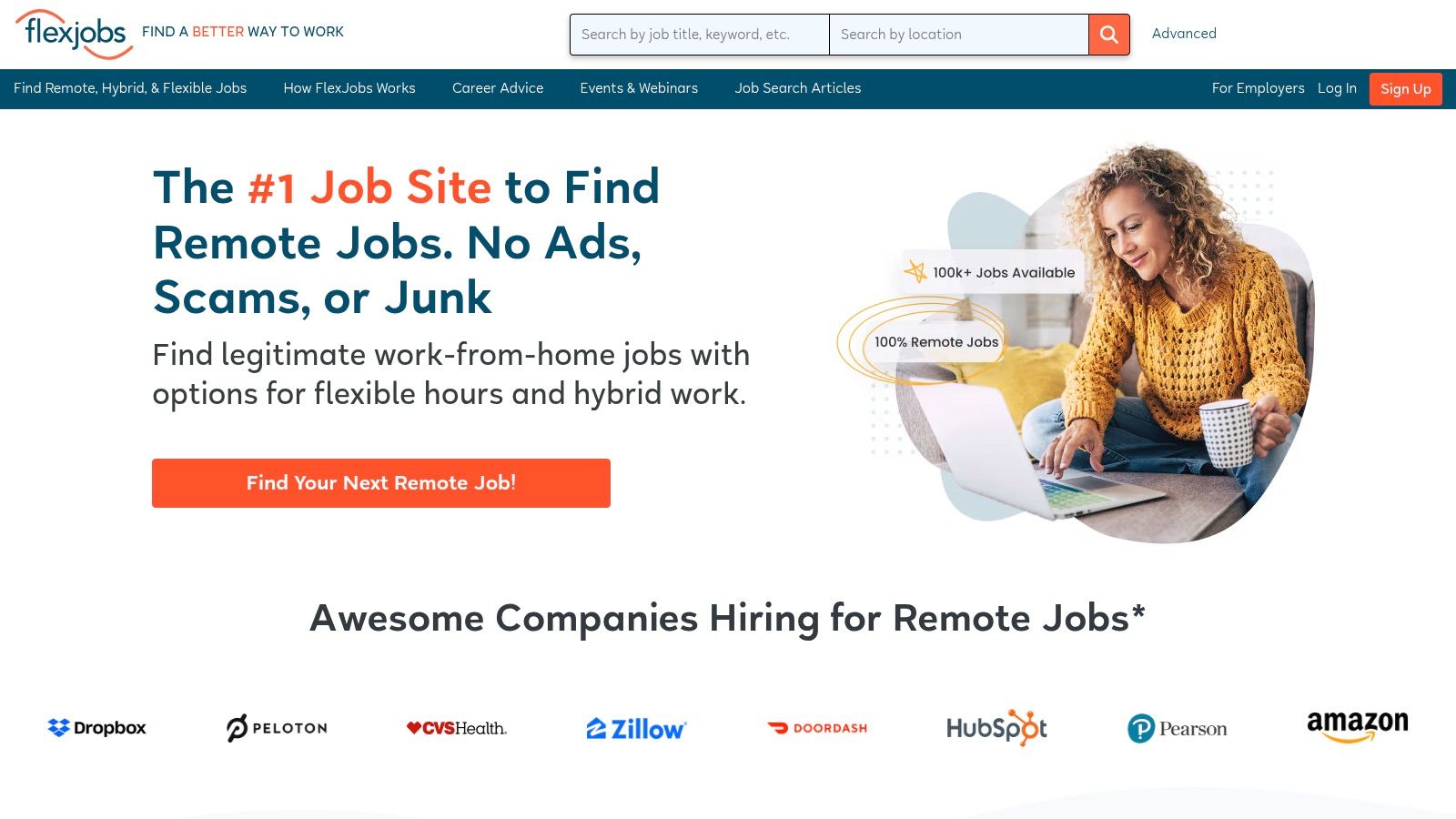
FlexJobs has carved out a distinct niche in the crowded market of the best websites for remote jobs by prioritizing quality over quantity. Its core value proposition is simple yet powerful: every single job listing is hand-screened by a real person before it goes live. This meticulous vetting process is designed to eliminate the scams, fake opportunities, and low-quality "business opportunity" posts that often clutter free job aggregators. For job seekers tired of sifting through suspicious listings, this commitment to safety and legitimacy is a significant advantage.
The platform specializes exclusively in roles that offer some form of flexibility, including fully remote, hybrid, freelance, and part-time positions. This focus makes it a highly efficient tool for anyone specifically seeking work-life balance.
Key Features and User Experience
The user interface is clean and easy to navigate, with powerful search filters that let you drill down by job type, career level (from entry-level to executive), schedule, and over 50 career categories. Beyond the job board itself, a FlexJobs subscription unlocks a suite of valuable resources.
- Human-Vetted Listings: Every company and job post is researched to ensure it's a legitimate, professional-level opportunity.
- Skills Testing: Members can take dozens of skills tests to validate their expertise and showcase scores to potential employers.
- Career Resources: Access to a library of webinars, articles, and career coaching services is included.
- Company Profiles: In-depth research on thousands of remote-friendly companies, including their hiring history and policies.
Subscription Model: Is It Worth It?
Unlike many job boards, FlexJobs requires a paid subscription to view full job details and apply. This is their primary drawback for some users. The fee funds the human-led screening process that defines their service.
| Subscription Tier | Pricing (Subject to Change) | Key Benefit |
|---|---|---|
| 1 Week | ~$6.95 | Low-commitment trial |
| 1 Month | ~$24.95 | Standard for active job searching |
| 3 Months | ~$39.95 | Better value for a longer search |
| 1 Year | ~$59.95 | Most cost-effective for long-term access |
Maximizing Success on FlexJobs
- Complete Your Resume Profile: Treat your FlexJobs profile as your primary resume. Recruiters on the platform can search these profiles, so a detailed and keyword-optimized profile increases your visibility.
- Utilize Skills Tests: Take the free skills tests relevant to your field. A high score is a tangible credential that can make your application stand out.
- Set Up Multiple Job Alerts: Don't rely on a single, broad alert. Create several specific, targeted alerts for different keywords and job titles to ensure you never miss a relevant opening. You can dive deeper into optimizing your applications by exploring our guide to the remote job search.
FlexJobs is best suited for serious job seekers who are willing to invest a small fee for a safer, more efficient, and scam-free search experience.
3. We Work Remotely (WWR)
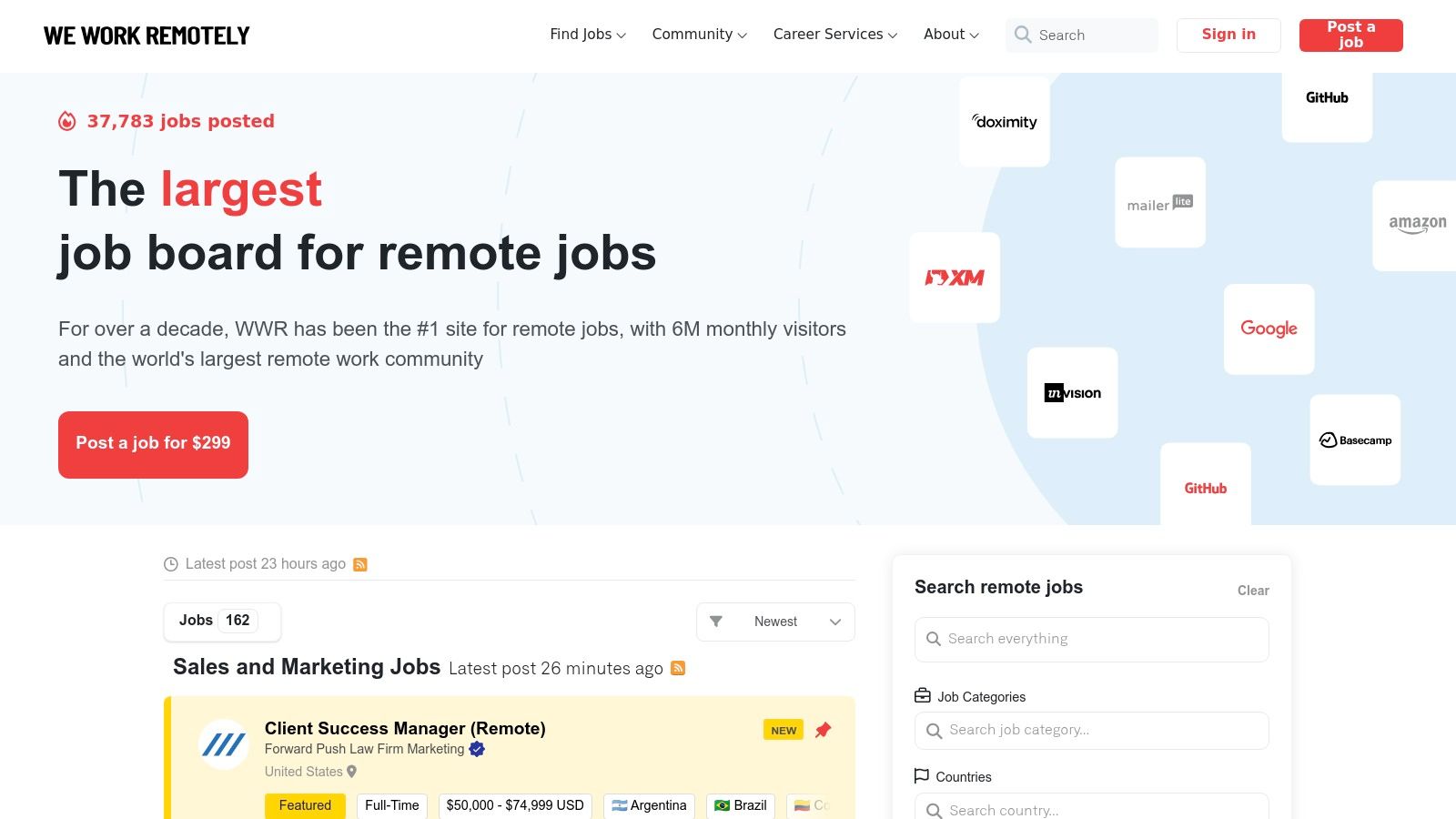
As one of the pioneers in the remote work space, We Work Remotely (WWR) has established itself as one of the largest and most respected remote-only job boards. Launched in 2011, its longevity and singular focus on remote roles have attracted a massive community of both job seekers and remote-first companies. The platform is not an aggregator; instead, companies pay to post listings, which helps ensure a higher standard of opportunities across diverse fields like engineering, marketing, design, and customer support.
WWR’s core strength lies in its simplicity and directness. It avoids the clutter of hybrid or location-flexible roles, concentrating exclusively on positions that can be performed from anywhere. This clear mission makes it a go-to destination for professionals committed to a fully remote career and for companies that have built their culture around distributed teams.
Key Features and User Experience
The platform’s interface is straightforward and job-centric, prioritizing easy browsing over complex features. Users can quickly filter jobs by category, company, or keywords, making the search process efficient. While the design is minimalist, the value is in the curated quality of the listings.
- Remote-Only Focus: Every listing is for a fully remote position, eliminating ambiguity and saving job seekers time.
- Broad Category Coverage: Spans a wide range of professional fields, from highly technical development roles to creative and administrative positions.
- Vetted Postings: While not as intensive as FlexJobs' hand-screening, WWR has a process to combat fraud, and users can report suspicious listings.
- Candidate Accounts: A seeker account allows you to tailor results by region or time zone and save jobs that match your interests.
Subscription Model: A Recent Shift
Historically free for job seekers, WWR recently introduced a subscription model to access its listings. This change has been met with mixed reactions but is intended to fund platform improvements and maintain listing quality.
| Subscription Tier | Pricing (Subject to Change) | Key Benefit |
|---|---|---|
| First Month | Free | Trial period to explore the platform |
| Seeker Account | $29 per year | Full access to browse and apply to all jobs |
Maximizing Success on We Work Remotely
- Use the Free Month Wisely: Take full advantage of the free trial period. Set up your profile, create targeted searches, and apply to several positions to get a feel for the platform’s value before committing.
- Filter by Time Zone: For roles that require synchronous collaboration, use the time zone filter to find companies that operate during your preferred working hours. This shows employers you've considered the practicalities of remote collaboration.
- Explore the Company Directory: WWR maintains a directory of remote-first companies. Even if a company isn't currently hiring for your role, you can research them and set alerts for future openings, making you one of the first to know.
We Work Remotely remains one of the best websites for remote jobs for those seeking high-quality, fully remote roles, especially if you are willing to pay a nominal annual fee for dedicated access. Its strong reputation attracts top-tier remote companies, making it a valuable resource in any job search.
4. Remote OK
Remote OK has established itself as a heavyweight contender among the best websites for remote jobs, particularly within the technology sector. Known for its high traffic and massive, constantly updated feed, it functions as a streamlined and powerful job aggregator. Its primary appeal lies in its simplicity and directness: it connects job seekers with opportunities quickly and without a paywall, making it a go-to resource for developers, designers, product managers, and other tech-focused professionals.
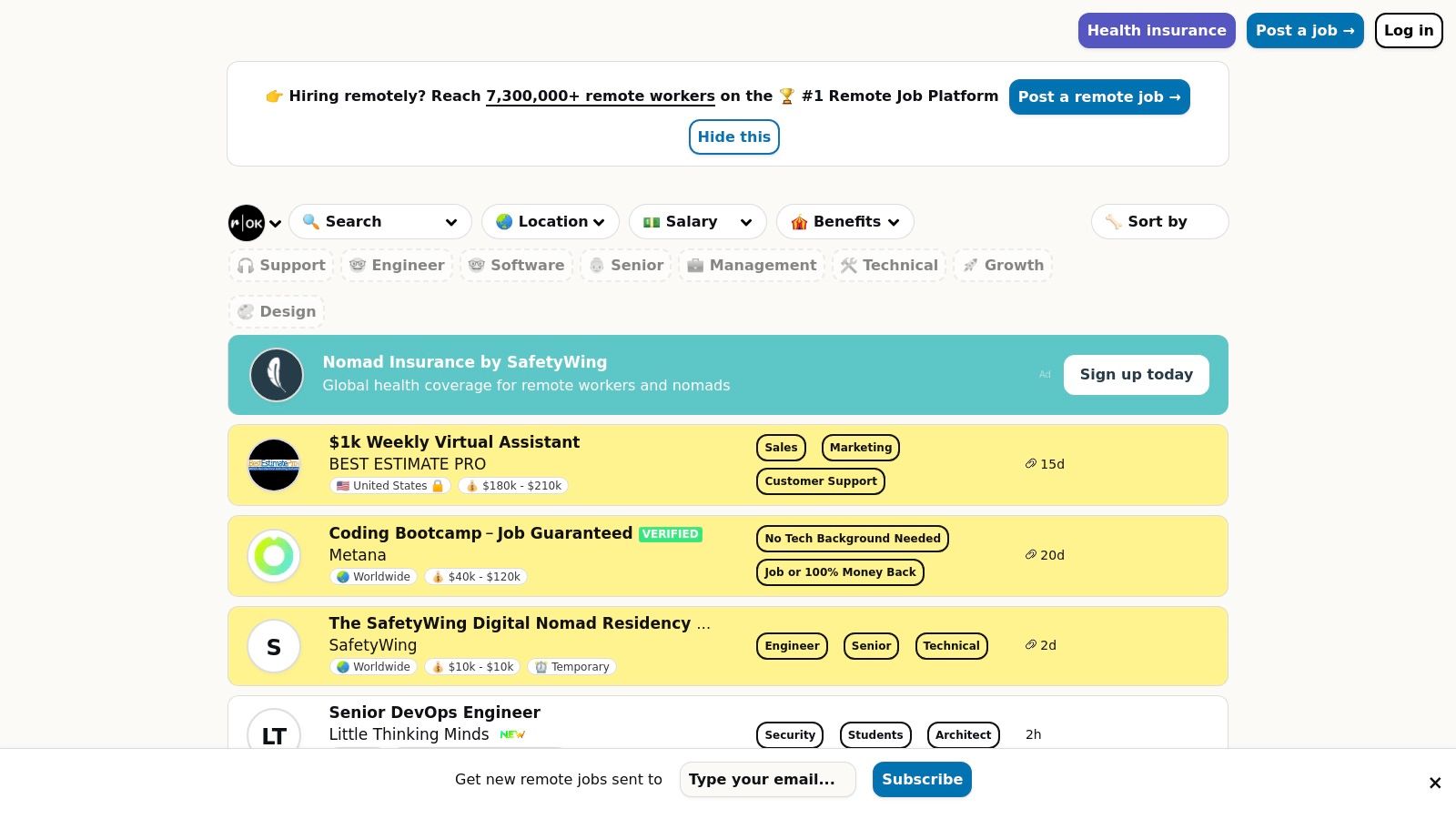
The platform's design is unapologetically data-driven, displaying salary ranges, tech stacks, and company stats upfront. This transparency allows candidates to quickly assess if a role is a good fit before even clicking. While its heart is in tech, it also features a healthy number of non-technical roles in areas like marketing, support, and operations.
Key Features and User Experience
The user interface of Remote OK is a fast, infinite-scroll feed that prioritizes information density. Job listings are tagged with clear labels like "Software Development," "Design," and "Marketing," along with location requirements such as "Worldwide" or specific regions. The platform is built for speed, allowing users to browse and apply to external company sites with minimal friction.
- Free for Job Seekers: There is no subscription or fee required to view full job descriptions and apply directly.
- Strong Tech Focus: The board is heavily populated with roles from startups and established tech companies looking for engineering, data science, and product talent.
- Global Reach: A significant portion of listings are for "work from anywhere" positions, supported by robust tagging and filtering for global roles.
- Employer Visibility Options: Companies can pay for premium placements, email blasts, and highlighted listings, which keeps the platform free for job applicants.
Pros and Cons: A Trade-Off Between Volume and Vetting
Remote OK’s open model is both its greatest strength and a potential weakness. It provides a massive volume of opportunities but lacks the rigorous human-screening process of curated platforms like FlexJobs.
| Pros | Cons |
|---|---|
| Completely free for job seekers to browse and apply. | Less rigorous vetting means listing quality can vary. |
| High volume of new jobs posted daily, especially in tech. | High competition for popular developer and engineering roles. |
| Strong presence among innovative startups and tech companies. | The interface can feel cluttered or overwhelming to some users. |
Maximizing Success on Remote OK
- Use Specific Keyword Tags: The tagging system is your best tool. Instead of just searching "developer," use specific tags like "React," "Python," "Go," or "Senior" to narrow the results to your exact skillset.
- Act Quickly: Given the high traffic and competition, the newest listings get the most attention. Check the site daily or set up alerts to be one of the first applicants for promising roles.
- Do Your Own Vetting: Because the platform is more of an aggregator, take a few extra minutes to research companies that you are not familiar with. Check their official website, LinkedIn presence, and employee reviews before you apply.
Remote OK is ideal for confident job seekers, especially in the tech industry, who prefer a high-volume, free-to-use platform and are comfortable doing their own research on potential employers. You can start your search at https://remoteok.com.
5. Indeed (Remote filter)
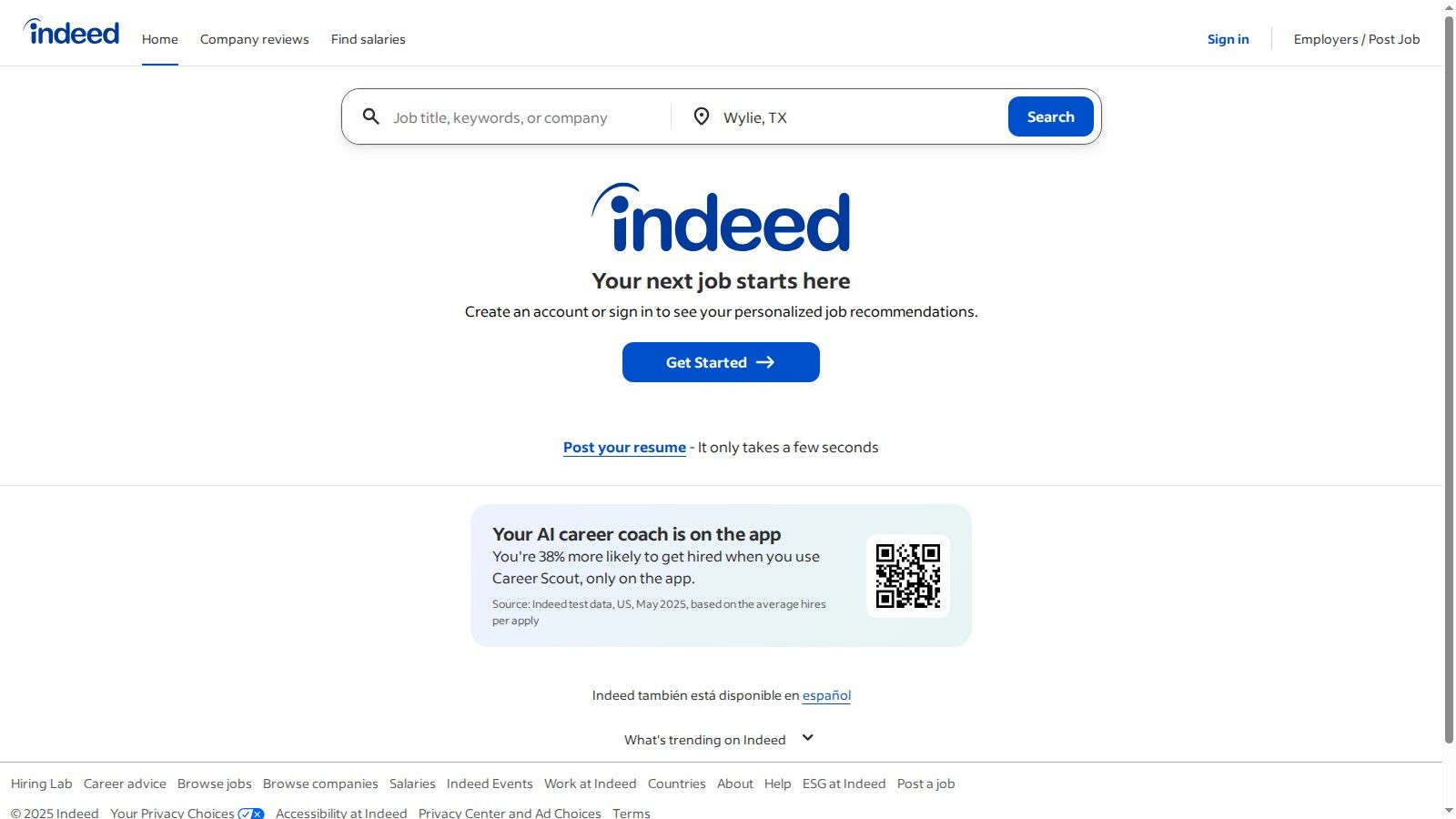
As one of the world's largest job aggregators, Indeed is a powerhouse that simply cannot be ignored in any comprehensive job search. While not a dedicated remote job board, its sheer volume of listings and powerful filtering capabilities make it an essential tool for finding remote work. Indeed aggregates postings directly from employer career pages, staffing firms, and other job boards, creating a vast, centralized database of opportunities across nearly every industry and career level.
The platform's primary advantage is its massive scale. For job seekers, this means an unparalleled breadth of choice, from entry-level administrative roles to senior executive positions, all accessible for free. By simply using the "Remote" filter under the location search, users can instantly narrow millions of jobs down to those offering work-from-home flexibility.
Key Features and User Experience
Indeed’s interface is straightforward and built for speed. The two-box search (What and Where) is universally recognized, and applying the remote filter is intuitive. Beyond the search function, Indeed provides a wealth of data to help candidates make informed decisions.
- Massive Job Volume: Access to millions of job listings, including a huge number of remote and hybrid positions, pulled from thousands of sources.
- Powerful Search and Alerts: The ability to filter by "Remote" and save these searches as daily or weekly email alerts is highly efficient.
- Company Reviews and Salary Data: Users can research potential employers through millions of anonymous employee reviews and salary reports.
- Free for Job Seekers: There is no cost for candidates to search, view full job details, and apply for positions.
Pros and Cons: Volume vs. Vetting
Indeed’s greatest strength, its immense volume, can also be its weakness. Unlike curated boards, it relies on algorithms, which can lead to some noise in the search results.
| Aspect | Pro | Con |
|---|---|---|
| Listings | Unmatched quantity and variety of roles. | Can include duplicates, expired posts, or scams. |
| Cost | Completely free for job seekers to use. | Lack of human vetting means users must be vigilant. |
| Filters | Simple and effective remote/hybrid filters. | "Remote" can sometimes mean location-specific remote. |
| Ease of Use | Familiar interface and fast application process. | The sheer number of results can feel overwhelming. |
Maximizing Success on Indeed
- Use Specific Keywords: Combine your job title with keywords like "remote," "work from home," or "telecommute" in the "What" field, in addition to using the location filter.
- Scrutinize Job Descriptions: Pay close attention to location requirements. Some roles listed as "Remote" may require you to live in a specific state or region. Be cautious and learn how to identify potential red flags by reading our guide on remote job scams.
- Set Up Precise Alerts: Create multiple, highly specific job alerts. For example, set one for "Remote Marketing Manager" and another for "Remote Content Strategist" to capture a wider net of relevant opportunities.
Indeed is best for job seekers who want to cast the widest net possible and are comfortable vetting opportunities themselves. Its free access and incredible scale make it a foundational part of any modern remote job search strategy.
6. LinkedIn Jobs (Remote/Work-From-Home filters)
LinkedIn has evolved from a professional networking site into a dominant force in the job market, making it an indispensable tool for anyone searching for the best websites for remote jobs. Its power lies in combining a massive, active job board with an unparalleled networking platform. You aren't just applying into a void; you're leveraging your professional identity, connections, and career history to gain a competitive edge. The platform's sheer volume of listings from U.S. and global employers is a major draw.
The site is not exclusively for remote work, but its search filters allow users to effectively isolate remote, hybrid, and on-site opportunities. This integration means you can search for a role and simultaneously research the company, see if you have any connections there, and view the profiles of potential team members, all within the same ecosystem.
Key Features and User Experience
LinkedIn’s interface is familiar to most professionals, making the job search feature intuitive. The ability to filter by "Remote" is the key function, allowing you to sift through millions of listings. The platform's true advantage, however, is the data and networking layer that sits on top of the job board.
- Powerful Network Integration: See who in your network works at a company you're interested in, making it easier to ask for a referral or inside information.
- Easy Apply: Many listings feature the "Easy Apply" button, which submits your saved LinkedIn profile and resume with a single click, dramatically speeding up the application process.
- Company Research Tools: Dive deep into company pages to learn about their culture, recent posts, and employee demographics before you even apply.
- AI-Powered Job Search: LinkedIn is increasingly using AI to help you find roles using natural language queries (e.g., "find me a remote marketing manager role in a startup") and to surface jobs that match your profile.
Subscription Model: Is It Worth It?
LinkedIn is free to use for job searching, but it offers a "Premium Career" subscription that unlocks additional features. This can be a valuable investment for those engaged in a serious job hunt.
| Feature Type | Free Access | Premium Career (~$29.99/mo) |
|---|---|---|
| Job Searching/Applying | Yes | Yes |
| InMail Credits | No | Yes (Contact recruiters directly) |
| Applicant Insights | No | See how you compare to other applicants |
| Who's Viewed Your Profile | Limited | Full access |
| Salary Insights | Limited | Full access |
Maximizing Success on LinkedIn
- Optimize Your Profile: Your LinkedIn profile is your resume. Ensure it's 100% complete, keyword-rich for your target roles, and features a professional headshot. This is the first thing recruiters will see.
- Use Precise Remote Filters: Don't just search for a job title. Use the "Remote" location filter and save job alerts for those specific criteria to get relevant new listings sent directly to your inbox.
- Leverage Your Network: Before using "Easy Apply," check if you have a 1st or 2nd-degree connection at the company. A warm referral is exponentially more effective than a cold application.
LinkedIn is best suited for professionals who want to actively combine networking with their job search, leveraging their connections to stand out in a crowded remote job market.
7. Wellfound (formerly AngelList Talent)
Wellfound, which rebranded from the well-known AngelList Talent, has solidified its reputation as the premier destination for professionals seeking roles within the startup ecosystem. It’s one of the best websites for remote jobs specifically for those drawn to the innovation, culture, and potential equity upside of working for early-stage and high-growth tech companies. The platform's core strength lies in its direct-access model, which cuts through traditional recruiting red tape.
The site is laser-focused on connecting talented individuals directly with the founders and hiring managers at startups. This approach fosters more transparent and meaningful conversations, moving beyond the impersonal nature of many larger job boards and making it a unique and powerful tool for the modern job seeker.
Key Features and User Experience
Wellfound’s platform is designed for speed and transparency, prioritizing a straightforward user experience. The interface makes it simple to discover companies and roles that align with your career goals, with powerful filters for remote work, company stage, and specific tech stacks.
- Startup-Centric Listings: Access to thousands of jobs at venture-backed startups and tech companies that you won't find on traditional job boards.
- Compensation Transparency: A high percentage of listings include detailed salary and equity compensation ranges upfront, helping you target roles that meet your financial expectations.
- Direct Communication: The platform's built-in messaging system allows you to communicate directly with hiring teams, bypassing third-party recruiters.
- Rich Company Profiles: Dive deep into a startup’s mission, funding, team size, and tech stack before you even apply.
Pricing and Access
For job seekers, Wellfound is completely free to use. The business model is built around charging companies for advanced recruiting tools and access to the candidate pool, creating a candidate-first experience without any financial barriers.
| User Type | Access Cost | Key Benefit |
|---|---|---|
| Job Seeker | Free | Unrestricted access to job listings, company profiles, and application features. |
| Company | Varies (Free & Paid Tiers) | Access to a large, active pool of tech-focused talent. |
Maximizing Success on Wellfound
- Build a Comprehensive Profile: Your Wellfound profile is your application. Fill it out completely with your skills, work history, and what you’re looking for. This is what hiring managers see first.
- Be Proactive with Messaging: Don't just apply and wait. If a founder or hiring manager's profile is listed, consider sending a brief, personalized message expressing your interest.
- Leverage Transparency: Use the upfront salary and equity data to focus your search. This saves time for both you and the employer by ensuring alignment from the start. For more insights, you can find a list of top tech companies hiring remotely.
Wellfound is ideal for tech-savvy professionals-engineers, designers, marketers, and product managers-who want to join a dynamic startup and value direct communication and compensation transparency in their job search.
Top 7 Remote Job Sites Comparison
| Platform | 🔄 Implementation complexity | ⚡ Resource requirements | ⭐ Expected outcomes | 📊 Ideal use cases | 💡 Key advantages |
|---|---|---|---|---|---|
| RemoteWeek | Low — simple job board + employer subscription | Minimal for seekers; employers pay monthly | ⭐⭐⭐⭐ — curated, higher-fit listings | Vetted remote job seekers; employers seeking ROI vs per-post | Glassdoor-based vetting; free for candidates; unlimited posts for subscribers |
| FlexJobs | Low–Moderate — hand-screening adds manual steps | Paid subscription for seekers; employer fees | ⭐⭐⭐⭐ — low-scam, higher-quality matches | Seekers who prefer curated, low-noise listings and career support | Human-screened listings; webinars and career resources |
| We Work Remotely (WWR) | Low — remote-only board with account system | Seeker account required (paid after trial); employer posts paid | ⭐⭐⭐ — strong remote-role volume | Remote-first professionals and established remote employers | Large remote-focused audience; long-standing brand recognition |
| Remote OK | Very low — easy browse/apply; employer add-ons available | Free for seekers; employers pay for visibility | ⭐⭐⭐ — high volume, variable vetting | Tech-forward job seekers and startups seeking quick hires | High-traffic, fast updates; strong startup/tech presence |
| Indeed (Remote filter) | Very low — aggregator with robust filters | Free; time investment to sort volume | ⭐⭐⭐ — massive coverage, mixed quality | Broad searches across industries and seniorities | Huge listing volume; company reviews and salary data |
| LinkedIn Jobs | Low–Moderate — profile + network leveraged; Premium optional | Free basic; Premium for AI/insights and extras | ⭐⭐⭐⭐ — strong networking & referral outcomes | Professionals relying on referrals and recruiter outreach | Network+referrals, Easy Apply, employer/recruiter visibility |
| Wellfound (AngelList) | Low — profile-driven one-click apply for startups | Free for candidates; employers use platform tools | ⭐⭐⭐⭐ — strong startup matches with transparency | Startup/scaleup candidates in tech/product/design | Compensation transparency; direct messaging and startup focus |
Your Next Step: Building a Winning Remote Job Search Strategy
Navigating the landscape of remote work can feel overwhelming, but equipped with the right tools, you transform from a passive browser into a strategic job seeker. We've explored a powerful arsenal of the best websites for remote jobs, from the curated, culture-focused listings on RemoteWeek and the meticulously vetted roles on FlexJobs, to the tech-centric hubs of We Work Remotely and Wellfound. You've also seen how to leverage the immense power of aggregators like Indeed and professional networks like LinkedIn to uncover hidden opportunities.
The key takeaway is this: there is no single "best" platform for everyone. The most effective approach is a multi-platform strategy tailored to your specific career goals, industry, and desired work style. Success isn't about signing up for every site; it's about choosing the right sites and using them intelligently.
Crafting Your Personalized Job Search Toolkit
Your first step is to consolidate and refine your core assets. Before you even start applying, create a "master resume" and a corresponding master cover letter template. These documents should be comprehensive, detailing all your skills, experiences, and accomplishments. This isn't the resume you'll send out; it's your personal database from which you'll pull relevant information to tailor each application.
Next, select your primary platforms. Here’s a simple framework to guide your choice:
- For Tech & Startup Enthusiasts: Prioritize Wellfound, Remote OK, and We Work Remotely. These platforms are the native habitat for innovative companies and cutting-edge roles in engineering, product, and design.
- For Curated, High-Quality Roles: If you're tired of sifting through low-quality listings and want access to vetted companies with strong remote cultures, make RemoteWeek and FlexJobs your first stops. The subscription model acts as a powerful filter for both employers and applicants.
- For Broad, Diverse Opportunities: To cast the widest net possible across various industries and experience levels, harness the advanced remote filters on LinkedIn Jobs and Indeed. These are excellent for discovering roles in less tech-focused fields like marketing, customer support, and administration.
Activating Your Strategy for Maximum Impact
Once you’ve chosen your 2-3 primary platforms, it's time to move from planning to action. Don't just browse; engage proactively.
- Optimize Your Profiles: On platforms like LinkedIn and Wellfound, your profile is your digital storefront. Ensure it is complete, keyword-optimized for your target roles, and highlights achievements relevant to remote work-like "asynchronous communication," "project management tools," and "self-directed."
- Set Up Smart Alerts: Create highly specific job alerts on each platform. Use keywords, titles, and location filters (even for remote roles, some are region-specific) to ensure you only receive relevant notifications. This automates the discovery process and puts the best opportunities in your inbox first.
- Tailor Every Application: This is the most crucial step. For each job you apply to, customize your resume and cover letter using your "master" documents. Pull the specific skills and experiences that align directly with the job description. Once you identify the best remote job opportunities, the next challenge is to differentiate yourself from other candidates; learn how to stand out in job applications to ensure your materials capture a hiring manager's attention.
Finding your ideal remote job is a marathon, not a sprint. It requires a deliberate strategy, the right combination of tools, and consistent effort. By moving beyond aimless scrolling and adopting this targeted, multi-platform approach, you are no longer just searching for a job; you are actively building the career and lifestyle you deserve. The right opportunity is out there waiting for a candidate as prepared and strategic as you.
Ready to find remote jobs at companies with proven positive cultures? RemoteWeek goes beyond the job description, providing insights into team culture, work-life balance, and benefits, so you can find a role where you’ll truly thrive. Start your search on RemoteWeek today and connect with companies that value their people as much as their product.